Where Ceramic Meets the Sea: The Birth and Enduring Life of the Chanel J12
Chanel’s J12 broke the mould and remains an icon of modern watchmaking
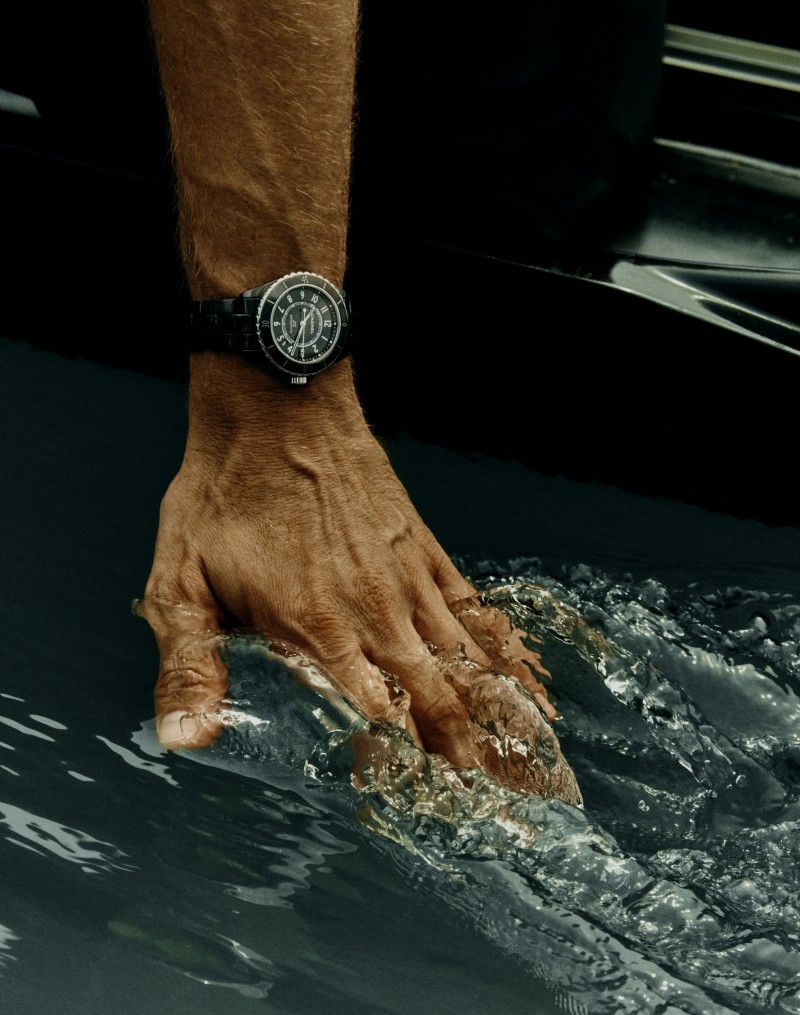
There's a reason Chanel's J12 has remained the house's watchmaking icon for over two decades: it did something no luxury watch had done before. When it launched in 2000, it was the first high-end timepiece made entirely from ceramic — a material choice that seemed almost inconceivable at the time, when steel and gold still ruled the category. More than 25 years on, the J12 still holds its iconic status, even when the entire watch industry seems to be jumping on the ceramic bandwagon. And the reason for this is perhaps that more than just the J12’s material choice, it is the watch’s source of inspiration, the ocean.

From Ulysses’ adventures to the solo crossings of great navigators, the ocean remains one of the most timeless sources of inspiration. This year, the storytelling surrounding the J12 leans into its original inspiration, going all the way back to its conception when racing yachts shaped the silhouette that Jacques Helleu, then Artistic Director of the House for Watches, first sketched more than twenty years ago. At the time the watch was forged in only a single colour, one that Mademoiselle Chanel liked to say, “which surpasses all” – black. It was chosen to satisfy the desire for simplicity and only ceramic could render such a perfectly monochrome result. Today however although the J12 is also available in white and blue and has a new matte finishing on some variants, its minimalistic ethos still remains.
“J12 was born from an act of radical creation. Without compromise or permission, it took hold like a revolution, challenging the traditional codes of watchmaking. This unbridled creation literally changed my perception of watches and was an inspiration to me. So much more than an icon, J12 is a manifesto of emancipation and audacity: it’s resistant to everything, especially trends.” Arnaud Chastaingt, Director, Watch Creation Studio, Chanel.
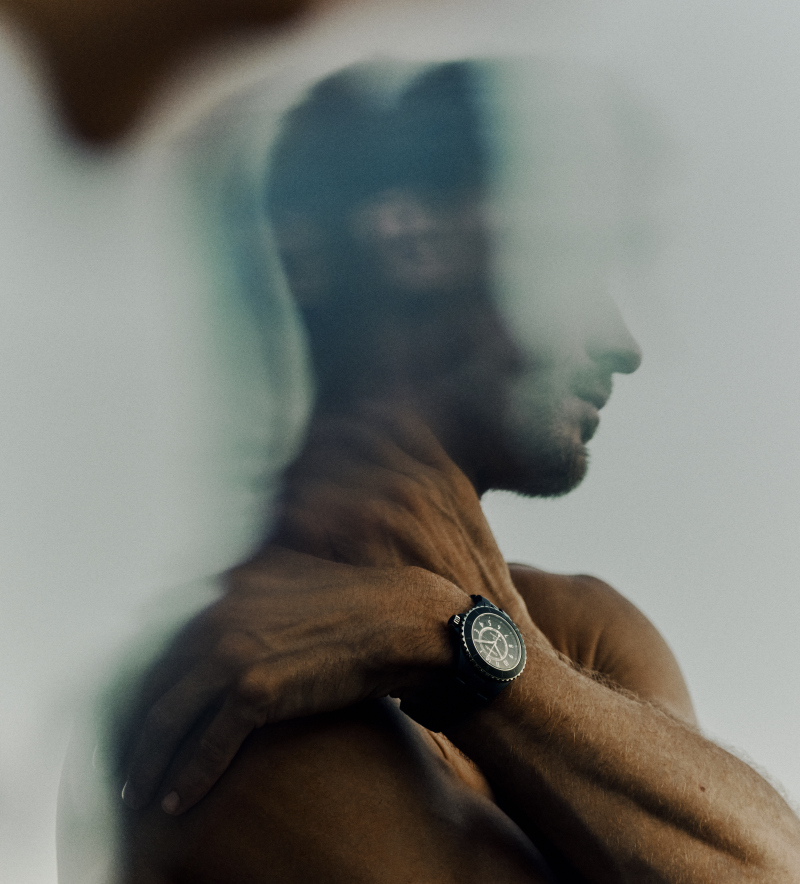
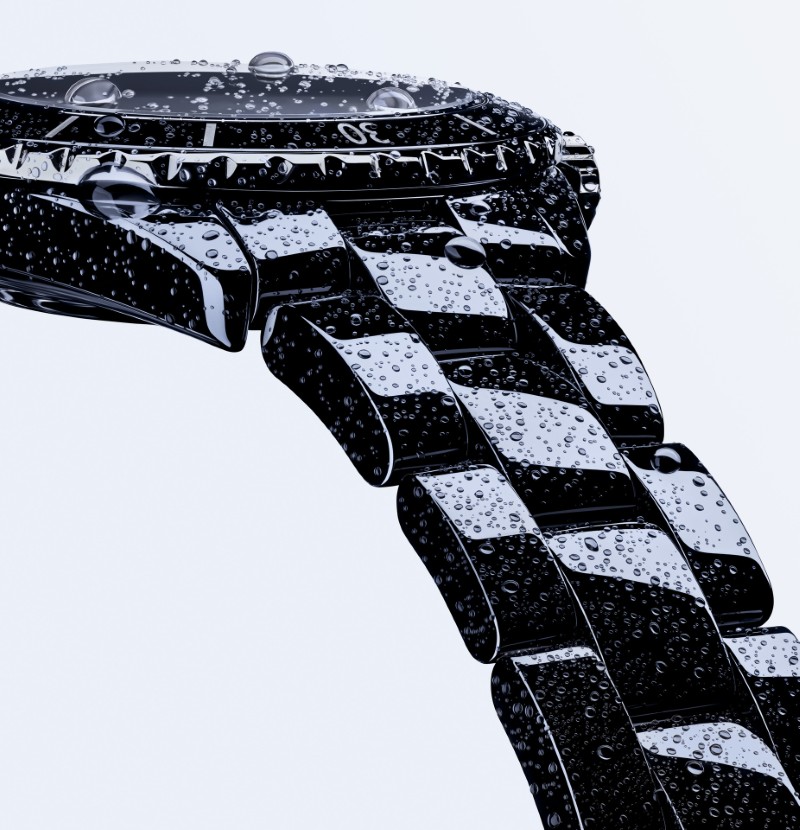
What also continues to set the J12 apart is the paradox at its core: a material that is simultaneously punishing and gentle. Chanel's ceramic is fired at temperatures exceeding 1,300°C at the brand's manufacture in La Chaux-de-Fonds, a process that gives it extraordinary resistance to scratches, corrosion, and the general wear of daily life. It emerges seven times more resistant than steel, yet lighter — and, notably, smooth against the skin in a way few hard materials manage. Chanel calls this contradiction "invincible softness," which is a poignant tagline to say that the J12’s greatest strength lies in its softness.
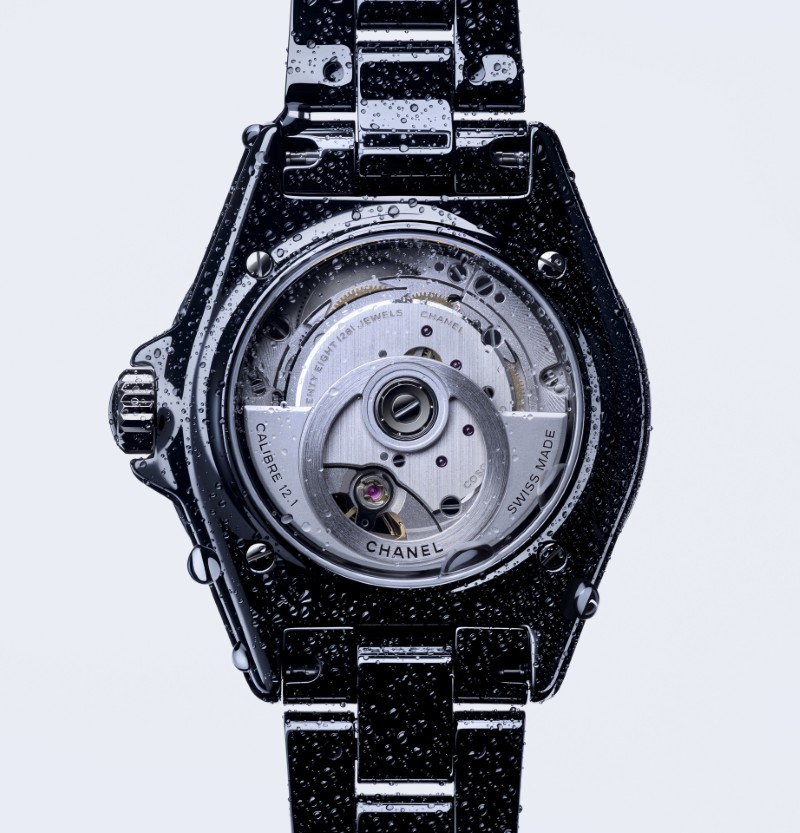
Underneath that ceramic case beats the Calibre 12.1, a self-winding movement assembled at the Kenissi manufacture, part-owned by Chanel. It's COSC chronometer-certified, delivers a 70-hour power reserve, and is visible through a sapphire case back — because for Chanel, a movement's underside deserves the same attention as its face. The circular, open-worked rotor, designed by Watch Creation Studio director Arnaud Chastaingt, turns with the unhurried precision of an observatory clock, its 191 components assembled by hand.
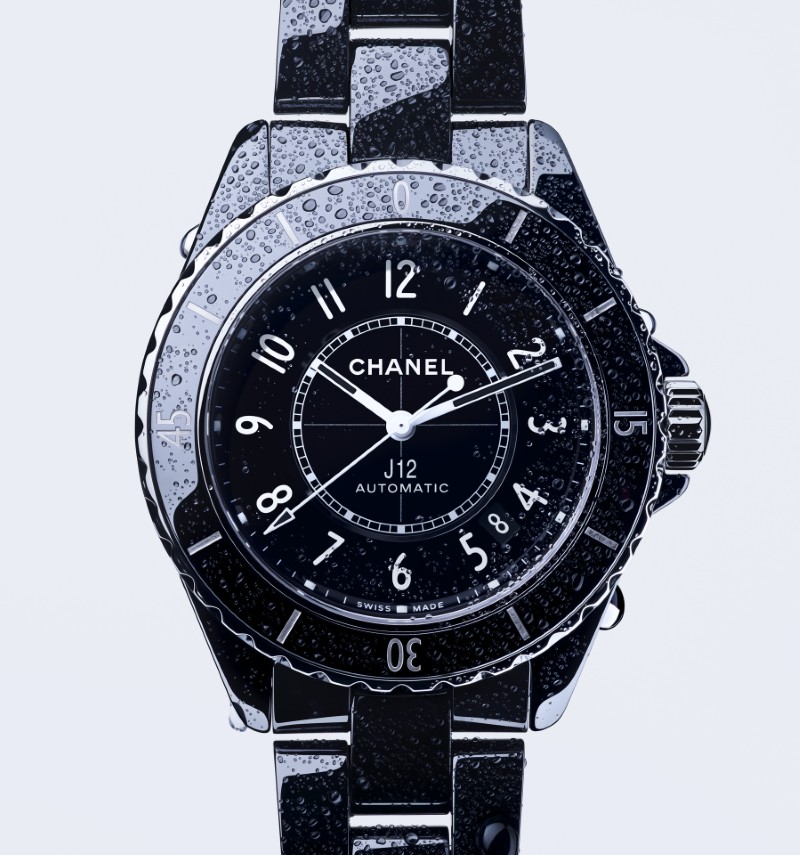
Available now in black, white, and the more recent addition of blue, the J12 remains water-resistant to 200 meters — a practical nod to the nautical world that inspired it, and a reminder that this is a watch meant to be worn hard, not simply admired from a case. More than two decades after its debut, the J12 still occupies an unusual position in watchmaking: an object born from a material experiment that became one of the most recognizable silhouettes in the industry, built on the idea that real durability and real elegance were never mutually exclusive.