Watching The Waves: We get a feel for the Grand Seiko Spring Drive U.F.A. Ushio 300 Diver in Izu
Invisible Attraction

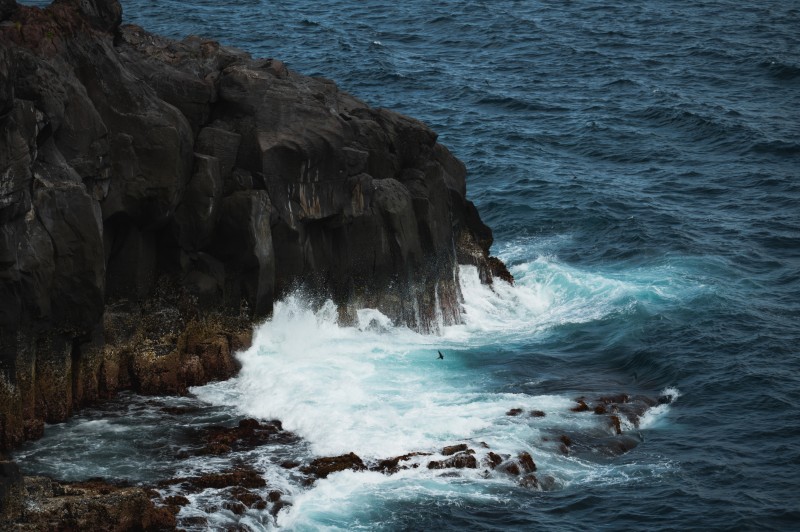
Imagine, if you will, the sun slowly setting as you stand atop a sheer cliff on the Izu peninsula, overlooking Suruga Bay. As the waves crash into the limestone rock below, you catch a rare glimpse of a herd of deer peering out from the fringes of the forest, the stag looking majestically at your party before disappearing into the treeline. Then dark clouds roll in, and a fine rain begins to mist Koganezaki Park. And just when you think to call it a day, all of a sudden the clouds part, letting radiant rays of sunlight hit the ocean such that a million little lights dance on the surface. And with the moisture and the sun, a double rainbow appears.
I wish I were capable of such works of fiction, but this indeed did happen near the last day of a trip I recently took with Grand Seiko to Izu. It felt more like providence than coincidence. You always hear about how the Japanese revere their natural elements, waxing lyrical in haiku and literature, painting scenery on paper, and, in the case of Grand Seiko, using nature as inspiration for their dials, and after spending a few days in Izu, I get it. I mean, how could you not?

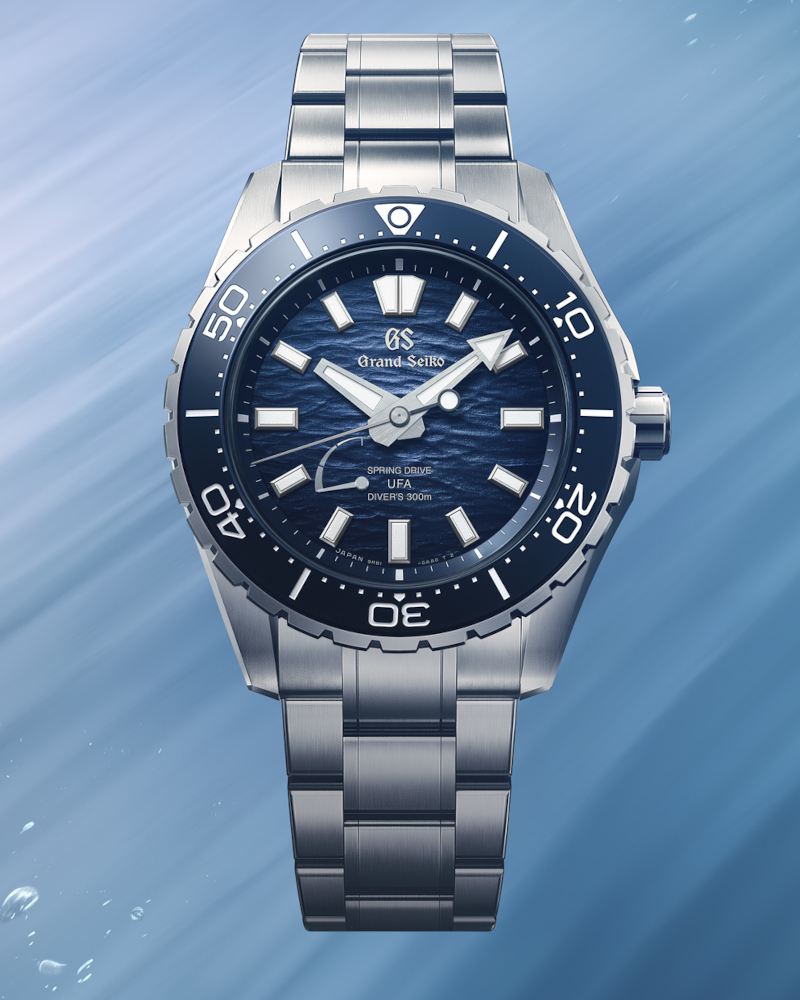
The reason I was with Grand Seiko in Izu was to understand their latest Ushio 300 Diver in a way that one simply cannot within the confines of a 30-minute slot during Watches & Wonders Geneva. The idea was to live and breathe the elements that inspired this watch. The term Ushio means "current" in Japanese, and with Japan being an island nation, there was no shortage of places to make this connection. They chose the Izu peninsula, however, because it represents the confluence of two ocean currents: the Kuroshio, which brings warm water from the south, and the Oyashio, which brings cold water from the north. In many ways it is fitting that the new SLGB023 and SLGB025 were named after the Japanese word for currents, because, like currents, which are often a hugely powerful force that can barely be seen from the surface, these new dive watches from Grand Seiko may seem like a simple reduction in size but actually harbour some seriously incredible watchmaking innovations.
Before we "dive" into further details of the watch, however, one must first understand why the Japanese are devoutly respectful of nature. On the long train ride aboard the Odoriko (which translates to "a female dancer" and was apparently inspired by the short story Dancing Girl of Izu, written by the Nobel Prize–winning author Yasunari Kawabata) from Tokyo to Izu — yes, I know the life of a journalist can be tough — I got to pondering. There is no other culture in the world that does this, as far as I know. Where most of the world goes by four seasons, the Japanese break the year down into as many as 72 micro-shifts in season.
Japan sits at the complex meeting point of four major tectonic plates, including the Pacific Plate, the Philippine Sea Plate, the Eurasian Plate, and the North American Plate, not to mention its position on the Pacific Ring of Fire. Powerful natural occurrences like earthquakes and volcanoes force the inhabitants of Japan to understand that they are cohabiting with nature rather than in control of it. This reverence for nature could have also stemmed from native Shinto teachings, where it is said that kami, or spirits, inhabit natural elements like ancient trees, mountains, waterfalls, and rocks. In any case, the beauty of nature in Japan is hard to ignore, which is probably why the designers at Grand Seiko spend their time watching the early morning sun as it hits Mount Iwate, staring at the white birch trees as the seasons change, watching the surface of Lake Suwa and noting its beauty whether in daytime or at night, or, more relevant to this story, watching the sea and wondering about the currents that shape its ecosystem.
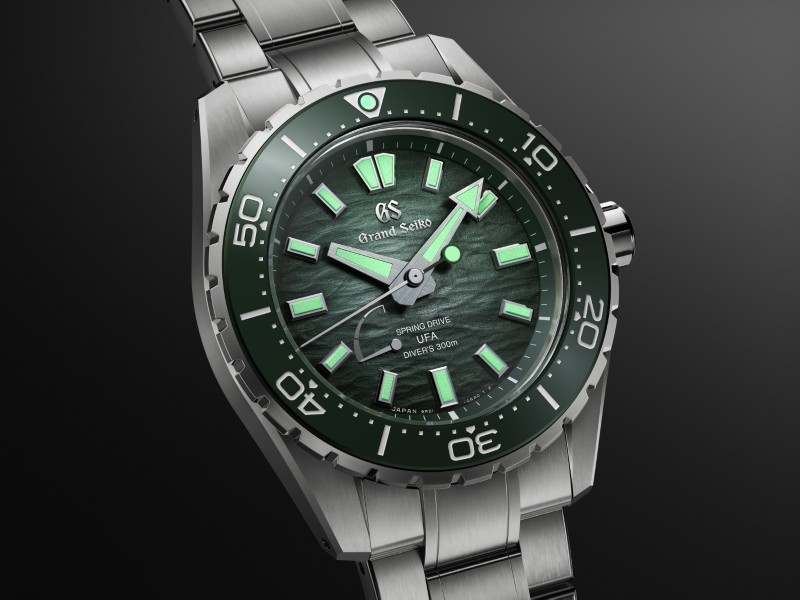
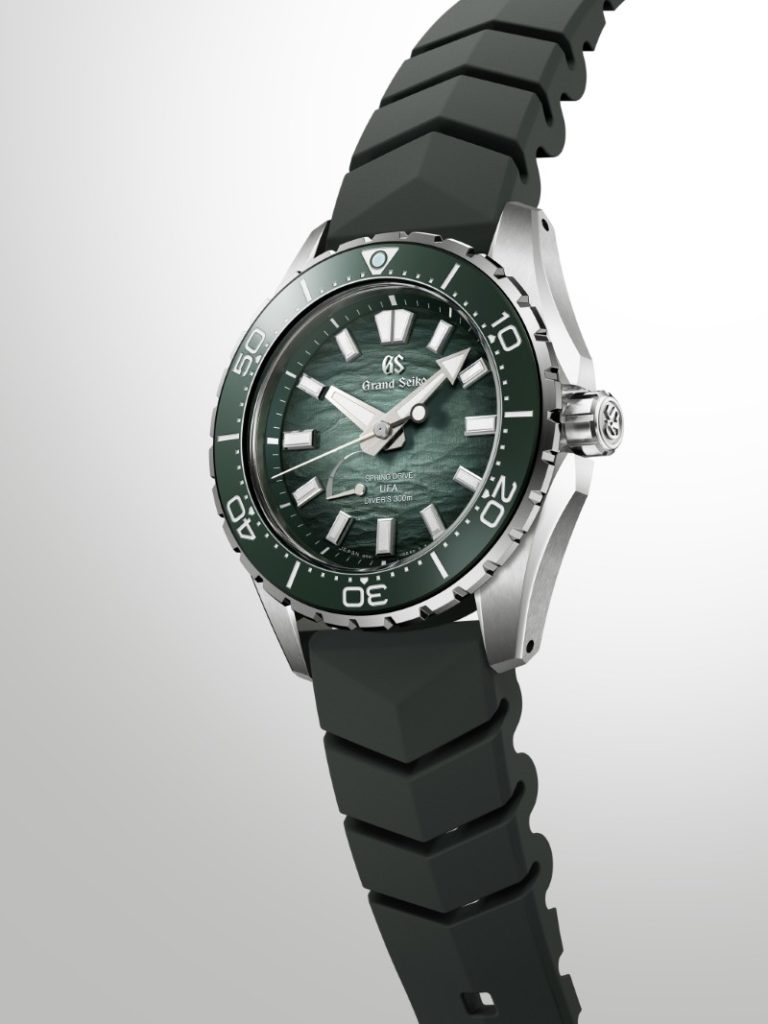
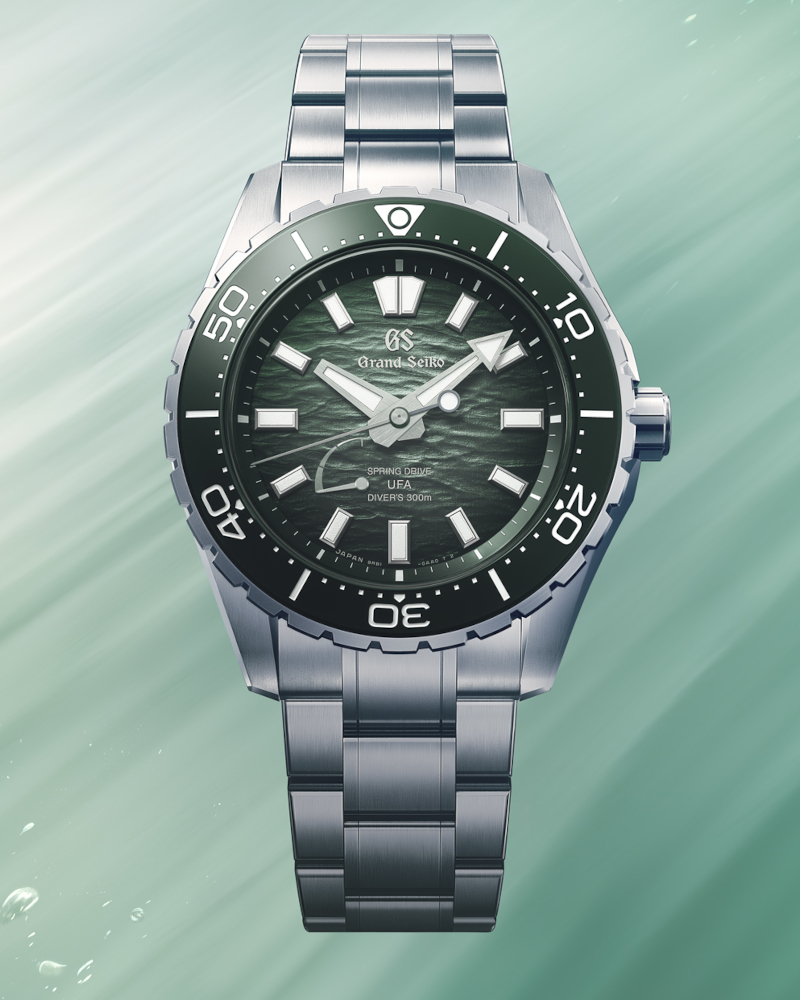
On paper, it may seem like the new Spring Drive U.F.A. Ushio 300 Diver is just a reduction in size for Grand Seiko dive watches. At 40.8 mm in diameter, it is the smallest dive watch in Grand Seiko's current lineup, and with its construction — both case and bracelet in High-Intensity Titanium — it is also possibly the most comfortable. It was last year that Grand Seiko first unveiled the U.F.A. designation, meaning Ultra Fine Accuracy, for their Spring Drive movements, and this year the movement powering this watch, the calibre 9RB1, follows nearly the same architecture, except that the power reserve indicator has been moved to the front of the watch and the date window has been removed. It relies on the signature Spring Drive mechanism, but to achieve higher accuracy the quartz oscillators have been aged for three months to allow the atomic particles of the crystal to arrange themselves into a more stable structure. This oscillator is still susceptible to temperature changes, so Grand Seiko also installed an integrated circuit to measure and compensate for variations. The difference is that in the U.F.A. version, both the oscillator and temperature sensor are vacuum-sealed in the same package, eliminating any micro-difference in temperature between the two and resulting in a highly accurate movement. As of now, the 9RB1 is capable of a precision of ±20 seconds per year. Additionally, there is now also a regulation switch that will allow after-sales service to correct any divergences in accuracy that may occur over long periods of use.
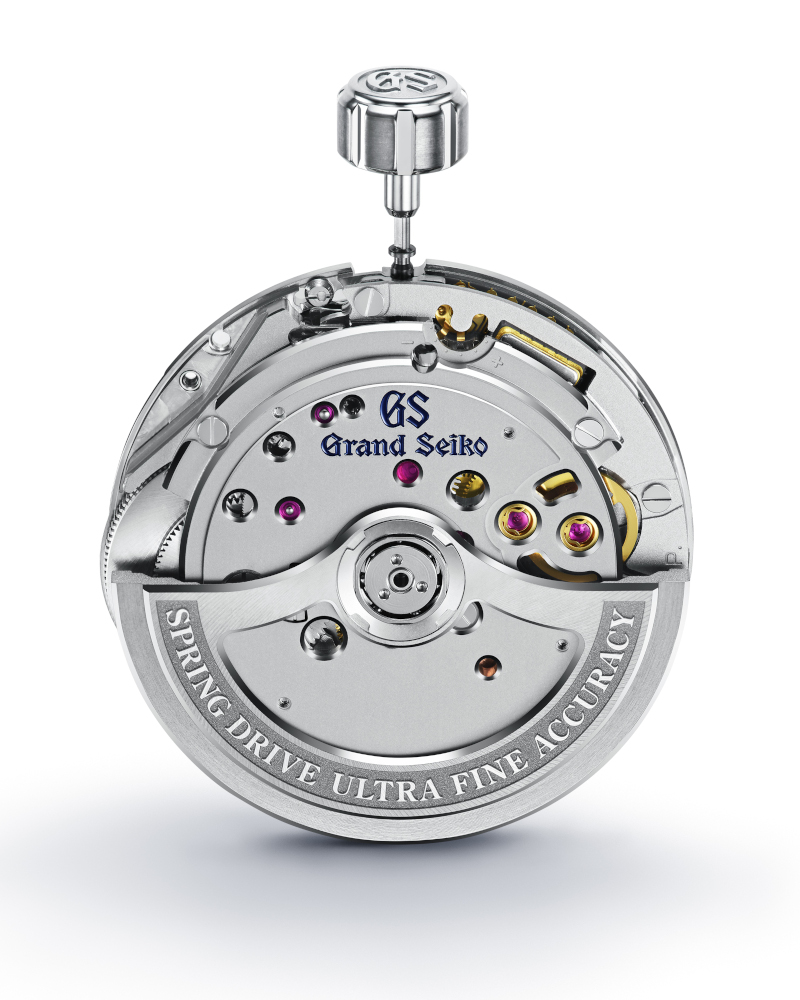
The real magic, however, is in how they have managed to shrink the size of the watch. Previous Spring Drive movements needed an anti-magnetic cage between the movement and the case to ensure that the movement was not affected by magnetic fields. With the 9RB1 movement, they have successfully removed this additional cage, meaning they could shrink the size of the watch case even though the movement remained relatively the same size. Instead of having a magnetic cage surround the movement, they created anti-magnetic plates integrated into the movement that shielded only the regulator components from magnetic fields. Another benefit of this new architecture is that they were able to reduce the height of the movement by also making the barrel thinner. To compensate for the thinner mainspring, they made the barrel larger, but because there was no longer an extra inner case needed for the anti-magnetism, the barrel could protrude slightly and have the extra girth absorbed by the case.
As always with Grand Seiko, it is only upon closer and longer inspection that a lot of the clever bits of design can be seen. Of course, the general principles behind making a dive watch are all there, like the unidirectional bezel, the extreme legibility, and the 300 m of water resistance. But there are also nuances of design that simply make sense for a diver. One is the entire reason the watch uses the 9RB1 instead of the 9RB2 that debuted with the U.F.A. last year — is the power reserve indicator that has been moved to the front. Where the 9RB2 pushed the power reserve indicator to the back to preserve visual purity on the dial, the 9RB1 purposefully brings the power reserve back to the front so divers can actively monitor whether their watch has power and thus will reliably continue running for the entirety of the dive.
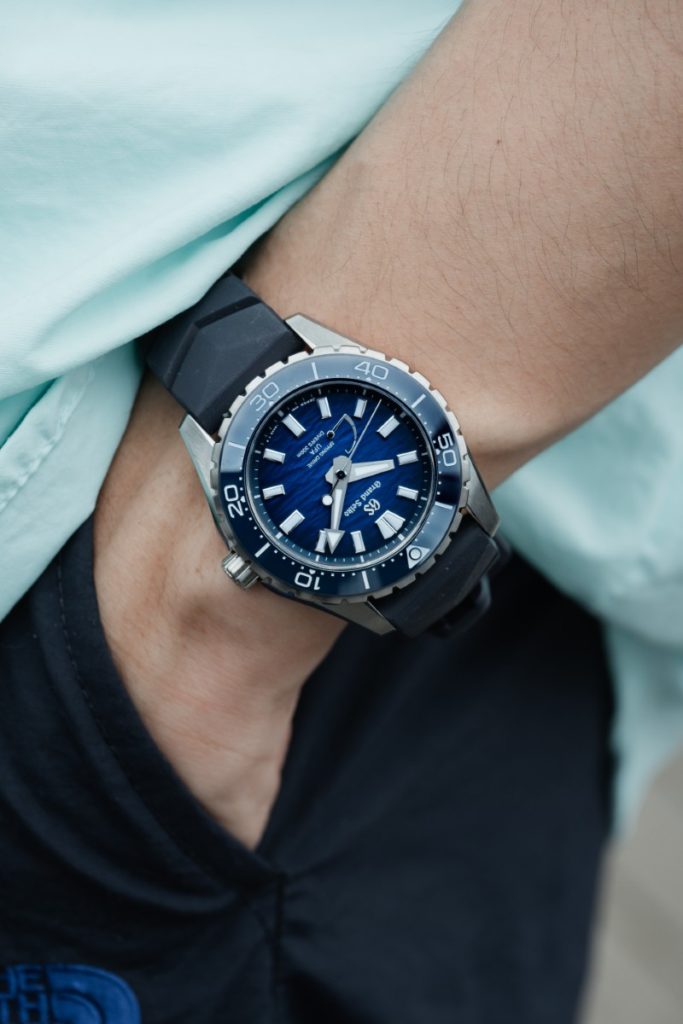
I'm also told that the technique for creating the dial is similar to that of the Lake Suwa model, but for the Ushio 300 Diver there is a special non-reflective finish applied to the dial to ensure there is no reflection to interfere with legibility. The clasp of the bracelet also hides many secrets. Like every good dive watch, the clasp has an extension feature that easily allows adjustments to wear over a wetsuit. But more than that, it has a new three-step micro-adjustment that gives the wearer an additional 6 mm of fine-tuning. Best of all, in my opinion at least, is a fantastic locking mechanism that allows the wearer to slide the GS logo on the clasp to lock it in place; a red bar appears when the logo is slid down, ensuring that the watch will stay secure on the wrist when it matters most.
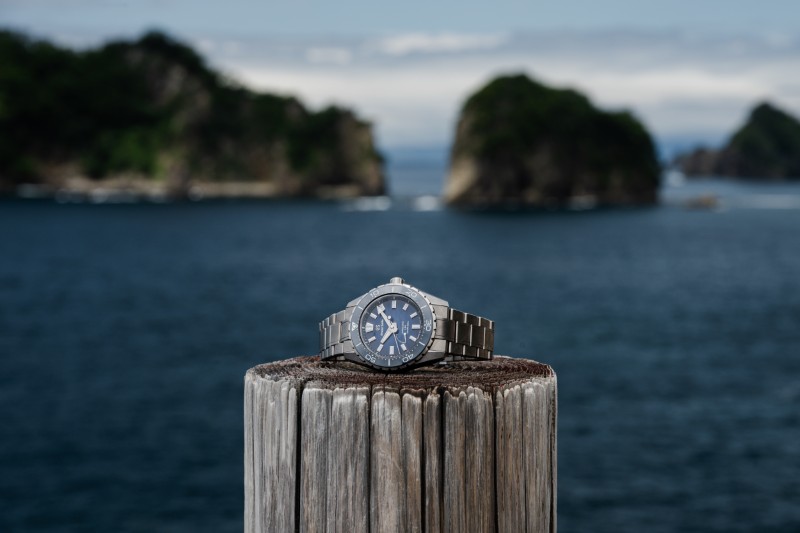
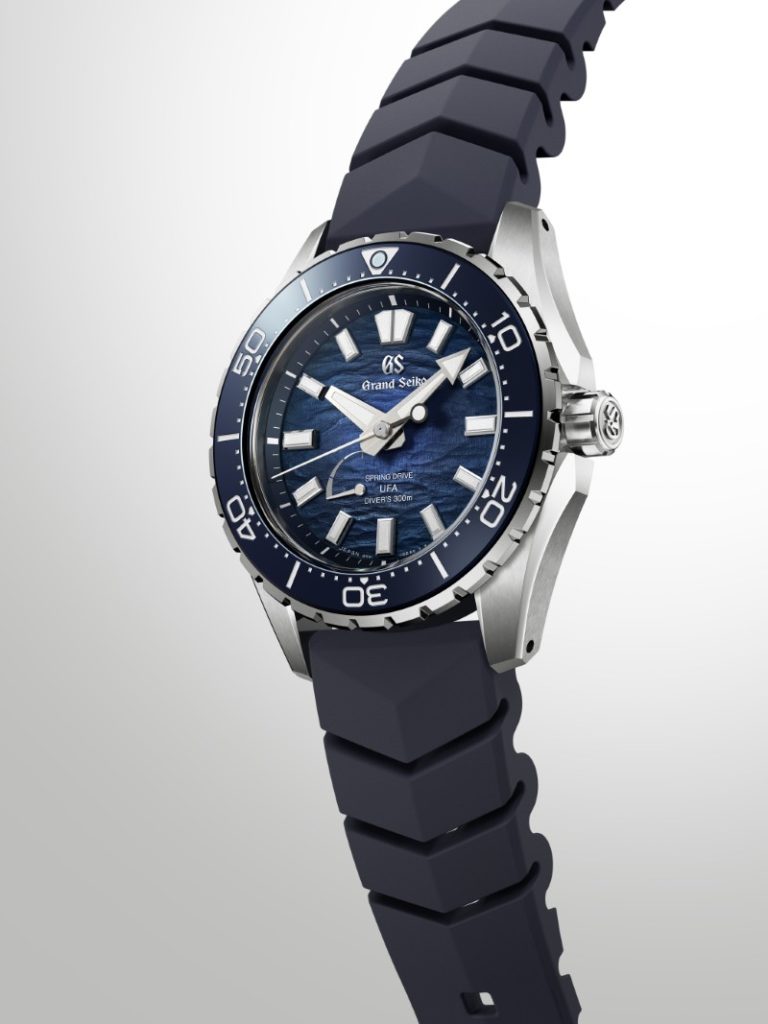
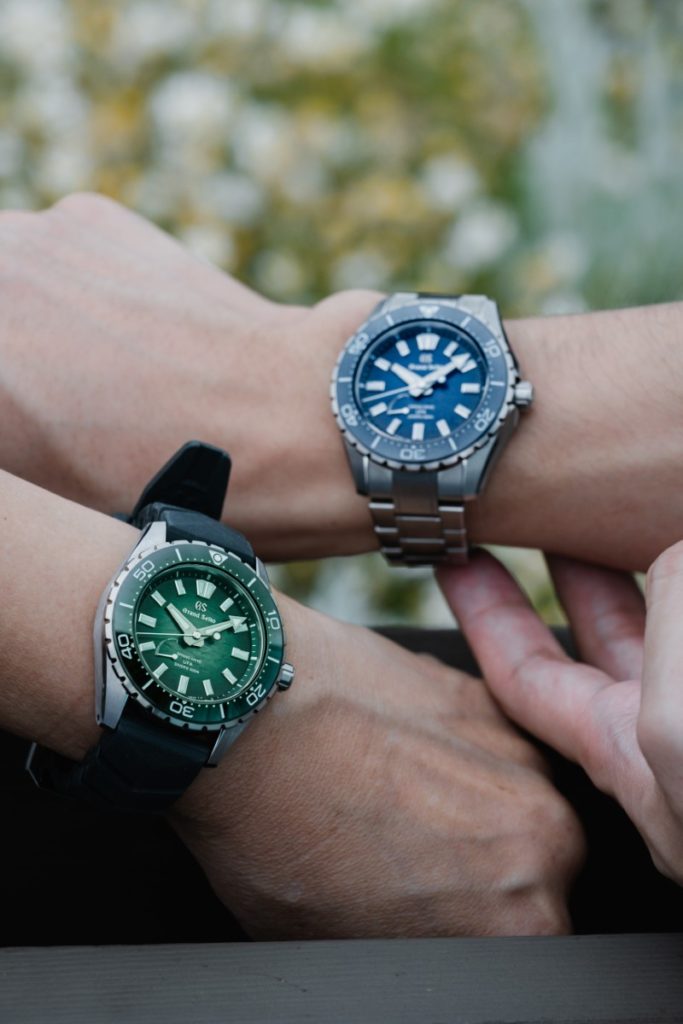
Finally, we come full circle, back to the part of the watch that serves as the most literal connection to the seas of Japan and the tides that shape its movement: the dial. The Spring Drive U.F.A. Ushio 300 Diver has two gorgeous dials meant to evoke the ocean. The blue reflects the more volatile aspects of the deep sea, while the green mirrors the shimmering tranquility of shallow coastal waters. Where the Lake Suwa dial has broader strokes, the Ushio version has smaller, more numerous grooves to mimic the stronger movement of the sea. According to the designers, the design for the Ushio dials was more complex than that of the Lake Suwa, so much so that they had to switch to a PVD process to plate the dial before lacquering, instead of painting. In any case, these dials are really gorgeous to look at, and they metaphorically conceal the technological powerhouse that is the 9RB1 movement, which provides the "current" that drives the Ushio 300 Diver.