Where Ceramic Meets the Sea: The Birth and Enduring Life of the Chanel J12
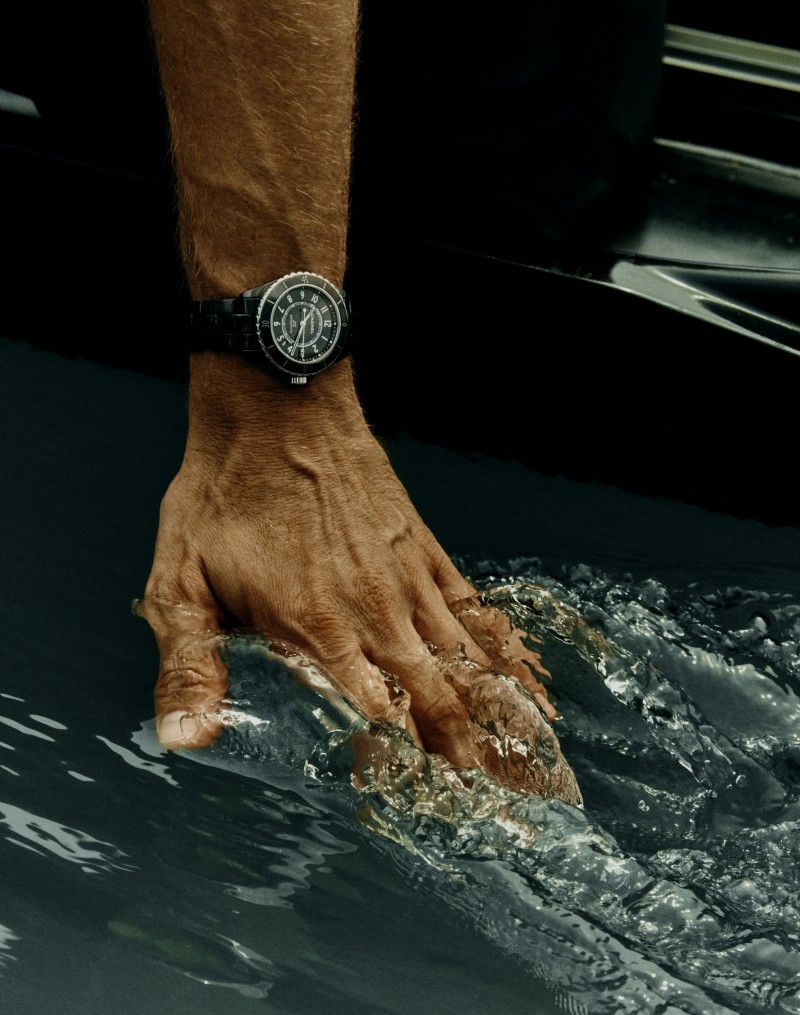
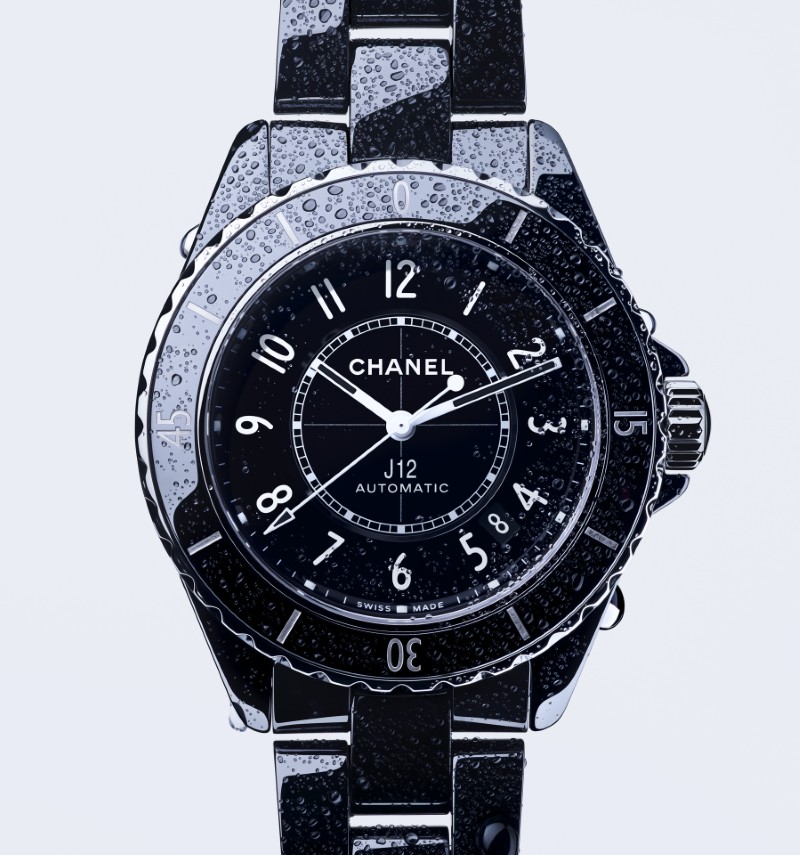
There's a reason Chanel's J12 has remained the house's watchmaking icon for over two decades: it did something no luxury watch had done before. When it launched in 2000, it was the first high-end timepiece made entirely from ceramic — a material choice that seemed almost inconceivable at the time, when steel and gold still ruled the category. More than 25 years on, the J12 still holds its iconic status, even when the entire watch industry seems to be jumping on the ceramic bandwagon. And the reason for this is perhaps that more than just the J12’s material choice, it is the watch’s source of inspiration, the ocean.
From Ulysses’ adventures to the solo crossings of great navigators, the ocean remains one of the most timeless sources of inspiration. This year, the storytelling surrounding the J12 leans into its original inspiration, going all the way back to its conception when racing yachts shaped the silhouette that Jacques Helleu, then Artistic Director of the House for Watches, first sketched more than twenty years ago. At the time the watch was forged in only a single colour, one that Mademoiselle Chanel liked to say, “which surpasses all” – black. It was chosen to satisfy the desire for simplicity and only ceramic could render such a perfectly monochrome result. Today however although the J12 is also available in white and blue and has a new matte finishing on some variants, its minimalistic ethos still remains.
“J12 was born from an act of radical creation. Without compromise or permission, it took hold like a revolution, challenging the traditional codes of watchmaking. This unbridled creation literally changed my perception of watches and was an inspiration to me. So much more than an icon, J12 is a manifesto of emancipation and audacity: it’s resistant to everything, especially trends.” Arnaud Chastaingt, Director, Watch Creation Studio, Chanel.
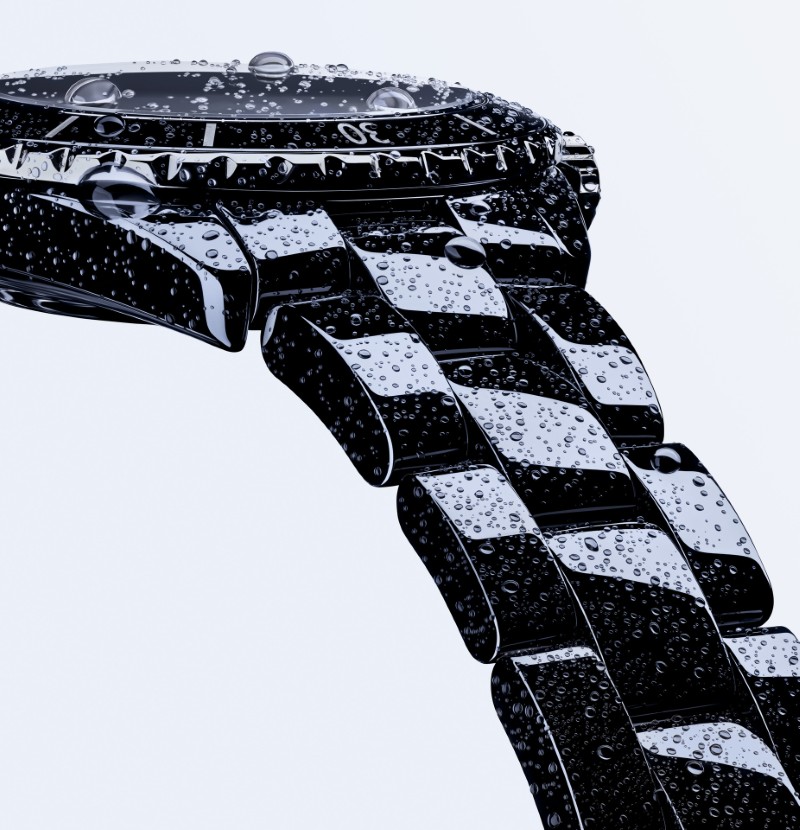
What also continues to set the J12 apart is the paradox at its core: a material that is simultaneously punishing and gentle. Chanel's ceramic is fired at temperatures exceeding 1,300°C at the brand's manufacture in La Chaux-de-Fonds, a process that gives it extraordinary resistance to scratches, corrosion, and the general wear of daily life. It emerges seven times more resistant than steel, yet lighter — and, notably, smooth against the skin in a way few hard materials manage. Chanel calls this contradiction "invincible softness," which is a poignant tagline to say that the J12’s greatest strength lies in its softness.
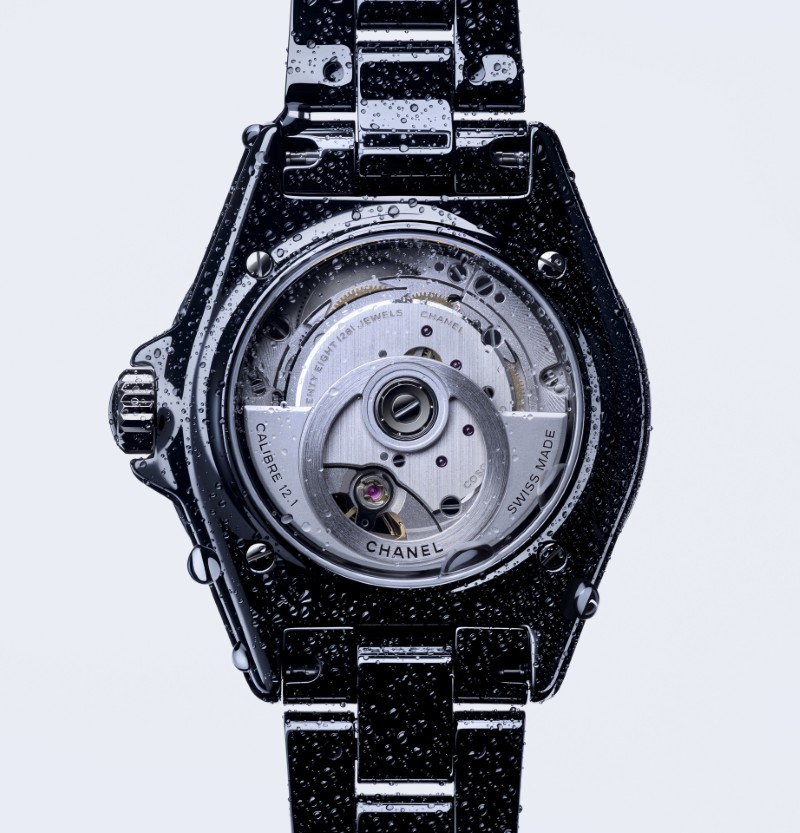
Underneath that ceramic case beats the Calibre 12.1, a self-winding movement assembled at the Kenissi manufacture, part-owned by Chanel. It's COSC chronometer-certified, delivers a 70-hour power reserve, and is visible through a sapphire case back — because for Chanel, a movement's underside deserves the same attention as its face. The circular, open-worked rotor, designed by Watch Creation Studio director Arnaud Chastaingt, turns with the unhurried precision of an observatory clock, its 191 components assembled by hand.
Available now in black, white, and the more recent addition of blue, the J12 remains water-resistant to 200 meters — a practical nod to the nautical world that inspired it, and a reminder that this is a watch meant to be worn hard, not simply admired from a case. More than two decades after its debut, the J12 still occupies an unusual position in watchmaking: an object born from a material experiment that became one of the most recognizable silhouettes in the industry, built on the idea that real durability and real elegance were never mutually exclusive.
The Bell & Ross BR-X3 Black Titanium finds a new sandbox with Defender Rally behind the wheel
What is a Bell & Ross watch doing in the sand? The brand has spent the better part of the last two decades convincing us that the staple Bell & Ross BR-03 was born in the skies and has every right to stay on the wrist of aviation professionals. This watch on the cover of our magazine, however, is not a BR-03. This watch represents the culmination of watchmaking savoir faire that Bell & Ross has garnered over more than 30 years of existence and is imbued with the brand’s signature X treatment, which vaults it over the traditional and into the realm of the avant-garde. This is the BR-X3.
So, what is a Bell & Ross doing in the sand? Quite simply, the BR-X3, with its more technical interpretation of watchmaking, inevitably expands its clientele. The evolution of a watch that started in the cockpit of a jet plane deserves a new playing field. And this is exactly what the watch is doing in the sand. With the announcement that Bell & Ross is now the Official Timing Partner of the Defender Rally team, which competes within the FIA World Rally-Raid Championship (W2RC) and the infamous Dakar Rally, Bell & Ross is getting its hands dirty playing in the mud and sand. But does all of this make sense for a brand like Bell & Ross, trading wings for wheels and flying so low to the ground? The exploration of the latest BR-X3 Black Titanium proves exactly why this partnership makes perfect sense and represents an exciting new frontier for this relatively young watch brand.
The Defender Dakar D7X‑R, derived from a Defender OCTA
HISTORY TAKES FLIGHT
Before the BR-X3 came the BR-03. And like with every great watch, it started with an idea. The idea came from co-founders Carlos Rosillo and Bruno Belamich to take the unique combination of a circle within a square, found on most instrument gauges in the cockpit of an aircraft, and turn it into a timepiece. Thus, the BR-01 was born. Arguably, although the brand had existed since 1994, the debut of the BR-01 in 2005 could be considered the birth of the “real” Bell & Ross, because it was from this singular idea inspired by aircraft cockpit instruments that went on to serve as the brand’s vehemently focused identity persisting until today.
Bell & Ross BR-X3 Black Titanium
When it was created, the BR-01 was unapologetic in its construction. From its inspiration as a tool, the watches were practically gargantuan at 46 mm in width. Remember, square watches tend to wear larger than their round counterparts. It was only in 2006 that Bell & Ross decided that it would shrink down the case shape to 42 mm with the BR-03. In 2023, the collection was further refined to 41mm and has since remained the profile that most modern fans of Bell & Ross are familiar with. Sadly, the BR-01 has since been discontinued, which relegated the task of enduring as the brand’s icon to the BR-03 collection. And endured it has.
The most basic model of the BR-03 has remained virtually unchanged in terms of aesthetics, but if you look at the brand’s collection today, there are myriad options to choose from, both in terms of functionality and design. And this, I think, is the real genius behind Bell & Ross: taking a single niche concept and evolving it into multiple collections within the brand. After all, if the watch stayed stagnant at its initial design with nothing else on display, I doubt they would be able to sell as many watches as they do today. As it stands in contemporary times, the BR-03 serves as the point of origin for Bell & Ross’ watches, and from that, they have distilled its essence into its most basic form—a circle within a square—and allowed it to take on whatever form abides by this ethos. There are BR-03 watches in all sorts of colours and case finishings, inspired by helicopters, inspired by space; there are skeleton versions of the BR-03, dive watches, and GMTs—the possibilities are near endless. Which brings us to X.
3 TO THE POWER OF X
I don’t consider the BR-X3 to be an evolution of the BR-03 because evolution implies a gradual change to the original form. The BR-03 Skeleton is an evolution of the BR-03, and in much the same way, the BR-05 also represents an evolution of the BR- 03, spinning off as a dressier version of the more utilitarian BR- 03 while still keeping the iconic circle-within-a-square DNA. The BR-X3, however, feels more like a supercharging of the BR-03. It takes the core ideology and removes all safety guardrails to create a hyper-technical reimagining of this watch.
The X treatment for the BR-X3 takes the collection to the next technical level in terms of watchmaking savoir faire. Although Bell & Ross is no stranger to complication—they have made plenty of tourbillons like the BR-X3 Tourbillon Micro-Rotor, and there was even once a series of skull automatons—these are mostly limited editions made in small batch runs. To produce a complicated watch as a production model, however, requires a different set of manufacturing capabilities before it can become commercially viable.
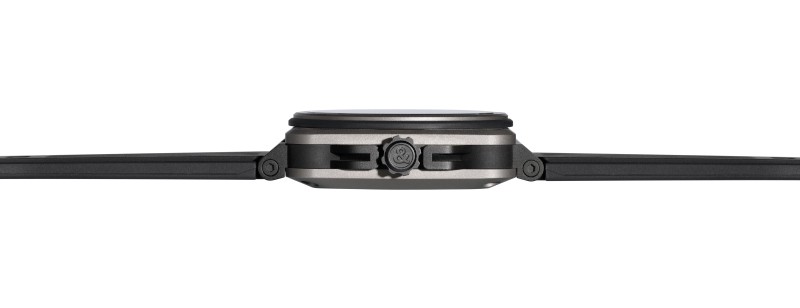
The case of the BR-X3 Black Titanium was created with a multi-component, multi-layered, and multi-material structure. “Two grey titanium plates—top and bottom—hold all components together. The black colour of the strap continues through the case, forming a black band that runs between the two grey titanium layers,” explains Bruno Belamich, Creative Director and Co-Founder of Bell & Ross. “This multi-layer design lets us mix materials, colours, and finishes.” The downside of such a complicated case structure is that the manufacturing process also becomes a lot more intense. There are more parts to machine; each component, especially the smaller ones, requires machining to higher tolerances. And on top of that, with more components, there are more openings that need to be properly sealed to ensure the waterproofness of the watch. But the results are well worth it when you have a case that feels this sophisticated.
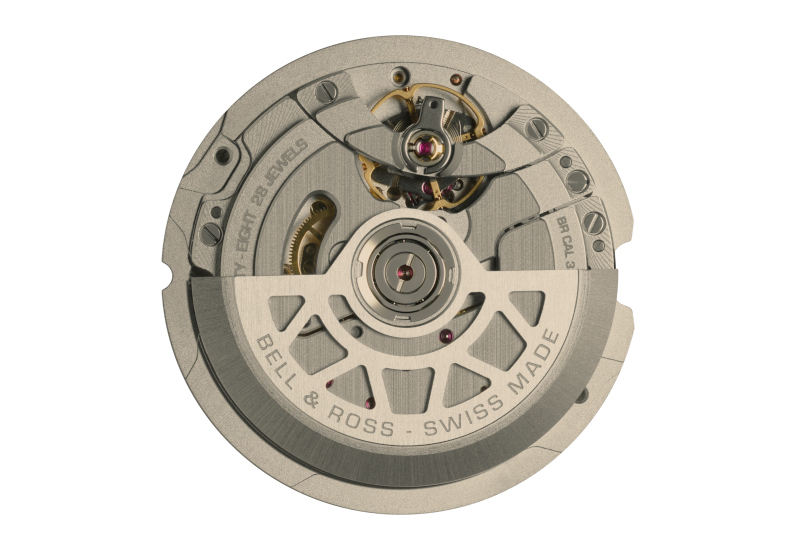
In many ways, the BR-X3 feels like it was designed for the watch enthusiast. The more complex case is one thing, but even the dial is built with a visual symmetry that will satisfy the watch nerds who often complain about the position of date windows. And this was made possible only because the movement, the Calibre BR-CAL.323, was specially developed for Bell & Ross. Just as an explanation, unless a brand has in-house manufacturing capabilities, most movements are sourced from movement makers like Sellita or, before they stopped supplying to non-Swatch Group companies, ETA. And these are usually complete movements or ébauches that allow the buyer to modify or finish and assemble them themselves. This means the watches that use these movements will somehow have to conform to the specifications, limiting their freedom in design. For the Calibre BRCAL. 323, on the other hand, it was made specifically for Bell & Ross by the movement maker Kenissi. This allowed Bell & Ross to imagine the watch first and then have the movement made to the specification of its design.
To the general consumer, having a manufacture movement probably doesn’t affect the buying decision, but for watch enthusiasts this definitely tips the scale in one way or another—especially once knowing that Kenissi also manufactures movements for quite a number of prestigious brands. One of the reasons Bell & Ross has access to Kenissi’s movements comes in part from the fact that Chanel, which owns a stake in Bell & Ross, also has a 20 per cent minority stake in Kenissi since 2018. And the fact that these movements are chronometers certified by the COSC adds value for those concerned with the precision of these mechanical timepieces, namely its -4/+6 seconds deviation rate per day.
PLAYING IN THE SAND
Upon understanding how the BR-X3 is different in almost every way from the BR-03 except for its core philosophy, it suddenly starts to make sense why Bell & Ross decided that it needed a new playground to call its own. This is where the partnership with the Defender Rally team comes in. On paper, Bell & Ross is the Official Timing Partner of Defender Rally, but realistically the bigger value of this partnership comes from being able to put the BR-X3 in an environment that will accentuate all the elements that Bell & Ross have worked into the timepiece.
Defender Rally is a new team competing in the FIA World Rally-Raid Championship (W2RC). And just to set the scene if you are unfamiliar with Rally-Raid: it is a long-distance off-road endurance motorsport that often takes place in the desert. Where the traditional rally takes place over dozens of kilometres, Rally- Raid is raced in stages several hundreds of kilometres long. The infamous Dakar Rally opens the W2RC, and over the course of the year there are additional stages around the world that the teams have to complete as they vie for the championship. Imagine driving hundreds of kilometres in the desert with nothing but a roadbook with distance data, symbols, and arrows. If anything happens, teams have to manage mechanical failures and repairs in the field, putting those successful in this sport at the epitome of reliability and speed and also highlighting the bond between man and machine. These are qualities that the BR-X3 definitely identifies with.
Fittingly, the partnership with the Defender Rally Team will see Bell & Ross equip the members with the BR-X3 Black Titanium as they test their mettle in the blazing heat of the desert. The starting race of the W2RC calendar, the Dakar Rally, was the perfect proving ground for precision, robustness, and legibility— three key pillars of Bell & Ross. According to Carlos Rosillo, Cofounder & CEO of Bell & Ross, “The Dakar Rally is a symbol of boldness, exploration and pushing beyond one’s limits — values that lie at the very heart of Bell & Ross’ DNA. The BR-X3 Black Titanium, with its iconic ‘circle within a square’ design, perfectly embodies this philosophy: precision, legibility and robustness in the most extreme conditions. We are proud to partner with Defender Rally, a team that shares our passion for adventure and our commitment to performance, and to see our watches accompany the drivers throughout this iconic race.”
With only 18 months of development, Defender Rally entered the 2026 Dakar Rally with a modified Defender OCTA called the Defender Dakar D7X-R and, during this race, won the new Stock class category and every single stage of the Dakar Rally. As the drivers celebrated, the watch sat quite clearly at home in this environment on their wrists.
Rokas Baciuška celebrates his win with the Bell & Ross BR-X3 Black Titanium seen clearly on his wrist
Regardless of the partnership, the BR-X3 Black Titanium is definitely a robust piece of equipment. Whether it be out in the desert, in harsh jungle terrain, or just accompanying its wearer through the perils of a workday, the watch is built to withstand punishment. The titanium material means it remains light and comfortable on the wrist, while the legibility makes reading time quite intuitive. What we did appreciate about the piece as well is the availability of a power reserve indicator on the dial side of the watch. The gauge, cleverly incorporated as part of the watch’s design language, indicates all 70 hours of the watch’s power reserve so its wearer will never be caught off guard.
It is funny how even though the BR-X3 represents a bit of a departure from the hardcore aviation inspiration that Bell & Ross was founded upon, its position at the very stratosphere of sophistiation in the BR-03 Professional Collection means it is still very much flying high. What we love about the BR-X3 is also the possibilities it affords the brand. Its technical construction means the opportunities for material experimentation are quite vast. The BR-X3 Black Titanium is, of course, made with titanium components, but there is also a version in steel and anodised aluminium bits, and even more crazy is the BR-X3 Night Vision that merges luminescent material with carbon fibre directly on the case. The BR-X3 collection feels like a licence for Bell & Ross to go beyond their well-rehearsed design language to experiment with concepts and complications that won’t necessarily be found in their “bread and butter” models. And, with freedoms such as these, it is often said, the sky is the limit…
Watching The Waves: We get a feel for the Grand Seiko Spring Drive U.F.A. Ushio 300 Diver in Izu
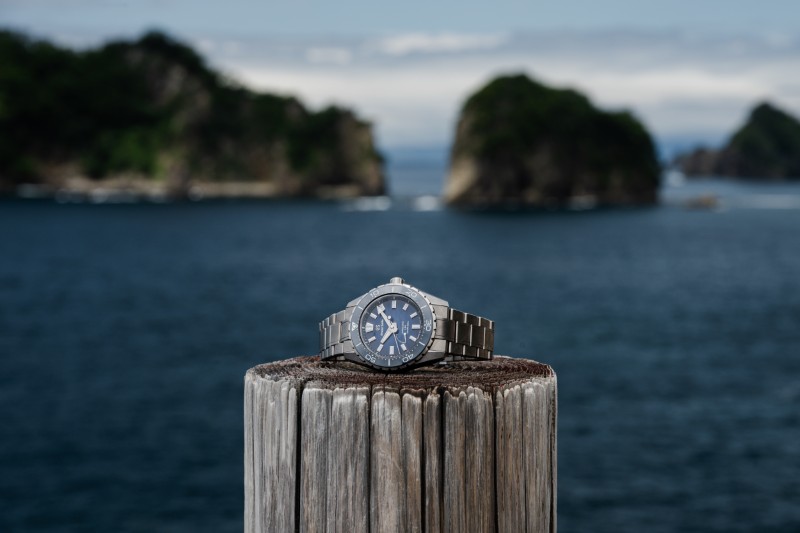
Imagine, if you will, the sun slowly setting as you stand atop a sheer cliff on the Izu peninsula, overlooking Suruga Bay. As the waves crash into the limestone rock below, you catch a rare glimpse of a herd of deer peering out from the fringes of the forest, the stag looking majestically at your party before disappearing into the treeline. Then dark clouds roll in, and a fine rain begins to mist Koganezaki Park. And just when you think to call it a day, all of a sudden the clouds part, letting radiant rays of sunlight hit the ocean such that a million little lights dance on the surface. And with the moisture and the sun, a double rainbow appears.
I wish I were capable of such works of fiction, but this indeed did happen near the last day of a trip I recently took with Grand Seiko to Izu. It felt more like providence than coincidence. You always hear about how the Japanese revere their natural elements, waxing lyrical in haiku and literature, painting scenery on paper, and, in the case of Grand Seiko, using nature as inspiration for their dials, and after spending a few days in Izu, I get it. I mean, how could you not?
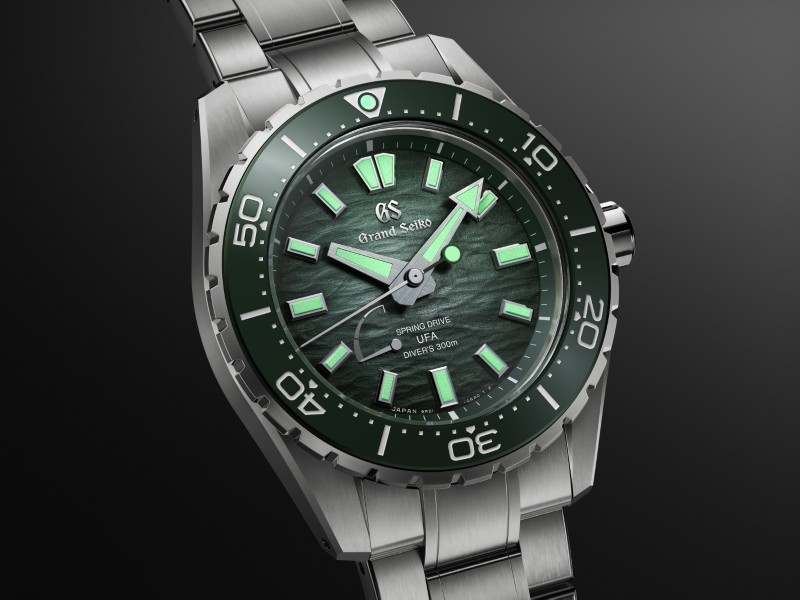
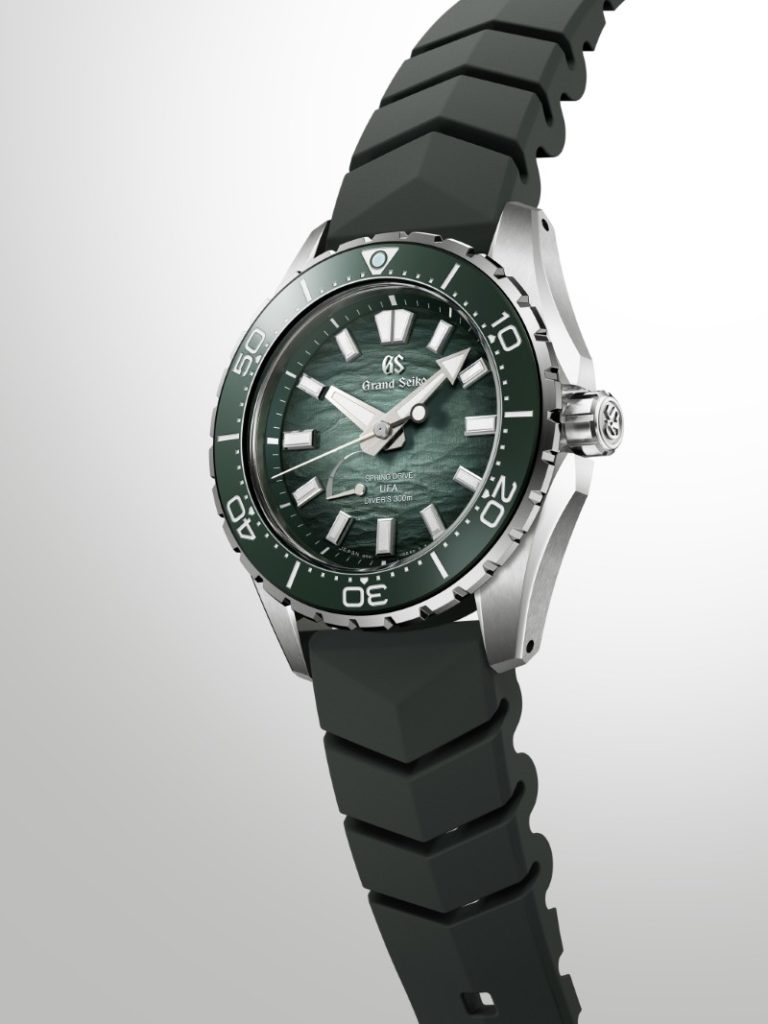
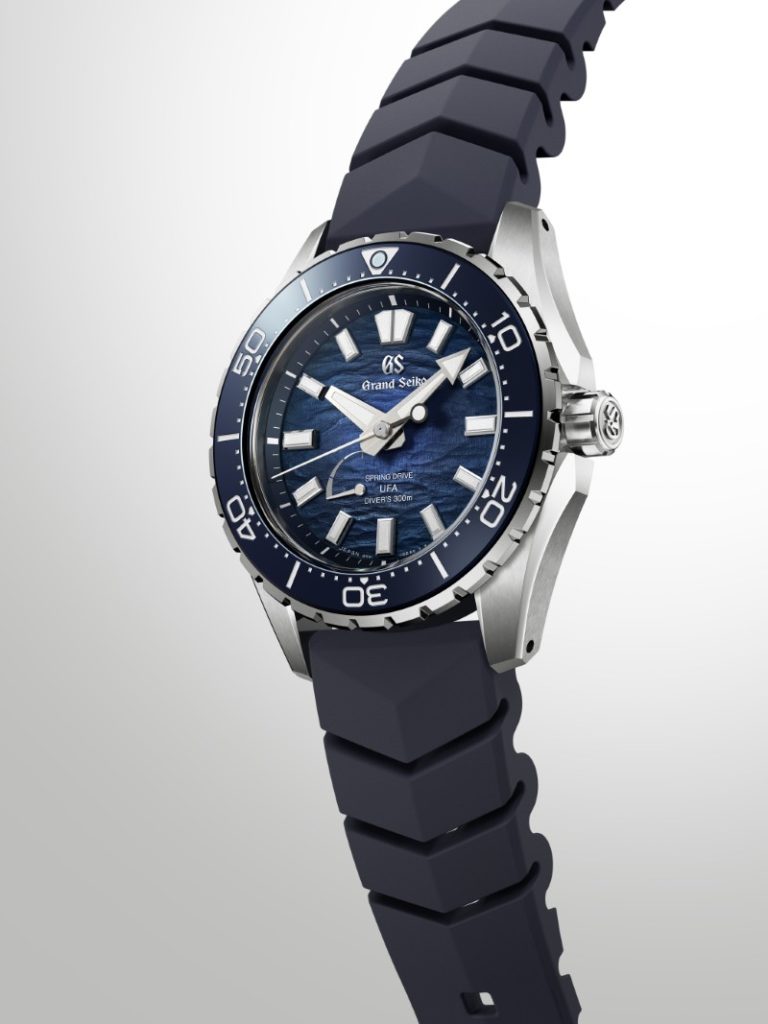
The reason I was with Grand Seiko in Izu was to understand their latest Ushio 300 Diver in a way that one simply cannot within the confines of a 30-minute slot during Watches & Wonders Geneva. The idea was to live and breathe the elements that inspired this watch. The term Ushio means "current" in Japanese, and with Japan being an island nation, there was no shortage of places to make this connection. They chose the Izu peninsula, however, because it represents the confluence of two ocean currents: the Kuroshio, which brings warm water from the south, and the Oyashio, which brings cold water from the north. In many ways it is fitting that the new SLGB023 and SLGB025 were named after the Japanese word for currents, because, like currents, which are often a hugely powerful force that can barely be seen from the surface, these new dive watches from Grand Seiko may seem like a simple reduction in size but actually harbour some seriously incredible watchmaking innovations.
Before we "dive" into further details of the watch, however, one must first understand why the Japanese are devoutly respectful of nature. On the long train ride aboard the Odoriko (which translates to "a female dancer" and was apparently inspired by the short story Dancing Girl of Izu, written by the Nobel Prize–winning author Yasunari Kawabata) from Tokyo to Izu — yes, I know the life of a journalist can be tough — I got to pondering. There is no other culture in the world that does this, as far as I know. Where most of the world goes by four seasons, the Japanese break the year down into as many as 72 micro-shifts in season.
Japan sits at the complex meeting point of four major tectonic plates, including the Pacific Plate, the Philippine Sea Plate, the Eurasian Plate, and the North American Plate, not to mention its position on the Pacific Ring of Fire. Powerful natural occurrences like earthquakes and volcanoes force the inhabitants of Japan to understand that they are cohabiting with nature rather than in control of it. This reverence for nature could have also stemmed from native Shinto teachings, where it is said that kami, or spirits, inhabit natural elements like ancient trees, mountains, waterfalls, and rocks. In any case, the beauty of nature in Japan is hard to ignore, which is probably why the designers at Grand Seiko spend their time watching the early morning sun as it hits Mount Iwate, staring at the white birch trees as the seasons change, watching the surface of Lake Suwa and noting its beauty whether in daytime or at night, or, more relevant to this story, watching the sea and wondering about the currents that shape its ecosystem.
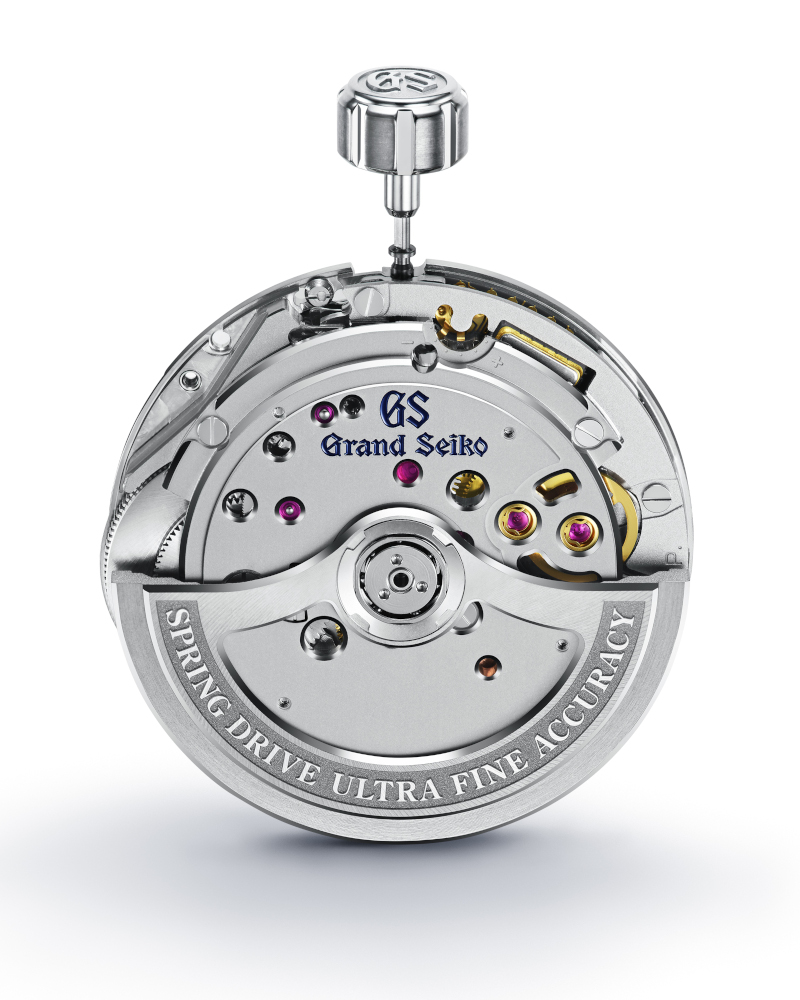
On paper, it may seem like the new Spring Drive U.F.A. Ushio 300 Diver is just a reduction in size for Grand Seiko dive watches. At 40.8 mm in diameter, it is the smallest dive watch in Grand Seiko's current lineup, and with its construction — both case and bracelet in High-Intensity Titanium — it is also possibly the most comfortable. It was last year that Grand Seiko first unveiled the U.F.A. designation, meaning Ultra Fine Accuracy, for their Spring Drive movements, and this year the movement powering this watch, the calibre 9RB1, follows nearly the same architecture, except that the power reserve indicator has been moved to the front of the watch and the date window has been removed. It relies on the signature Spring Drive mechanism, but to achieve higher accuracy the quartz oscillators have been aged for three months to allow the atomic particles of the crystal to arrange themselves into a more stable structure. This oscillator is still susceptible to temperature changes, so Grand Seiko also installed an integrated circuit to measure and compensate for variations. The difference is that in the U.F.A. version, both the oscillator and temperature sensor are vacuum-sealed in the same package, eliminating any micro-difference in temperature between the two and resulting in a highly accurate movement. As of now, the 9RB1 is capable of a precision of ±20 seconds per year. Additionally, there is now also a regulation switch that will allow after-sales service to correct any divergences in accuracy that may occur over long periods of use.
The real magic, however, is in how they have managed to shrink the size of the watch. Previous Spring Drive movements needed an anti-magnetic cage between the movement and the case to ensure that the movement was not affected by magnetic fields. With the 9RB1 movement, they have successfully removed this additional cage, meaning they could shrink the size of the watch case even though the movement remained relatively the same size. Instead of having a magnetic cage surround the movement, they created anti-magnetic plates integrated into the movement that shielded only the regulator components from magnetic fields. Another benefit of this new architecture is that they were able to reduce the height of the movement by also making the barrel thinner. To compensate for the thinner mainspring, they made the barrel larger, but because there was no longer an extra inner case needed for the anti-magnetism, the barrel could protrude slightly and have the extra girth absorbed by the case.
As always with Grand Seiko, it is only upon closer and longer inspection that a lot of the clever bits of design can be seen. Of course, the general principles behind making a dive watch are all there, like the unidirectional bezel, the extreme legibility, and the 300 m of water resistance. But there are also nuances of design that simply make sense for a diver. One is the entire reason the watch uses the 9RB1 instead of the 9RB2 that debuted with the U.F.A. last year — is the power reserve indicator that has been moved to the front. Where the 9RB2 pushed the power reserve indicator to the back to preserve visual purity on the dial, the 9RB1 purposefully brings the power reserve back to the front so divers can actively monitor whether their watch has power and thus will reliably continue running for the entirety of the dive.
I'm also told that the technique for creating the dial is similar to that of the Lake Suwa model, but for the Ushio 300 Diver there is a special non-reflective finish applied to the dial to ensure there is no reflection to interfere with legibility. The clasp of the bracelet also hides many secrets. Like every good dive watch, the clasp has an extension feature that easily allows adjustments to wear over a wetsuit. But more than that, it has a new three-step micro-adjustment that gives the wearer an additional 6 mm of fine-tuning. Best of all, in my opinion at least, is a fantastic locking mechanism that allows the wearer to slide the GS logo on the clasp to lock it in place; a red bar appears when the logo is slid down, ensuring that the watch will stay secure on the wrist when it matters most.
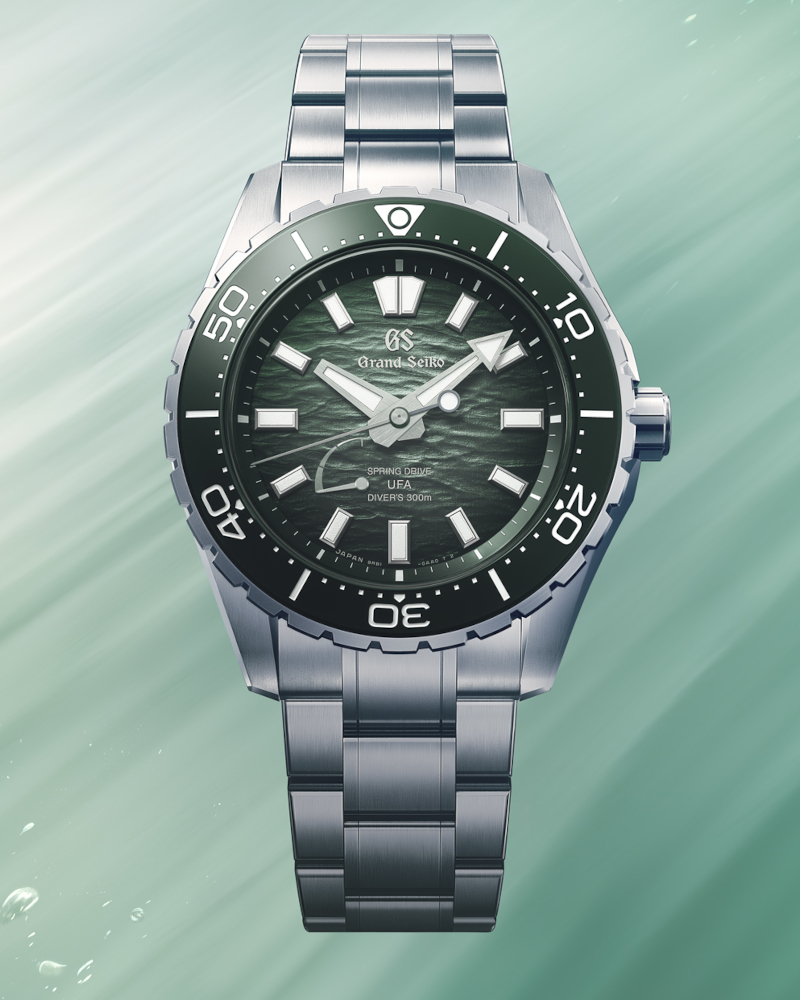
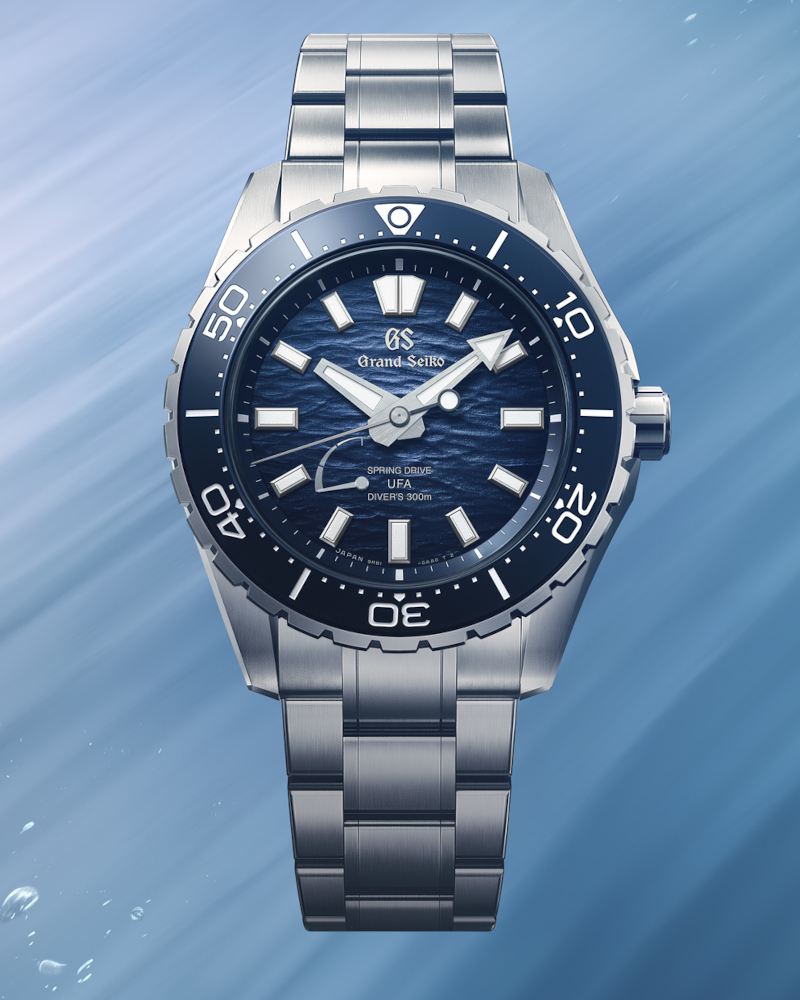
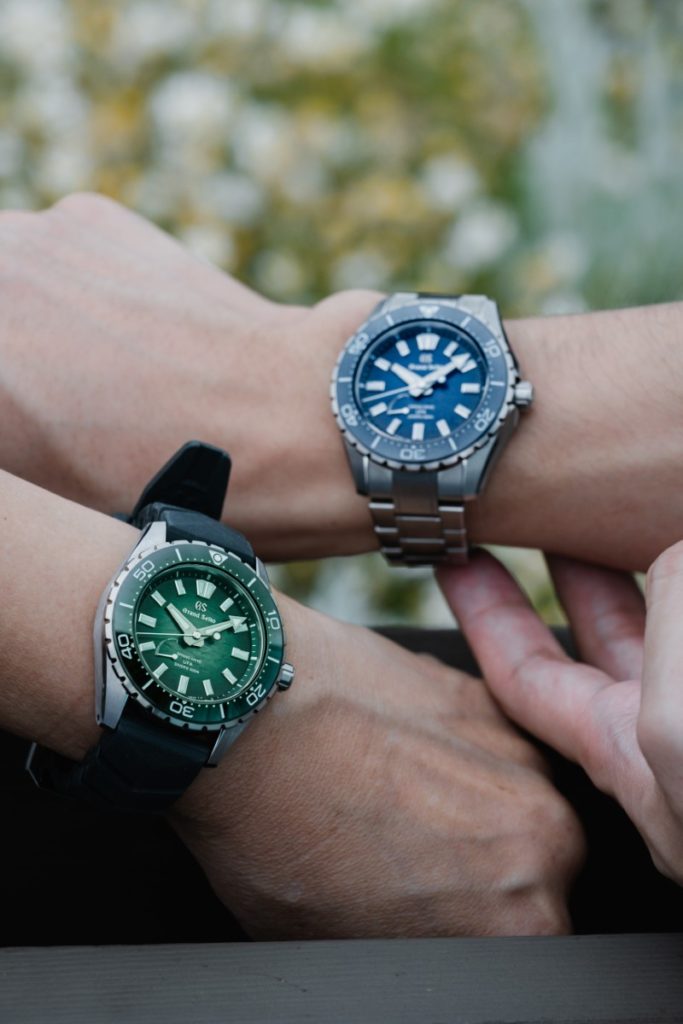
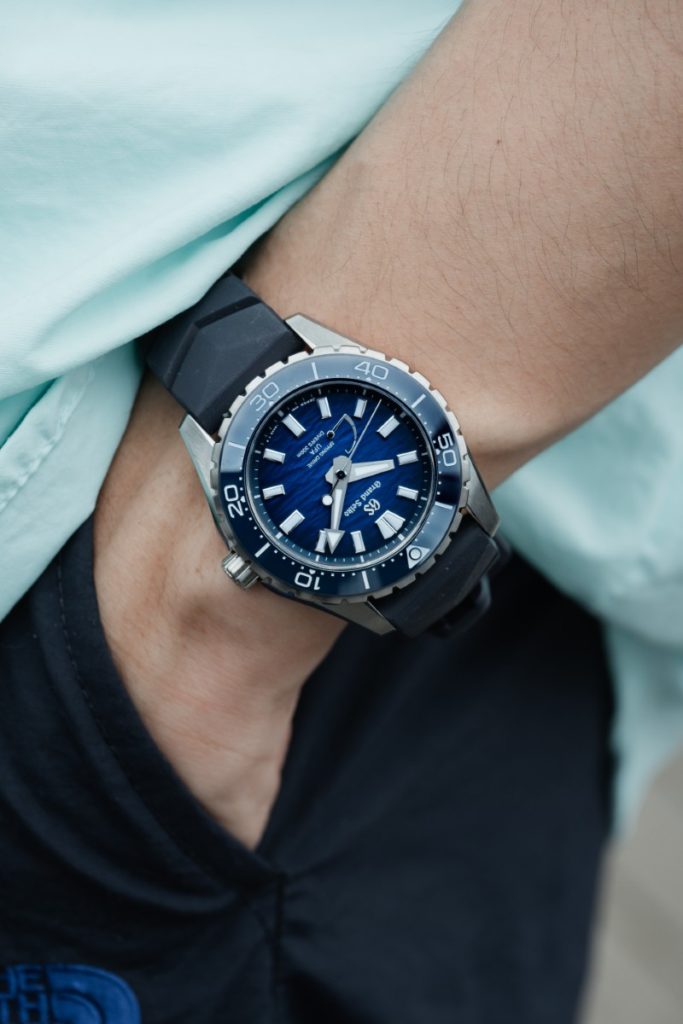
Finally, we come full circle, back to the part of the watch that serves as the most literal connection to the seas of Japan and the tides that shape its movement: the dial. The Spring Drive U.F.A. Ushio 300 Diver has two gorgeous dials meant to evoke the ocean. The blue reflects the more volatile aspects of the deep sea, while the green mirrors the shimmering tranquility of shallow coastal waters. Where the Lake Suwa dial has broader strokes, the Ushio version has smaller, more numerous grooves to mimic the stronger movement of the sea. According to the designers, the design for the Ushio dials was more complex than that of the Lake Suwa, so much so that they had to switch to a PVD process to plate the dial before lacquering, instead of painting. In any case, these dials are really gorgeous to look at, and they metaphorically conceal the technological powerhouse that is the 9RB1 movement, which provides the "current" that drives the Ushio 300 Diver.
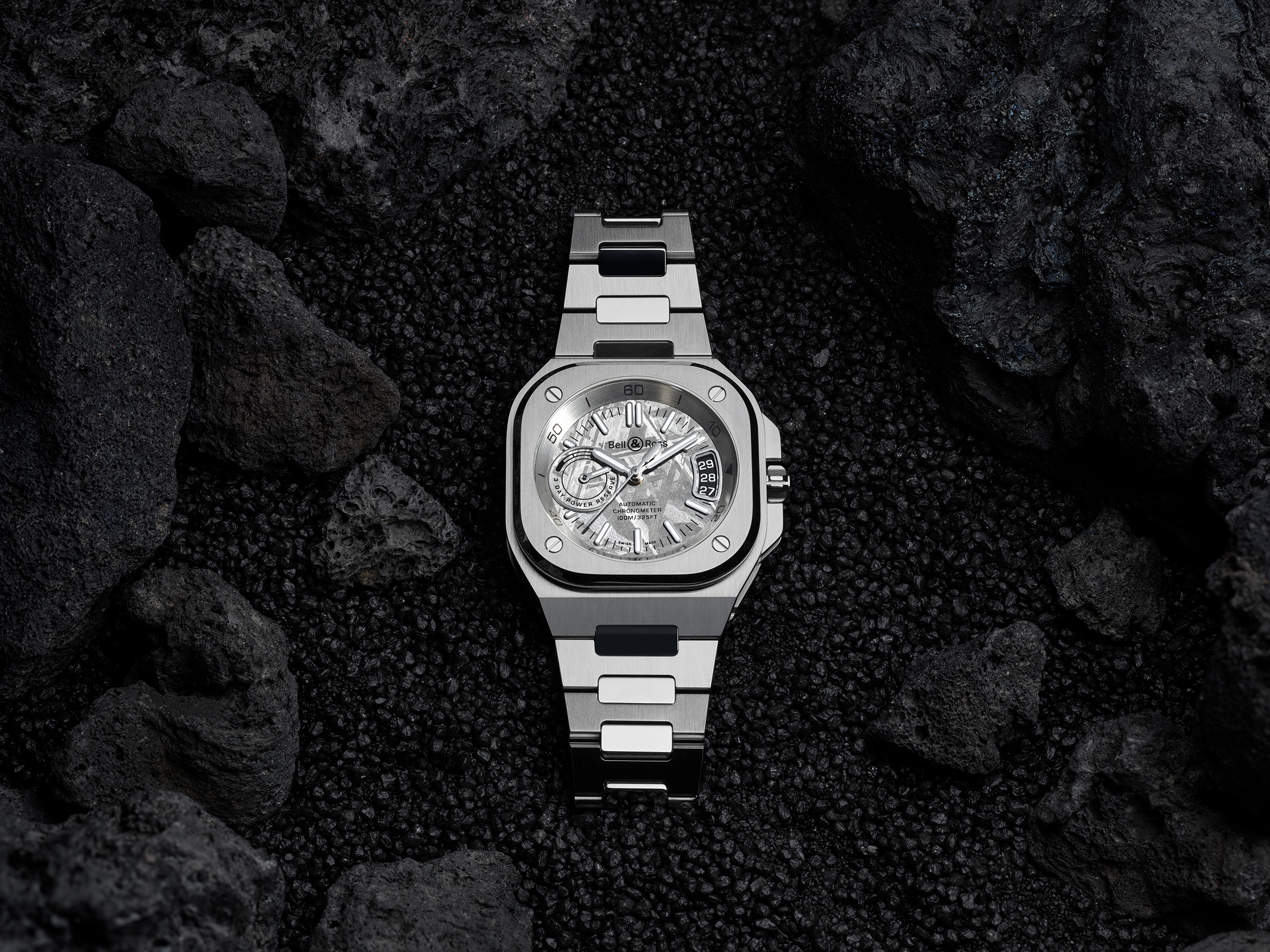
Bell & Ross Puts A Piece of Space on the New BR-X5
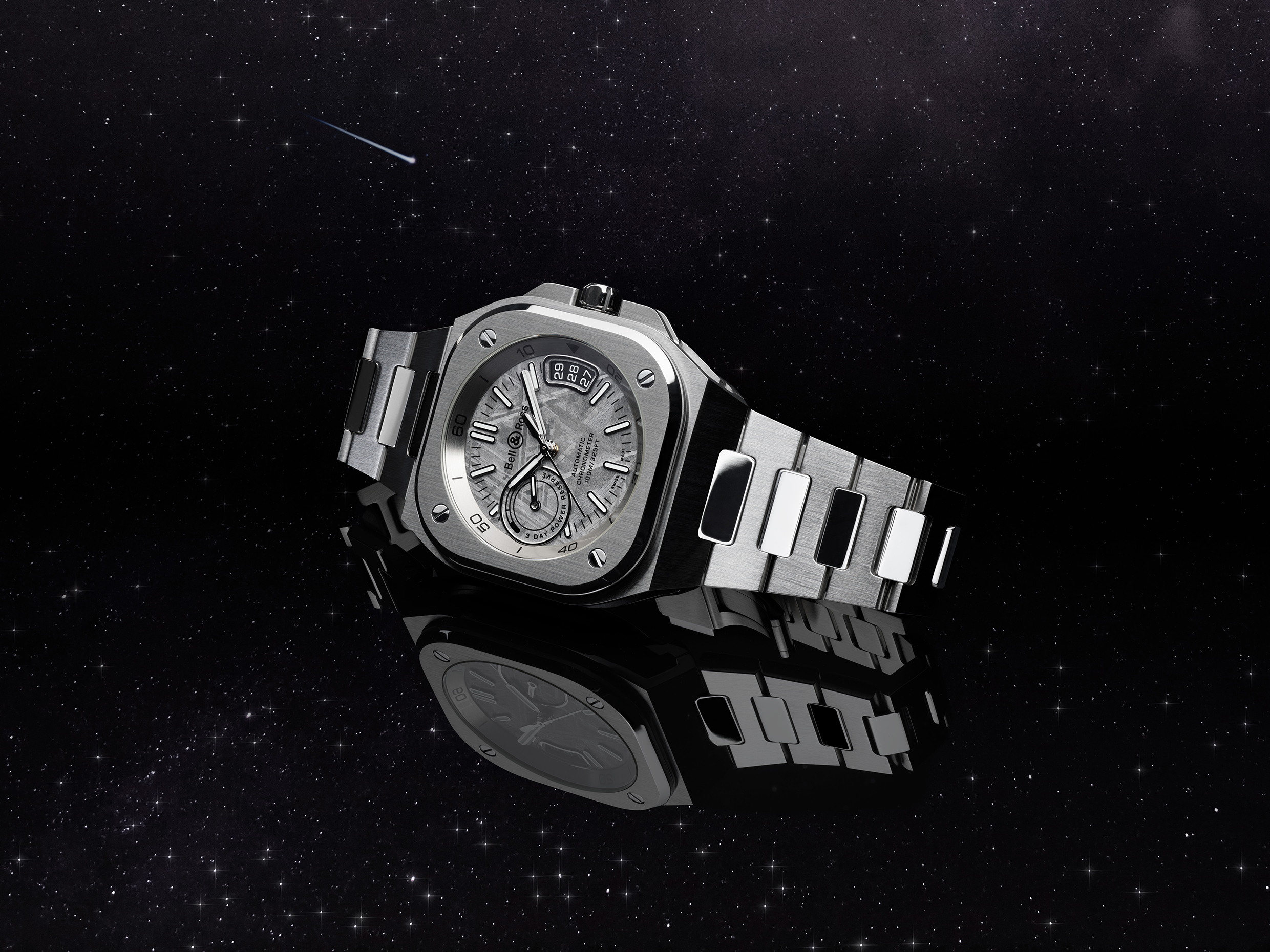
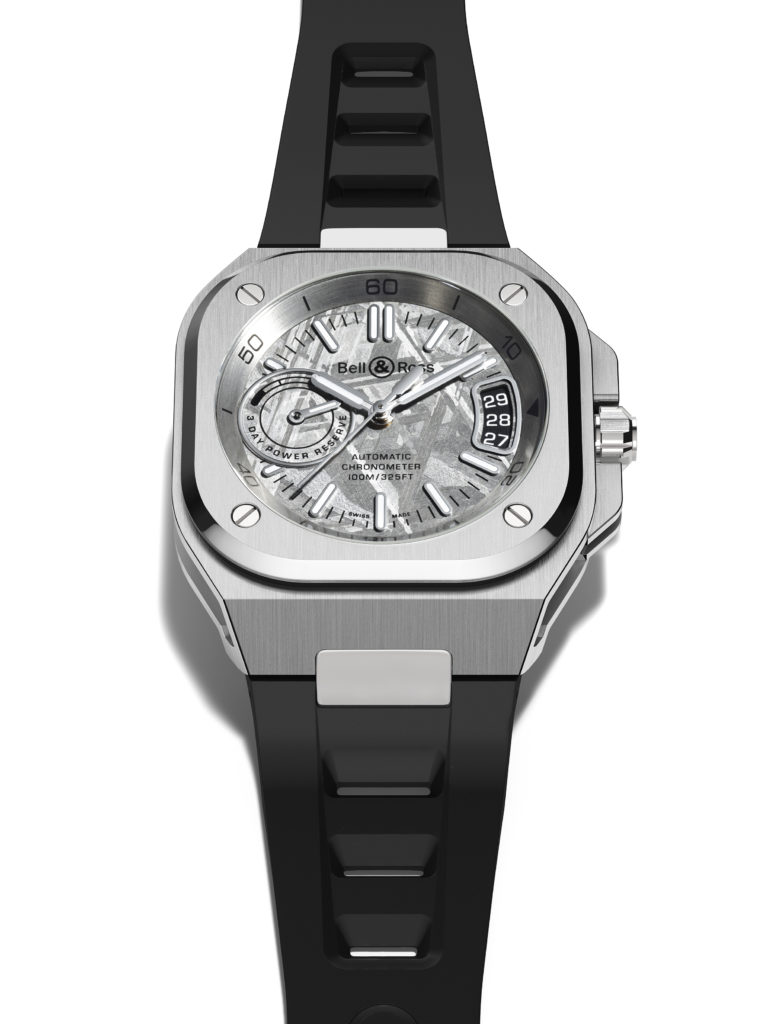
Since its debut in 2022, the BR-X5 has carved out its own lane within Bell & Ross's lineup: a multi component, multi material proposition that trades the brand's famous aviation inspiration for something more architectural and technical, aimed squarely at collectors who want their watches to look like precision instruments rather than dress accessories. The Meteorite edition pushes that identity further by pairing Swiss manufacture watchmaking with a material no factory can replicate.
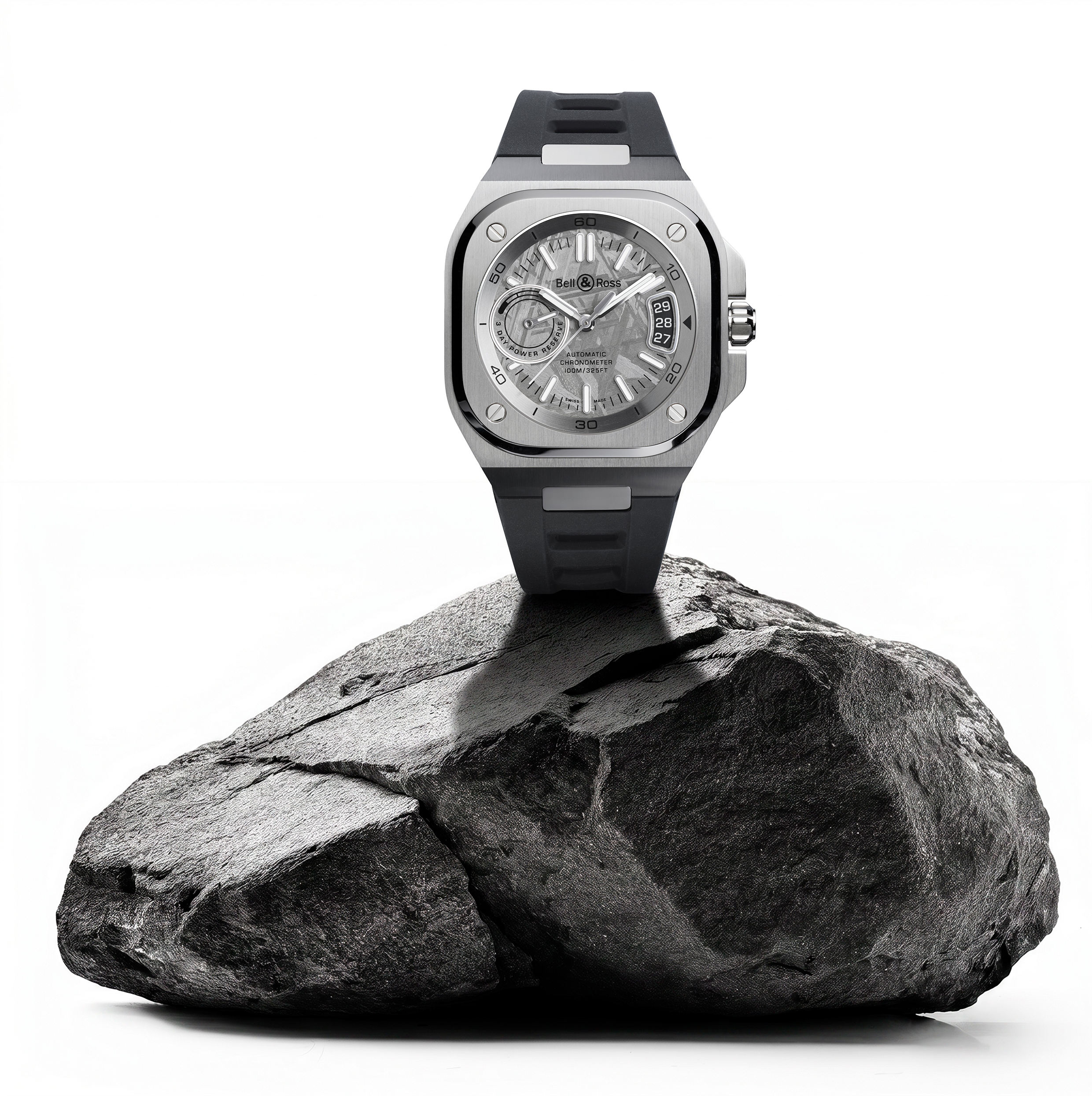
The star of the piece is Muonionalusta meteorite, an iron meteorite first found in 1906 in Sweden's Norrbotten region. It's believed to have crashed to Earth roughly a million years ago and lay preserved under Scandinavian permafrost for millennia before being unearthed. Slice and etch it correctly, and it reveals a Widmanstätten pattern — a crystalline lattice of fine interlocking lines that only forms when molten metal cools over millions of years in the vacuum of space. It's a structure that simply cannot be faked in a lab, which means every dial carved from it is genuinely one-of-one. Across the 250 pieces in this limited run, no two watches share the same pattern.
Bell & Ross treated the material with real restraint. Rather than veneering a thin slice of meteorite onto a conventional brass dial, the brand machined the dial directly from solid meteorite, with the dial feet passing straight through the raw stone — a monolithic component rather than a composite one. A thin PVD coating protects the surface and stabilizes it against the elements without disguising its character, letting the dial shift between charcoal, silver, and shifting metallic reflections as light hits it. Legibility hasn't been sacrificed for spectacle, either: polished, rhodium-plated "bathtub" indices and skeletonized hands are both filled with blue-glowing Super-LumiNova, so the watch reads as clearly at night as the meteorite pattern reads by day.
Housing it all is the familiar BR-X5 case: 41mm of satin-polished steel, 12.8mm thick, with the collection's signature four exposed case screws and open-worked structure that keeps the watch feeling lighter on the wrist than its dimensions suggest. Power comes from the in-house BR-CAL.323, a COSC-certified automatic caliber with roughly 70 hours of power reserve, a large date at 3 o'clock, and a power reserve indicator at 9 o'clock — backed by a five-year warranty and visible through a sapphire case back. Buyers can choose a steel bracelet for a sharper, technical look or a black rubber strap for something sportier. At 250 pieces, the BR-X5 Meteorite isn't just a limited edition — it's a geological one. Each buyer isn't only acquiring a chronometer-grade Swiss watch; they're acquiring a literal fragment of the universe, shaped long before Earth existed, now keeping time on a wrist.
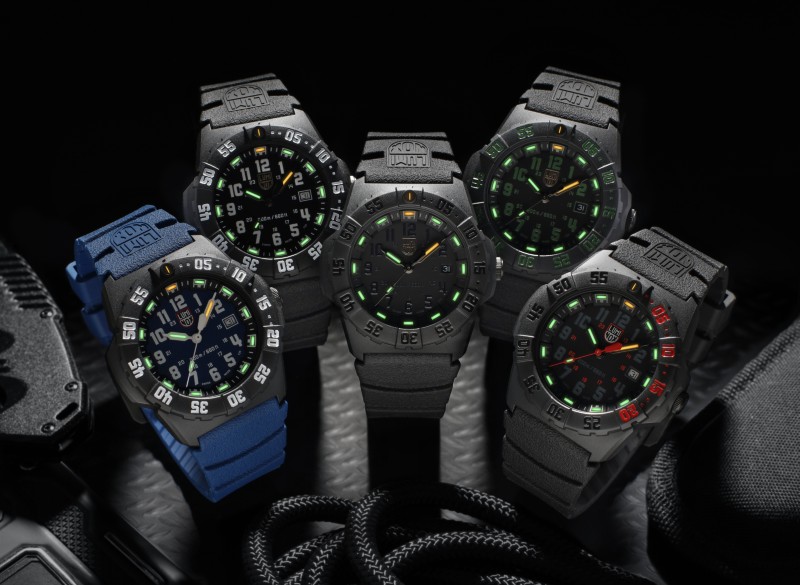
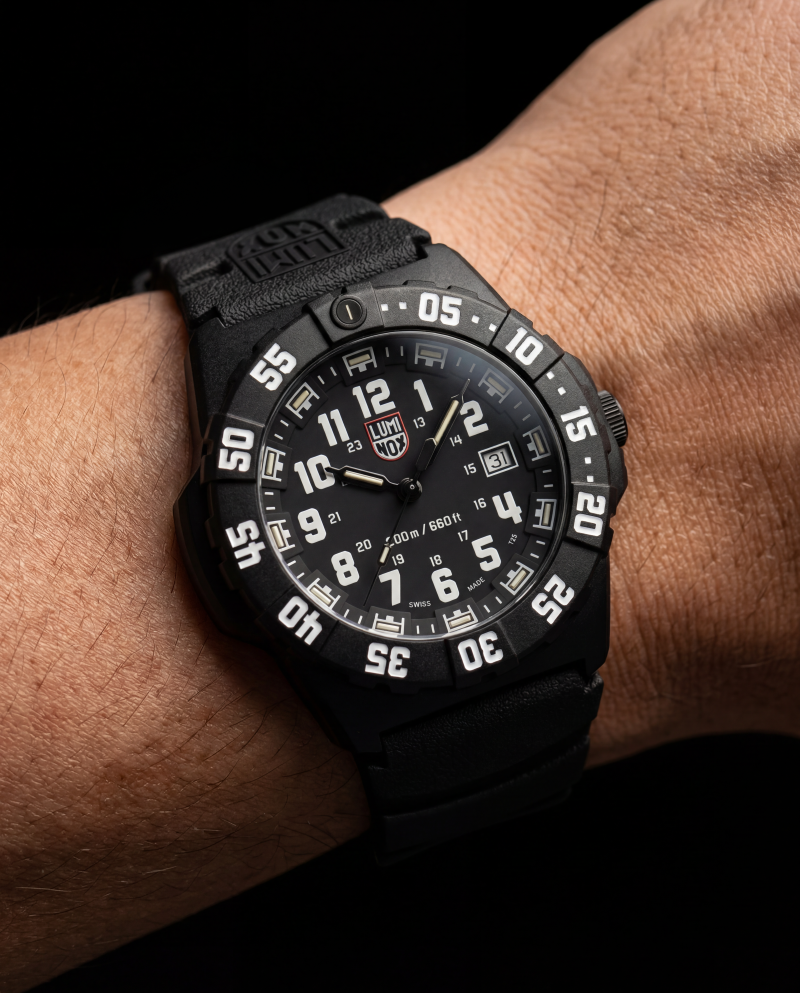
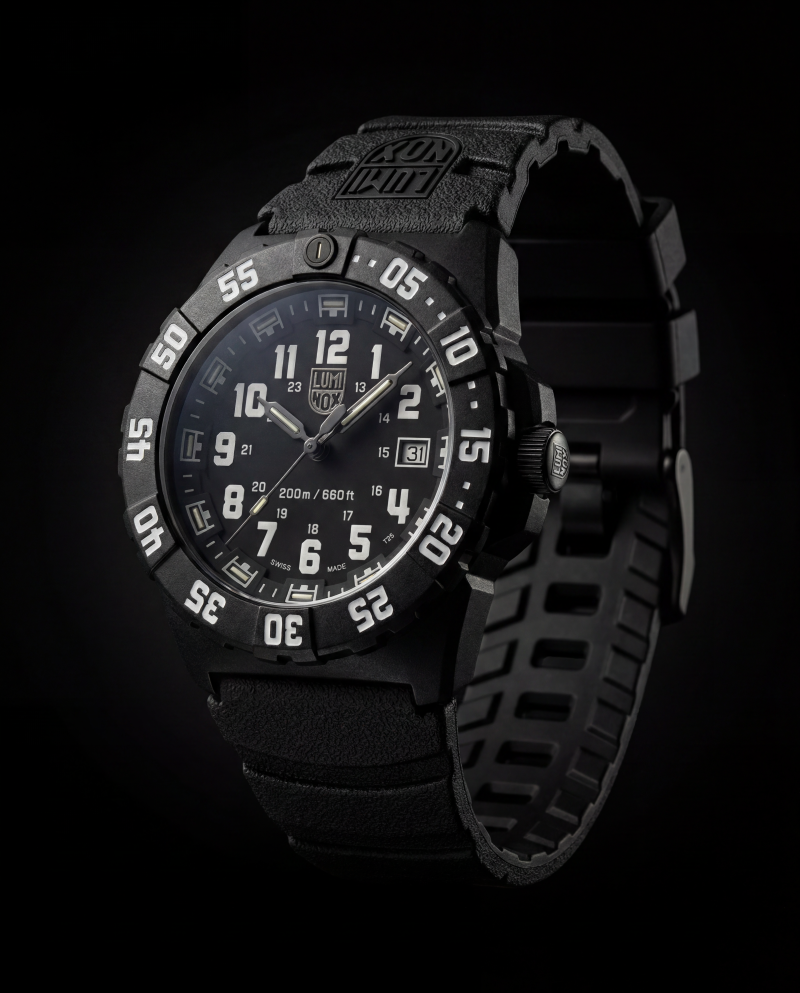
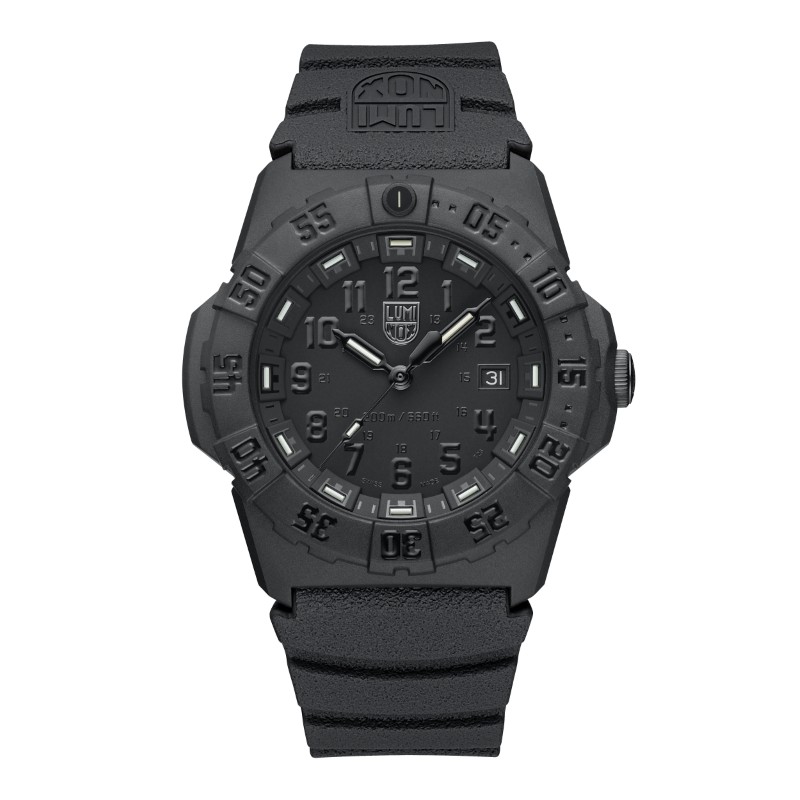
Luminox Reworks Their Classic Silhouette With The New Navy 3550 Series of Watches
For over thirty years, the Navy SEAL collection has been shorthand for Luminox's core promise: a tough, always-legible tool watch built for people who actually need one. Now the brand has given that lineage its most thoughtful update yet with the launch of the Navy 3550 Series, a redesign that keeps the collection's identity intact while updating its comfort, proportions, and readability on the wrist.
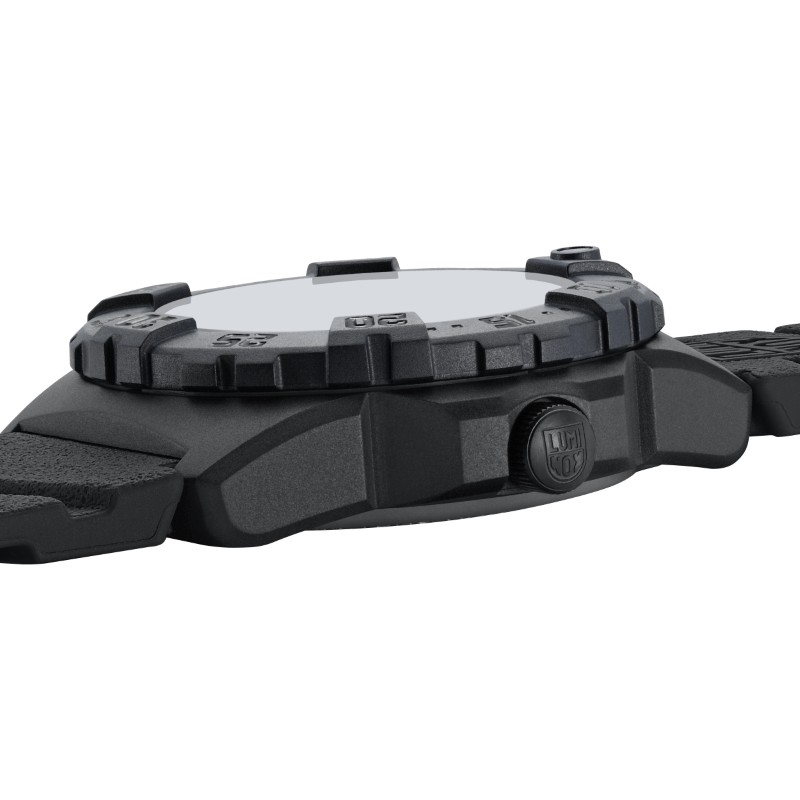
The headline change is the case itself. Luminox has re-engineered the 44mm CARBONOX case with a more streamlined architecture, smoothing the transitions between bezel, case, and strap. The result is a watch that sits noticeably more naturally across a range of wrist sizes, a meaningful upgrade for a collection that's as likely to be worn on Asian wrists regardless of whether it is over a wetsuit or at a desk. Crucially, the redesign doesn't chase a slimmer profile at the expense of durability; the toughness professionals have relied on for decades remains fully intact.
What's easy to miss on first glance is that this is an evolution, not a departure. The watch still carries the collection's signature turtle-shaped silhouette, the visual cue that's made the Navy SEAL series instantly recognizable on wrists from search-and-rescue teams to weekend divers. Luminox has clearly been careful here, refining the ergonomics without diluting the design language that built the collection's reputation in the first place.
Beyond the case, the details support the same goal. Enhanced crown protection, a unidirectional bezel that now sits flush with the case, and slimmer syringe hands, all drawn from the earliest Luminox models, all contribute to a more balanced, modern tactical look without softening the watch's functional edge. A tapered, textured rubber strap rounds out the fit, designed to stay secure and comfortable through long wear.
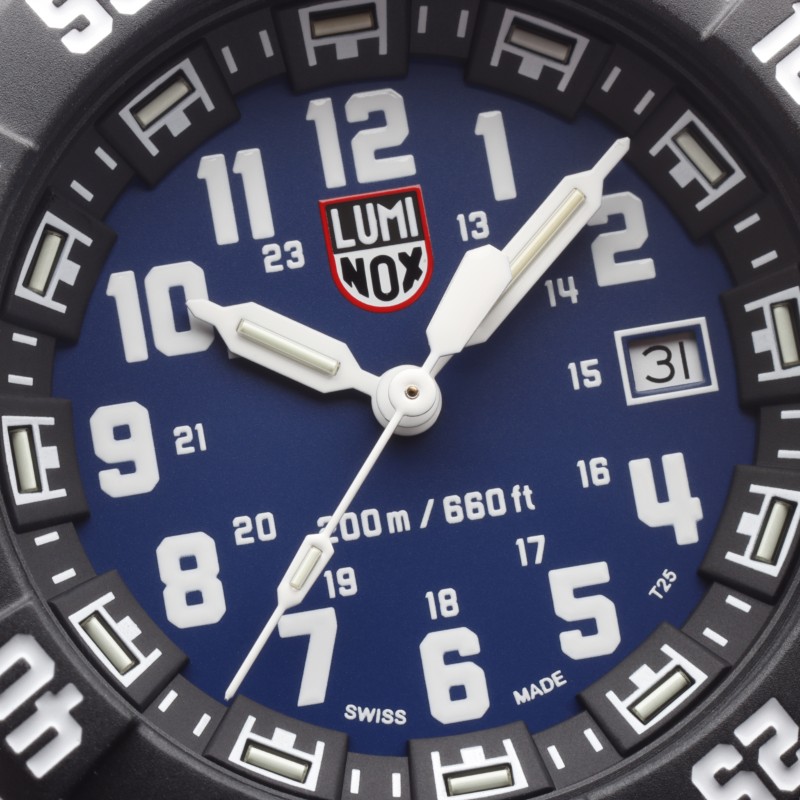
Legibility has always been the non-negotiable at the centre of Luminox's design philosophy, and the Navy 3550 Series dial upholds this mentality. Bold numerals set in Liberator Sans Heavy give the dial an immediate, no-squinting clarity, while an opened-up chapter ring clears visual clutter and improves the watch's overall readability at a glance. The 200 m water resistance rating now appears directly on the dial, a small but telling touch that puts one of the collection's defining capabilities front and centre rather than tucked into the spec sheet.
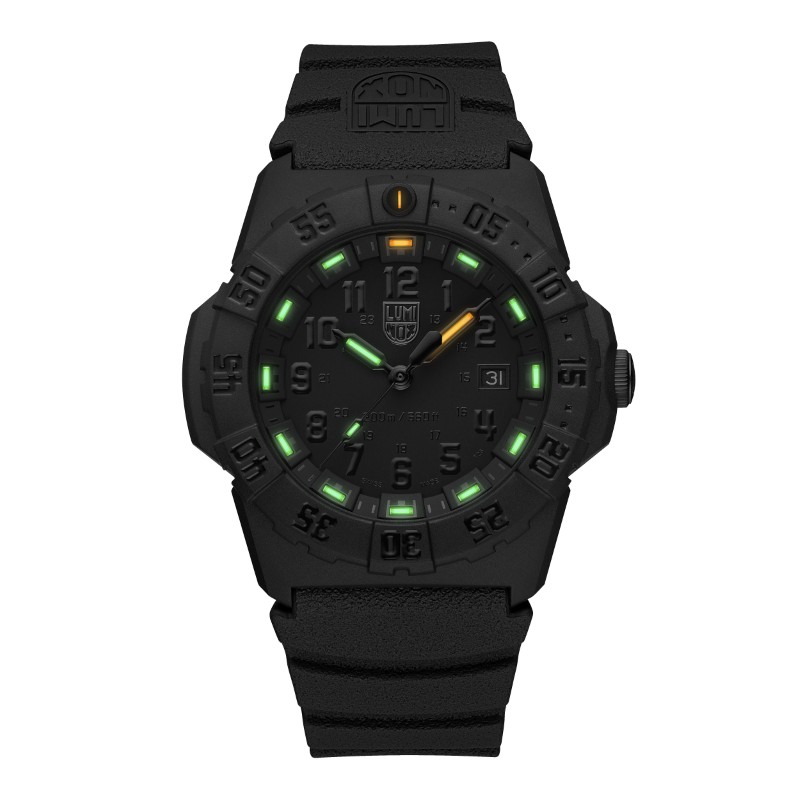
Underpinning all of this is the technology the brand is still best known for: Luminox Light Technology. 16 of these luminescent tubes provide constant, self-powered illumination for up to 25 years, with no charging and no external light source required.
The Navy 3550 Series arrives in five colorways, always black with touches of white, red, green or blue. And of course, it wouldn’t be Luminox without a signature blackout version of the watch, black on black, complete stealth. The Navy 3550 Series is a watch that respects its own history. It's not trying to reinvent the Navy SEAL collection so much as sand down its rough edges making it more comfortable, more legible and most importantly still unmistakably Luminox.
Fully Wound, This Panerai Watch Will Last the Entire Month Without Needing Extra Power
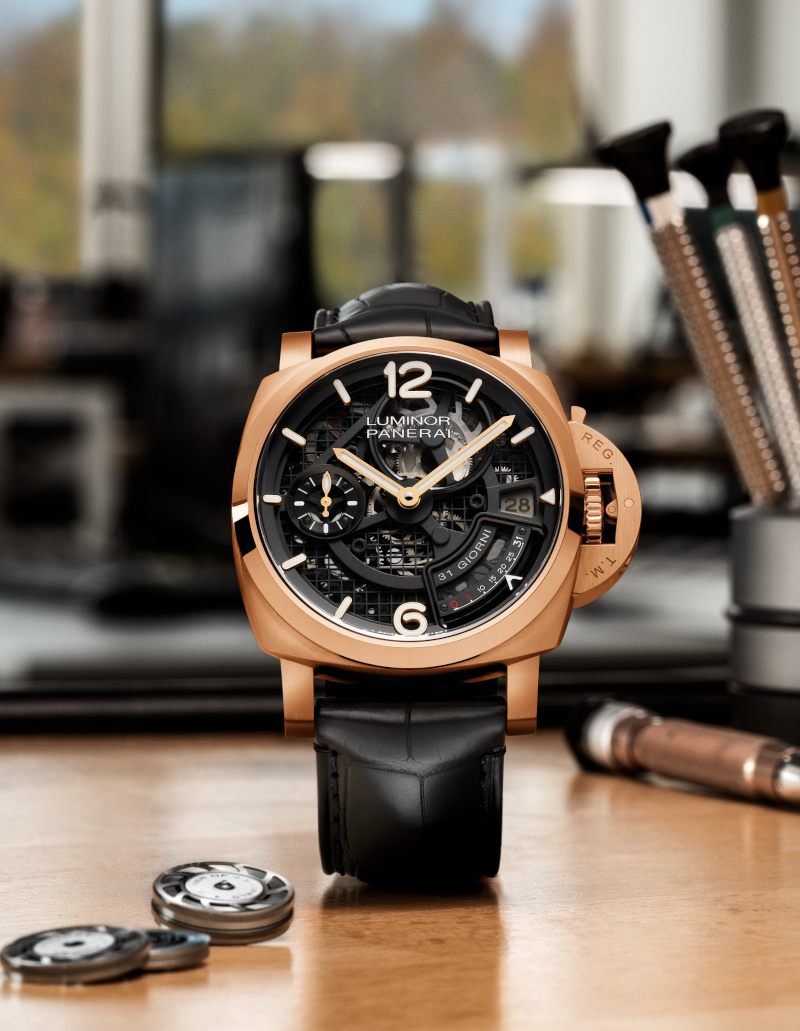
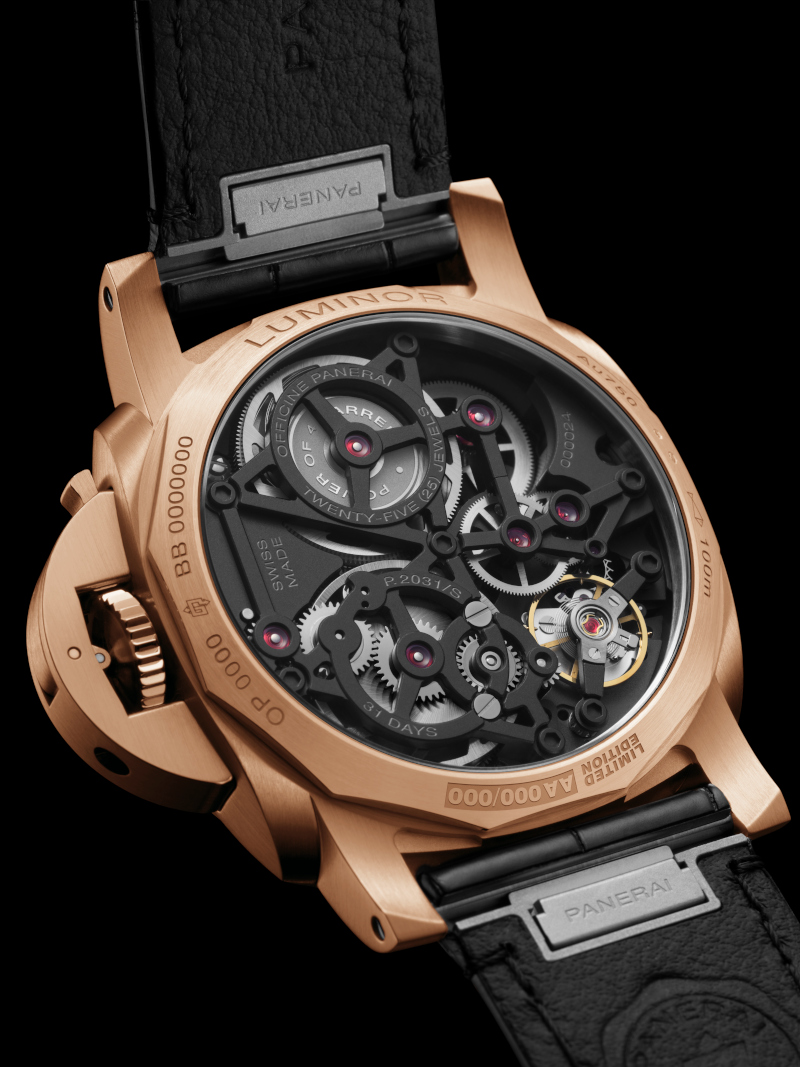
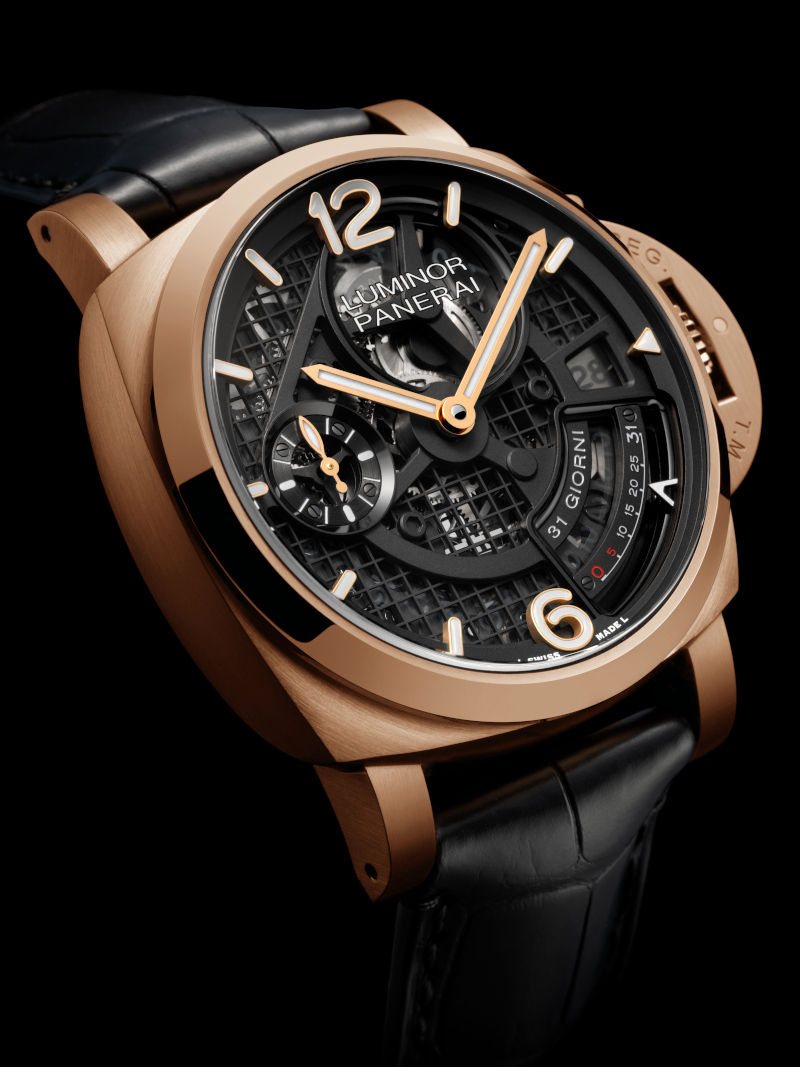
Panerai’s long‑standing pursuit of endurance, reliability, and functional clarity reaches a new milestone this year with the introduction of the Luminor 31 Giorni PAM01631. The watch is the latest expression of a philosophy shaped in the brand’s earliest days, when Panerai built secret instruments for the Royal Italian Navy and discovered that performance and purpose were inseparable. Those formative decades forged the hallmarks that still define the Maison today: exceptional legibility, robust construction, and extended autonomy.
The new PAM01631 pays tribute to this heritage through a remarkable technical achievement — a 31‑day power reserve, the longest ever created by Panerai. This breakthrough is the result of seven years of research by the Laboratorio di Idee, the brand’s innovation hub within its Neuchâtel manufacture. Their work builds on a lineage that began in the 1950s with the Angelus SF240 movement, whose eight‑day reserve became a benchmark of Panerai’s military instruments. Later milestones, such as the P.2002 (8‑days) and P.2003 (10‑days) calibres, continued to push the boundaries of autonomy. The new P.2031/S calibre now extends that legacy into unprecedented territory.
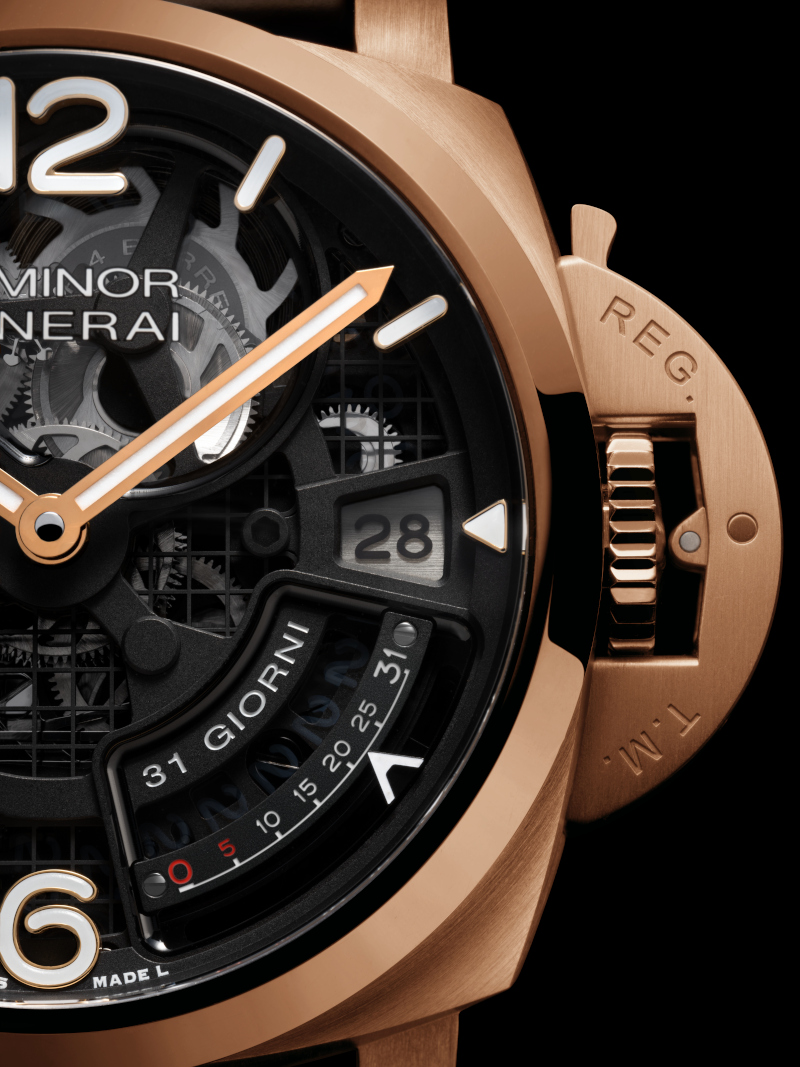
Housed in a 44 mm Panerai Goldtech case — a proprietary alloy enriched with copper, platinum, and silver for enhanced durability — the PAM01631 combines Italian design flair with Swiss mechanical rigour. Its skeletonized movement surrounds the four barrels containing 3.3 metres of mainsprings, arranged in series to deliver consistent torque and minimise wear. A patent‑pending Torque Limiter system selects the optimal 31‑day operating window from a potential 36 days, ensuring stable chronometry and protecting the movement from excessive tension. After 31 days, the watch deliberately stops to preserve its chronometric precision.
The open‑worked architecture is complemented by a polarized date display visible only through the aperture at 3 o’clock, while the rest of the date disc appears transparent, offering an unhindered view of the skeleton movement. It also has a curved power‑reserve indicator and Super‑LumiNova X2 accents for enhanced low‑light readability. A sapphire caseback offers a full view of the calibre’s depth and complexity. Practicality remains central: the watch requires just 128 crown turns for a full wind, and a patented jumping‑hour mechanism allows quick time adjustments without disturbing the minute or seconds hands.
Water‑resistant to 10 bar and tested beyond its rated depth, the PAM01631 is delivered with a Goldtech folding clasp featuring the PAM Click Release System for effortless strap changes. Limited to 200 pieces and available exclusively in Panerai boutiques, it stands as the brand’s most advanced expression of its enduring mission — creating instruments built for resilience, clarity, and uncompromising performance.
The Conversation: IWC achieves new heights with its Pilot’s watches
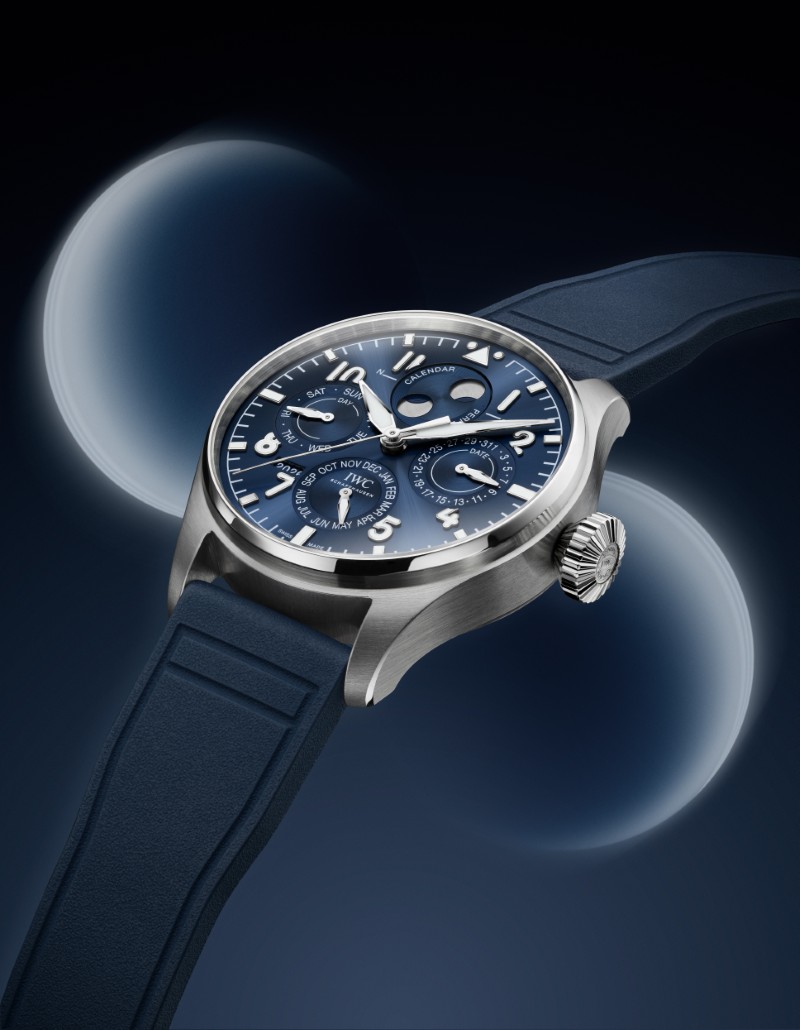
Big Pilot’s Watch Perpetual Calendar ProSet Le Petit Prince Ref. IW329601
In the high-pressure atmosphere of Watches and Wonders Geneva, where novelties come to receive judgment, IWC Schaffhausen chose to remind the world why it remains the definitive master of the skies. This year marks a staggering milestone: the 90th anniversary of the Pilot’s collection, which has a lineage tracing back to the 1936 “Special Pilot’s Watch” (Ref. IW436).
While the collection’s DNA is rooted in the functional austerity of the mid-century—from the oversized 1940 B-Uhr to the legendary Mark 11 – the 2026 presentation was anything but nostalgic. Instead, the “Engineers of Schaffhausen” leveraged their IWC Experimental (XPL) division to push the boundaries of both material science and mechanical logic.
In our latest editorial “scramble,” the editors of WOW Singapore, Malaysia, and Thailand convene to dissect whether the resulting novelties represent the most significant leap for the collection since the Kurt Klaus era. From the surreal spectacle of glowing Big Pilots in darkened auditoriums to the “LIGA wizardry” powering the new Calibre 82665, the trio digs into where IWC is going.
RC: I made a new personal record this year. I have worn a single watch for 18 consecutive days, on the annual Watches and Wonders Geneva trip, of course. This beats the previous record of 17 days for WWG 2024. I also wore this same watch to WWG 2025, but the trip was slightly shorter at 16 days total.
The watch in question? It’s the Pilot’s Watch Chronograph 41 (Ref. IW388101) that I bought following my visit to IWC’s headquarter in Schaffhausen in June 2023. The idea from the beginning and until now is for it to be my “watch fair” timepiece – the one whose bracelet I can very quickly extend and put on my right wrist as I try the novelties being presented on my left wrist. This may sound somewhat snobbish, but I come from the perspective of safety, if you can appreciate it.
DG: What a fantastic story! I did not realise all the times I met you; in the halls; in the presentation rooms; and during dinner that you had such an interesting philosophy on your wrist. I think you chose the perfect timepiece for this purpose though. The Pilot’s Watch was designed to function in the most hostile of environments, and Watches & Wonders Geneva can get a bit hectic! Rushing from one appointment to the next and dodging trolley bags left and right! The legibility I am sure would have helped for keeping on schedule. I wonder however, did you ever use the chronograph? Maybe how long a presentation went over the limit? Or how long it took them to make your coffee?
AS: It is very funny to hear about new records for wear-time! As it happens, I brought more than one watch (of my own) to the party this year, for the first time. There was an idea there, but I will save that for another discussion session. Alas, neither of the watches was a chronograph but one was obviously the IWC Aquatimer (discontinued 2008) – sadly I do not have a Pilot’s Watch from IWC though I have always admired them from afar… For the Big Pilots, that works just fine.
As for hostile environments and the Palexpo, I have a lot of sympathy there (and I definitely take as much care as possible to avoid scratching my watches) but I doubt that a chronograph would help any! Well, I might have some thoughts there (especially on timing my peers at presentations, if I’m feeling especially curmudgeonly) but this is not the occasion. In any case, we are gathered here today to talk about some of the most significant watches of the fair, and they happen to be IWC Pilot’s Watches. Who would have guessed eh? And a number of perpetual calendars too, which is my favourite complication. And now, speaking of coffee, I need some!
RC: While you go make that, I will reply to Daniel that I did not time the various sessions during the day. I started the chronograph when I left my hotel room and stopped it upon returning to see how many hours I was outside that day.
DG: Which is practically all of the waking hours, am I right?
AS: I must say that I have never timed how long I spend at the fair… what a novel idea! It might be especially useful on the fair’s public days, but I digress.
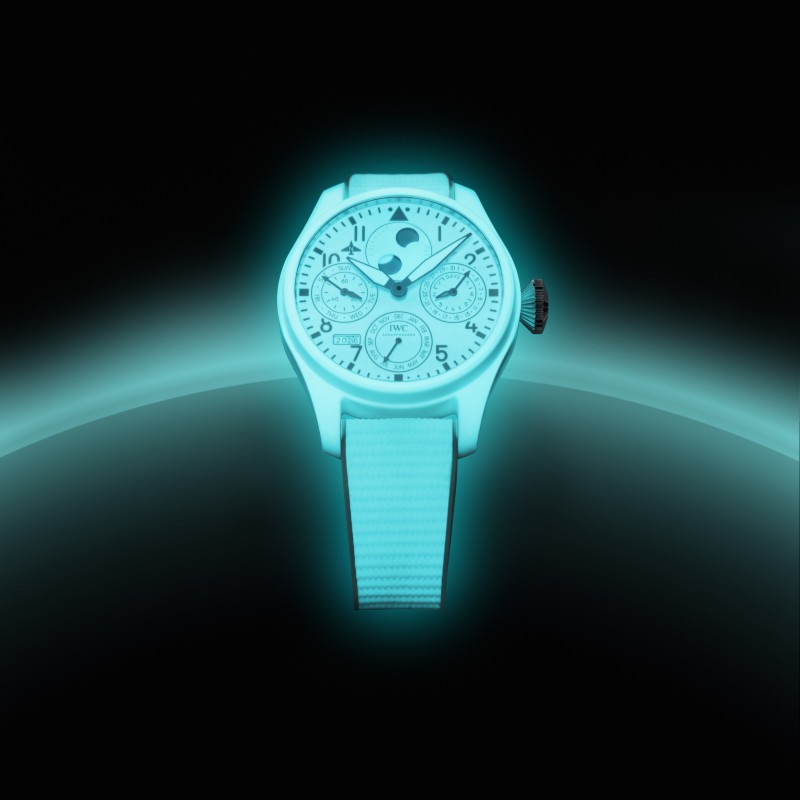
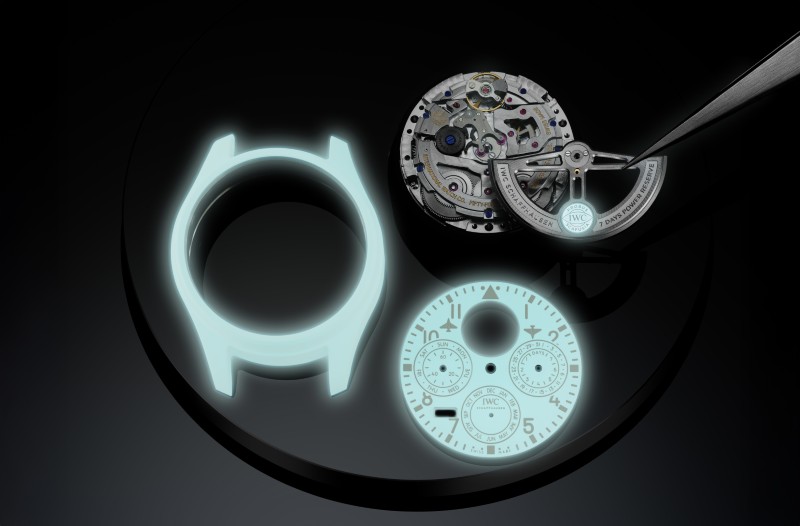
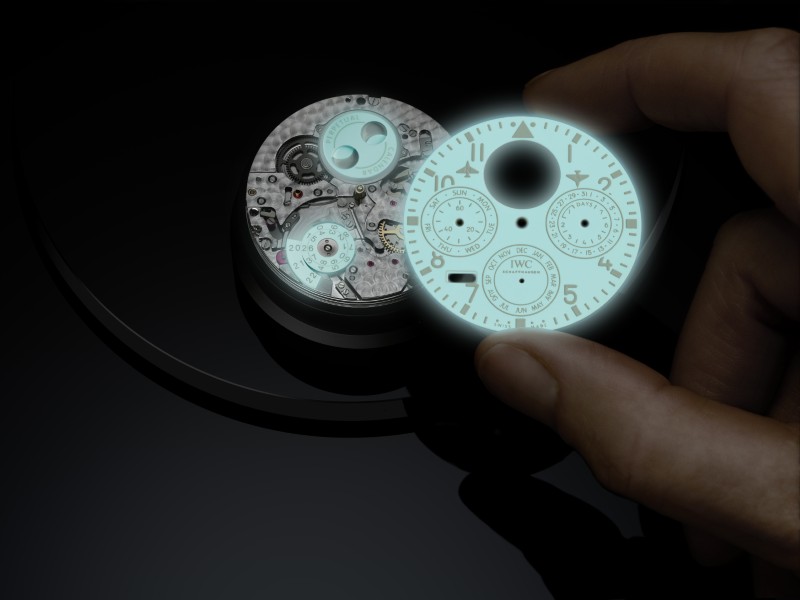
RC: More impressive than how long we spent at the fair is what we saw there. And, this year, the most impressive stunt I witnessed with my own eyes was the ending part of the keynote by IWC’s Chris Grainger-Herr. As he was talking about the Big Pilot’s Watch Perpetual Calendar Ceralume® (Ref. IW505801) in the darkened auditorium, he was quietly joined by four figures who pulled their left arms out on cue to show green and highly luminous objects on their wrists that I could see from the other end of the hall from the stage. The moment was surreal, and captured as video on my phone if anyone wants proof.
Big Pilot’s Watch Perpetual Calendar Ceralume® Ref. IW505801
AS: That thing was so bright I could see it on the wrists of the guys on stage with Grainger-Herr, even without the aid of the live-feed camera screening a shot of someone’s wrist there (it does not look as convincing in the video of the keynote address, but Ruckdee’s video tells the tale of being in the room better). I have always recommended that people check their lume levels before heading into movies or maybe work-related presentations and the like. Usually, this is just a bit of vanity but if you have a watch in Ceralume®, watch out! Eight hours (according to Grainger-Herr at the keynote) of glow-in-the-dark power? I am blown away…still. My first thought was that I need such a watch on standby just to distract people at Watches and Wonders so I can get dibs on some pieces!
DG: Alas, I did not have time to catch the keynote presentation, but my first encounter with Ceralume® was at their booth and it was also a spectacle. It was quite a sight because we were in a booth made to mimic the inside of a spaceship, and there it was, a watch that was glowing in a case like some sort of alien artifact. It was crazy! And I am really happy to see the material go from a concept when it was first unveiled on Lewis Hamilton’s wrist (he is now forced to wear something else now by the way) to a full-on production model where they have stabilised the production of this futuristic material. I cannot wait to see what they do with it next.
RC: According to IWC, Ceralume® is their next level ceramic technology where Super-LumiNova pigments are added to the usual blend of ceramic powders. The development took them some years, and they were assisted by specialist company RC Tritec whose unique business is the Super-Luminova luminous pigments.
DG: I was speaking to one of the presenters during the touch-andtry session and he mentioned that one of the challenges in making this material was that the molecules of the zirconium oxide and luminescent material were in different sizes. And it was really difficult to mix them and ensure the resulting mass was homogeneous so that the entire case glows uniformly and there are no patches of lume.
AS: It was introduced in 2024, if I recall our own coverage correctly (and we correctly noted the involvement of RC Tritec), and presented in a production watch this year, which is very impressive in the world of fine watchmaking. As you gentlemen will be aware, materials science is one of my favourite things and I happened to be chatting with an expert in this field at the start of the fair on experiments on this front by watch firms.
Notably, IWC is one of the few watch firms with a dedicated research and development arm that works on new materials, amongst other things. It is called IWC Experimental (IWC XPL), which might sound uninventive but I suspect it is a nod to the JPL lab. Anyway, this department works on new materials and shock absorption, and we saw the first of its realised projects in the Spring Protect shock absorption system last year, in a real watch too. But I must confess that Ceralume® is by far the most striking and exciting development yet. I mean the watch is a big fella at 46.5mm and now it retains all the wrist presence even in the dark. Truly a bright idea! Ok forgive the pun there, and someone please stop me!
DG: With how much of a talking piece this material is for IWC, I am actually quite surprised they did not combine it with their other innovation for the year, the ability to “turn back time” with the IWCProSet ™ perpetual calendar. I never thought to ask them why, it would have made perfect sense (at least from my layman point of view) to combine the two.
RC: If I have to guess, Ceralume® and the IWC-ProSet™ were two separate developments. And there was no way for them to tell which one would have been ready when.
DG: Okay, this is a pretty good reason. I forget sometimes how developments in the watchmaking industry count in years rather than weeks or months.
RC: One other thing that I did not think about while in Geneva is the movement platform difference. The Big Pilot’s Watch Perpetual Calendar Ceralume® uses Calibre 52616 with 7-day power reserve. The other novelties with IWC-ProSet™ use Calibre 82665 with 60- hour power reserve.
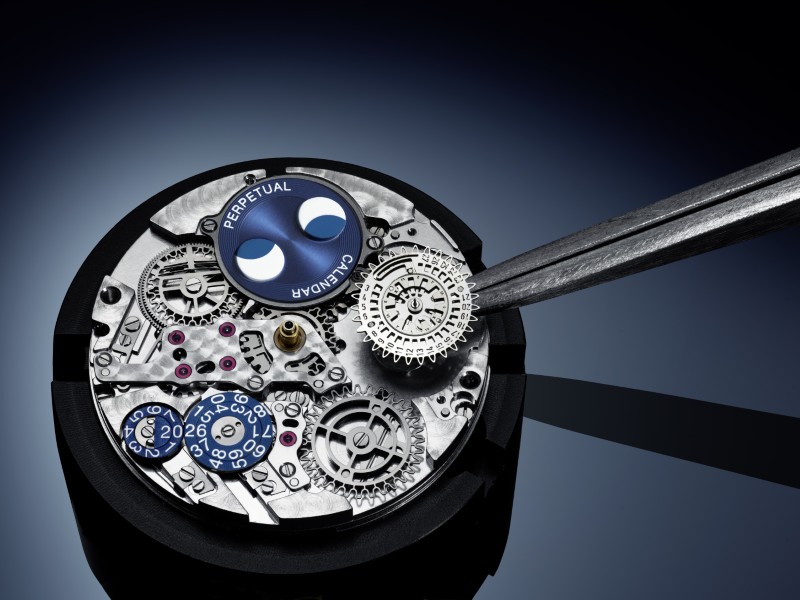
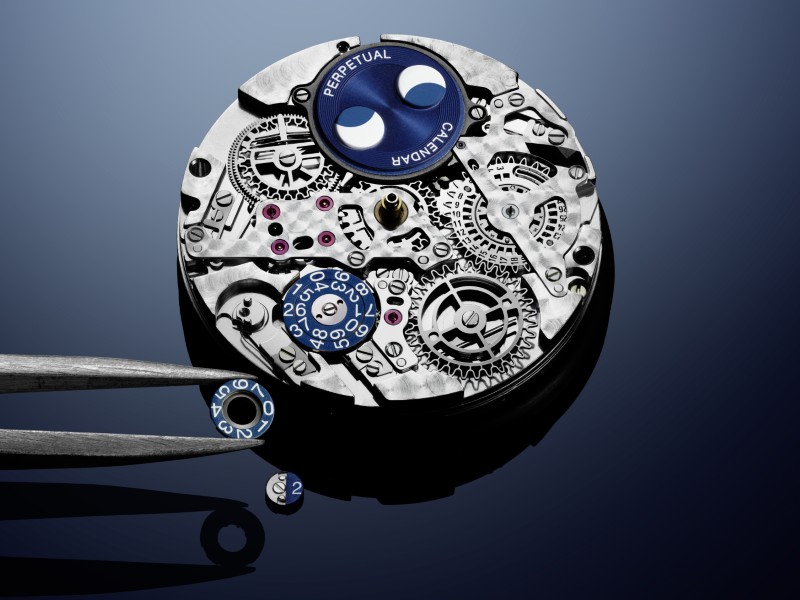
DG: Just to reiterate for our readers who might not have kept up with the latest from IWC, the perpetual calendars with IWC-ProSet™ features allows for the mechanism to be set both forwards and backwards. Traditionally, the cams that “programme” the calendar are made to go only forward; this is not just convention because the levers literally cannot go backwards. For IWC, the Perpetual Calendar IWC-ProSet™ is based entirely on gears with multiple functional layers and flexible, extendable and retractable fingers to allow for a very intuitive setting of the calendar both backwards and forwards via the crown. This is of course protected by several patents within the new IWC-manufactured 82665 calibre.
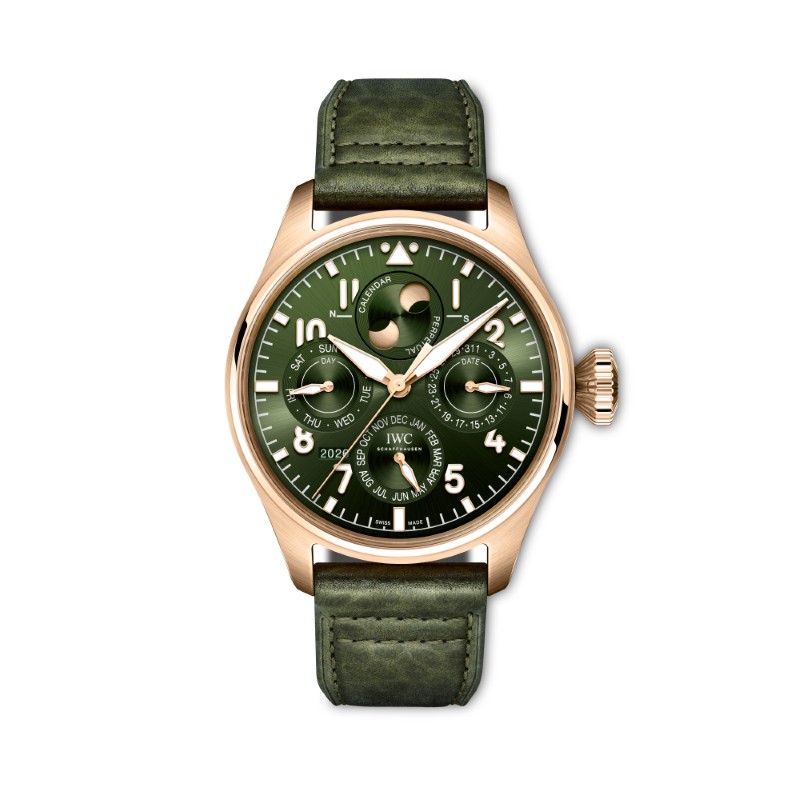
Big Pilot’s Watch Perpetual Calendar ProSet Ref. IW329602
RC: Finally, owners of perpetual calendar watches can, if they wish to, wear them while travelling from east to west. For virtually all perpetual calendar watches before IWC-ProSet™, the only option was for them to first let the power reserve run out then set their watch on the destination country’s time and date before leaving home.
AS: Well, there will be no more of that, at least with IWC-ProSet™ because one can really adjust it any way one wants. I am not 100 percent certain but, I believe the date indications on the Big Pilot’s IWC-ProSet™ models can be adjusted at any time – there is no longer a danger zone where you might have to send your watch in for an expensive service. To return to Daniel’s earlier thinking, IWCProSet ™ does feature a number of material innovations that make all this possible so perhaps XPL was involved. I am thinking here of the LIGA components, of course, but I am getting ahead of myself!
RC: Ashok, since you mentioned just above that you like perpetual calendar watches, what is your take on this new IWC-ProSet™ feature? Are you more impressed by the convenience it offers or the construction, for starters?
AS: Oh, are you sure you want to get me started on this? Well, too late! I will say that my own IWC presentation was late into the fair and I heard whispers about it from some respected peers and seniors. Honestly, it seems like one of the most impressive perpetual calendar developments in years… maybe since certain key examples from Ulysse Nardin and MB&F. I mean, IWC-ProSet™ gets rid of the grand lever! But it retains all the goodness of the Kurt Klaus calibre’s full crown-control! That is amazing stuff.
You know, as IWC itself notes, a key pain point with the aforementioned Kurt Klaus calibre is that you can only adjust it forwards, as far as the date indications go. Daniel, I am pleased that you introduced those ‘fingers’ because they certainly point towards what makes this new calibre special. Aside from how and what they are made of, they also work in conjunction with a programme wheel unlike anything else in conventional watchmaking. I say wheel there but it is really a number of wheels rotating at different speeds…these speeds match up with all the different timings so everything from 24 hours to full years and four-year sequences. To make a long story short, it is this wheel and the fingers (guess why there are three? It has something to do with February) that make the IWC-ProSet™ work. Did I mention that those fingers are spring-loaded?
DG: This is how IWC explains it “At the end of February, the leap year wheel, which completes one revolution every four years, indicates whether it is a leap year. This information is also transmitted through a finger: in regular years, the finger is extended, while it remains retracted in a leap year.” Is the fact that Kurt Klaus’ calibre only allows for adjusting forward the reason why it is commonly known that for older perpetual calendars, it was easy to “break” the movement if adjusted at the wrong time? And that is why many brands incorporate “safety” mechanisms to protect the user from unintentionally destroying their own watch? I have so many questions.
RC: Everything breaks if adjusted at the wrong time, even a simple date watch.
DG: That sounds like a good analogy for life in general.
RC: I can be philosophical at times. I have this joke which I like to make in Thai, but it will not fly in English. I would say, “life is a journey”, but I would spell it in Thai so that the word “journey” reads exactly as “run-in with debt” because “jer” is the sound of the word “to meet” and “nee” is the exact tone of the word “debt”. This applies directly to watch collecting because, well, it is distance running and you get to use your credit card again and again and again.
DG: Well, I suppose with the IWC perpetual calendars you can consider it as value right? Perpetual calendars mean it is accurate until at least the year 2100. So technically, I can buy this watch, go into debt, set it once with the IWC-ProSet™ and leave it on my wrist for the next 70+ years and still have an accurate date at the end of it.
RC: That is most correct, but the IWC-ProSet™ will be of greatest benefit for anyone who travels across continents every once in a while. Besides, you will still have to send the watch in for periodical maintenance after all. This is also why, despite being a moon phase person, I am more excited to see the introduction of the IWC-ProSet™ as it is more useful in real-life settings than the improved accuracy of the moon phase in the latest generation of IWC’s perpetual calendar watch with IWC-ProSet™.
Oh, we forgot to discuss this, right? Regular moon phase watches have a general accumulated deviation of one day in about three years. Astronomical moon phase is much more accurate with one day deviation only after some 122 years. IWC has offered an improved performance of 577.5-year moon phase accuracy since 2003. Now, the figure has been further enhanced to 1,040 years with the IWC-ProSet™ perpetual calendar movement.
AS: Speaking of things left unsaid here, IWC now has four kinds of calendars that are perpetual, if you also count the Eternal Calendar. That means the collector who cares about perpetual calendars now has four reasons to get into IWC! That is three more than the nearest competitor, and this does not even include multicomplications. Not for nothing, there are also three kinds of moon phase indications at IWC! This is basically a really exciting development for the brand, and I can see many opportunities ahead for it. For myself, going back to the points about debt, well I have to plan for how I will approach this challenge without bankruptcy looming in my future!
DG: Which is basically another way of saying Ruckdee’s joke is basically truth. “life is a jer-nee”
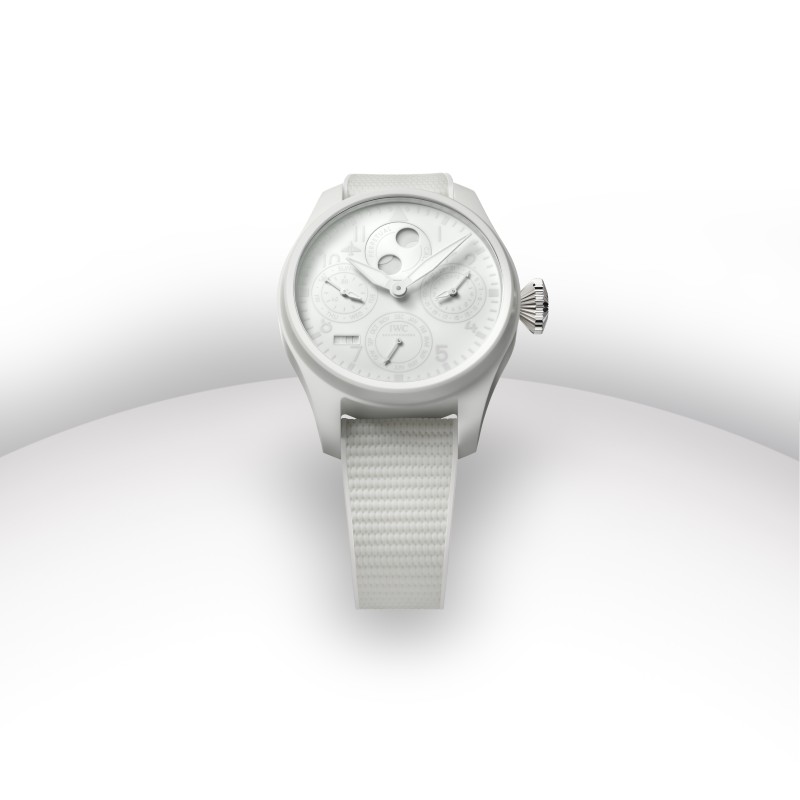
RC: Ruckdee is laughing and clapping very hard here in Bangkok! Thank you, guys, for indulging across languages. So, which of IWC’s novelties is your favourite poison? We have first of all the Big Pilot’s Watch Perpetual Calendar Ceralume® (Ref. IW505801) at 46.5 mm, the Big Pilot’s Watch Perpetual Calendar ProSet Le Petit Prince (Ref. IW339601) in white ceramic at 43 mm, the Big Pilot’s Watch Perpetual Calendar ProSet Le Petit Prince (Ref. IW329601) in stainless steel at 42 mm, and, and, and, the Big Pilot’s Watch Perpetual Calendar ProSet (Ref. IW329602) in 18-carat 5N gold at 42 mm.
DG: As much as I love the inventiveness of the IWC-ProSet™ and all those retractable fingers, I have been saying I needed a watch that will allow me to read the time while on the long flights to Geneva for Watches & Wonders and when they turn down the lights on the plane. And for that reason I have to go with the Big Pilot’s Watch Perpetual Calendar Ceralume® (Ref. IW505801) and with the 46.5 mm I would not even have to squint!
AS: Steel for me, lads! Honestly though, I have always wanted a calendar watch that I could read in the dark so I can always know the date and time when I wake up on a plane. I am only partially joking there. I do have to say that the 5N gold Ref. IW329602 is very fetching…I will need to go fetch more dollar dollar bills yo, as they say, to make that happen though. Time to work harder!
DG: Just remember that the Ceralume® model, unfortunately, does not set backwards when you wake up on that plane. I think that with the leap forwards in both material and mechanical innovation sets IWC up for an indeed, to borrow a pun, bright future. I am very curious about what happens next with these technologies, I am sure we will see both in multiple collections within the brand. I am envisioning a Ceralume® Ingenieur, case and bracelet, with an IWC-ProSet™ perpetual calendar, now that would be a sight would it not?
Big Pilot’s Watch Perpetual Calendar ProSet Le Petit Prince Ref. IW329601
AS: I do think that Ceralume® has a lot of possibilities for IWC, far beyond complications. A Ceralume® Aquatimer? Yes please! Well, seriously though, IWC-ProSet™ is like a dream come true, and I am sure many fans of the perpetual calendar will find much to admire there. Of course, only time will tell how all this LIGA wizardry will work out, and of course calibre 82665 is equipped with a silicon hairspring and nickel phosphorus escape wheel so this will all mean different things to progressive and conservative collectors.
RC: For the Ceralume® Aquatimer, XPL must do a marine science study first, to make sure that a glowing blob of green on your wrist does not accidentally make you prey at depths. Ha ha. A Ceralume® Ingenieur is without a doubt safer, given the environment, unless your scientific work is photosensitive! Well, the possibilities are endless for IWC as a manufacture and for end users. Given that we are journalists and industry observers, however, what do you make of these innovations and offerings? Ashok first?
AS: Well, I am dedicating the entire year to innovations, rather than just one issue, so it is clear where I stand. I think collectors on the progressive end will be better pleased, and those who enjoy practical benefits perhaps most pleased! There are just so many opportunities now to find better watches, with all sorts of relative benefits. Now, if you will excuse me, I must go figure out how to make more money!
RC: And Daniel?
DG: I think interestingly with IWC’s innovations this year, they are appealing to both the hardcore watch collector and the casual everyday watch enthusiast. The IWC-ProSet™ solves a problem, perhaps not a big problem, but just the cleverness of the innovation is enough to get fans of technical innovation excited. Then there is just the pure entertainment value of the Ceralume®. Whether you see it on a wrist in a darkened room, or floating in a case, a fully lumed case, dial, strap and hands are just something that puts a smile on any watch enthusiast’s face, regardless of the level of watch knowledge.
RC: IWC has come a very long way indeed, and it is still aspiring to reach new heights. During IWC’s presentation at Watches and Wonders Geneva this year, I was reminded that it was exactly 90 years ago or in 1936 that the brand had presented its first timepiece that was developed with pilots in mind. And look how far it has come from that technically humble but historically significant beginning. On the pioneering frontier, IWC has clearly embraced space as their new challenge. For literary souls, they inspire with the collaboration with the Little Prince, which celebrates the 20th anniversary this year. Then, for discerning watch buyers looking for timepieces to fulfil their everyday requirements, the current lineup is more diverse than ever…especially with the novelties we are highlighting here. So, have fun shopping, dear readers!
Zenith Offers a Peek at the El Primero Movement with The Chronomaster Sport Skeleton
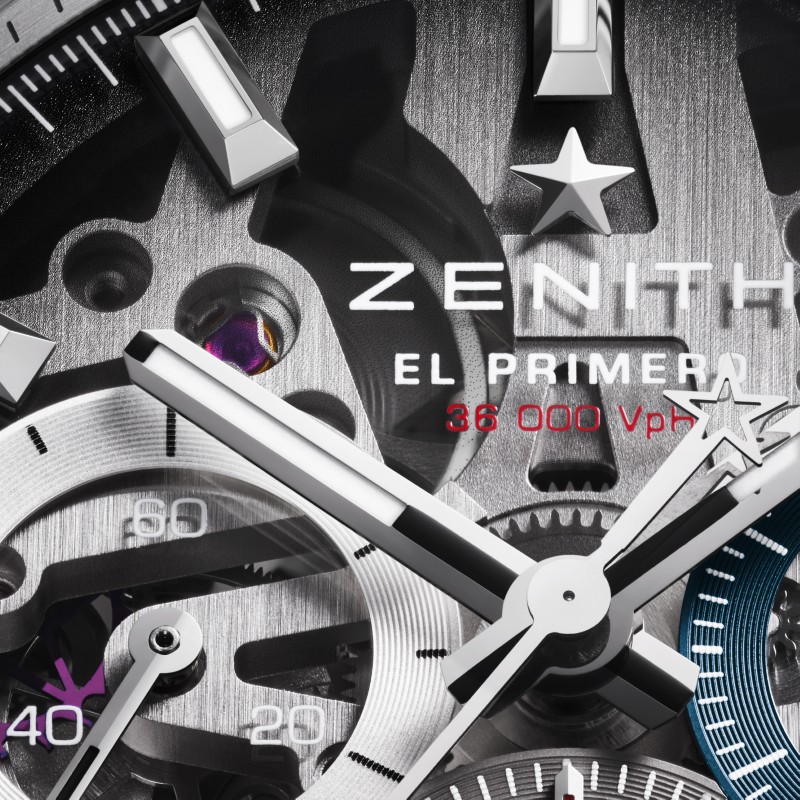
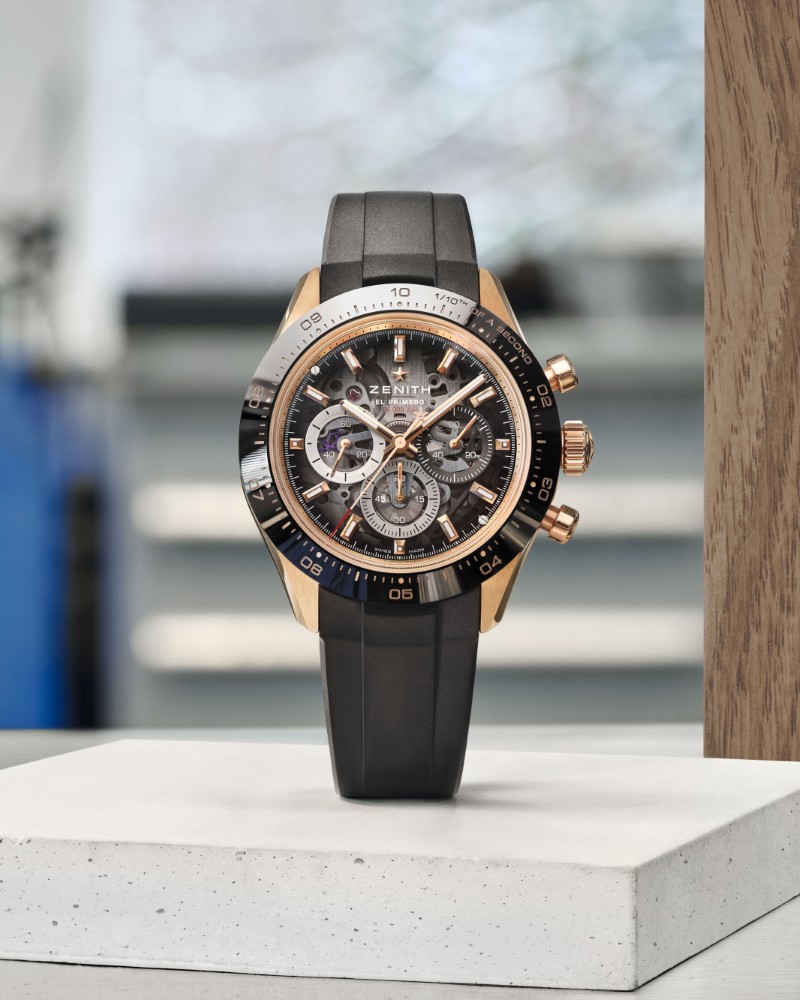
Zenith revolutionised the watchmaking industry back in 1969 by debuting the very first automatic chronograph movement. This was the birth of the El Primero, and it is astonishing thaat this name lives on today, nearly 60 years later. Something that almost always gets lost to the annals of history is the fact that not only was the El Primero the first automatic chronograph ever, it was also the first movement of its kind to achieve a high beat rate of 36,000 vph or 5 Hz. Of course, today, most chronograph movements are automatic winding by default, but still, not many are able to offer a frequency of 5 Hz; most hover around the 3 to 4 Hz mark. This became one of the technical foundations of the maison and remains one of the legacies of the Zenith El Primero movement.
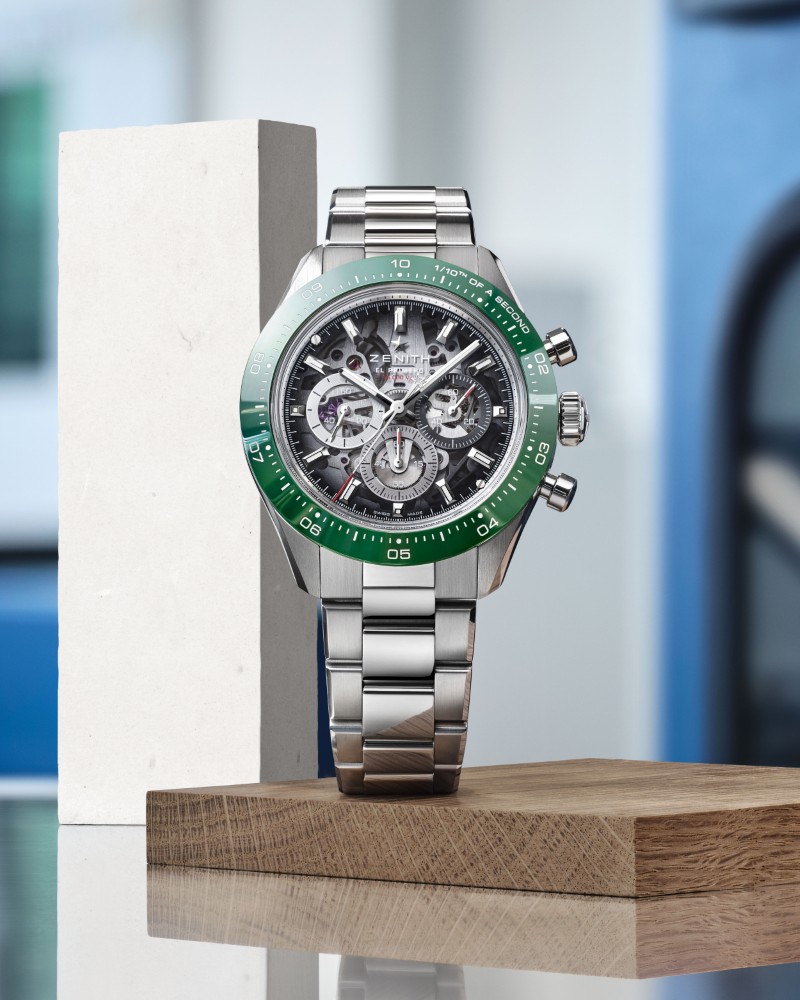
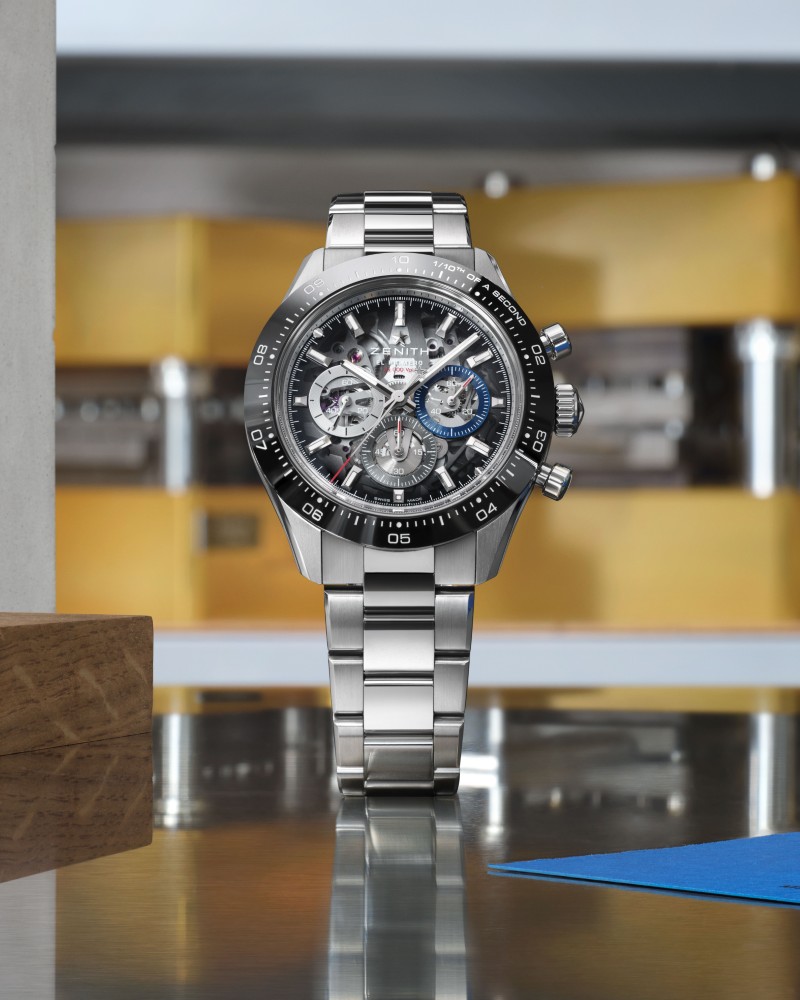
Generally, the reason for a higher oscillation rate is to improve chronometric precision. The idea here is that if the oscillator vibrates at a higher rate, it cancels out the micro-variations of its oscillations. Also, higher speeds mean higher angular momentum, making it more stable when a watch changes positions or even recovers faster when the regulating organ receives shocks. For a chronograph, however, one of the added bonuses for a 36,000 vph movement is that the timing precision can be measured to 1/10th of a second. Because if you do the math, 36,000 vibrations per hour means 600 vibrations per minute and 10 vibrations per second. And to make this even easier to read, the Chronomaster Sport has a chronograph seconds hand that makes one full rotation of the dial in 10 seconds rather than the usual 60, so that the 1/10th of a second can be read instantaneously on the bezel when the chronograph is stopped. It is a very subtle detail, but if you notice, on the ceramic bezel, it reads 1/10th of a second instead of a tachymetre that is found on most chronographs of this style.
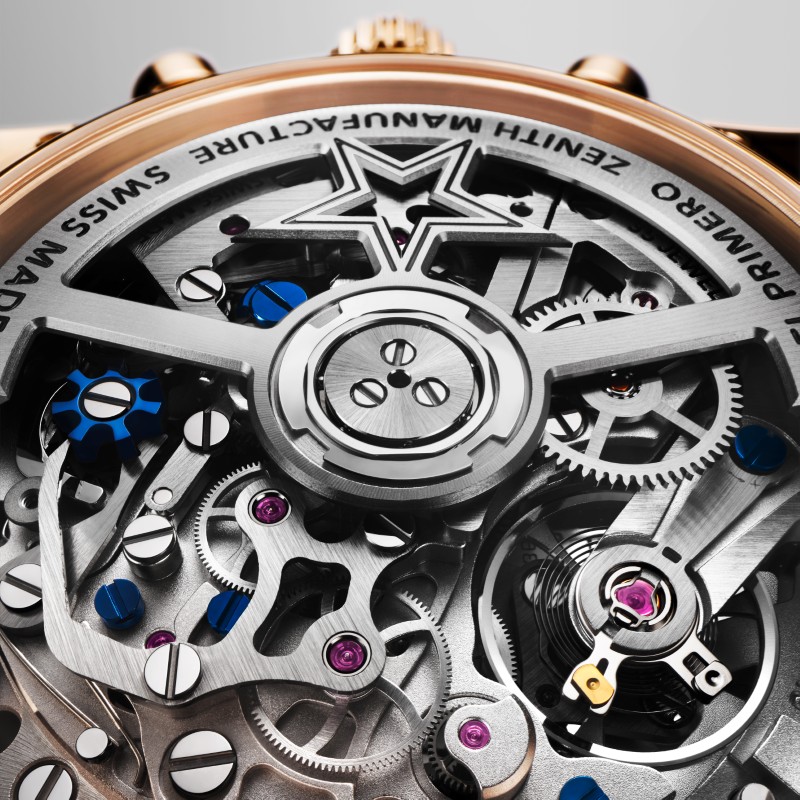
For 2026, Zenith has decided to reveal more of the technical mastery that allows this to happen by skeletonising the movement and combining it with a transparent dial. The El Primero 3600 SK movement was delicately openworked with careful attention to structural integrity and chronometric performance, ensuring that the movement’s high-frequency precision remains uncompromised. And as an added level of sophistication, the sapphire dial is subtly tinted from black at the periphery to transparent at the centre. The signature elements that define an El Primero chronograph—the grey, anthracite and blue subdials—have also been cleverly retained despite the transparent nature of the dial.
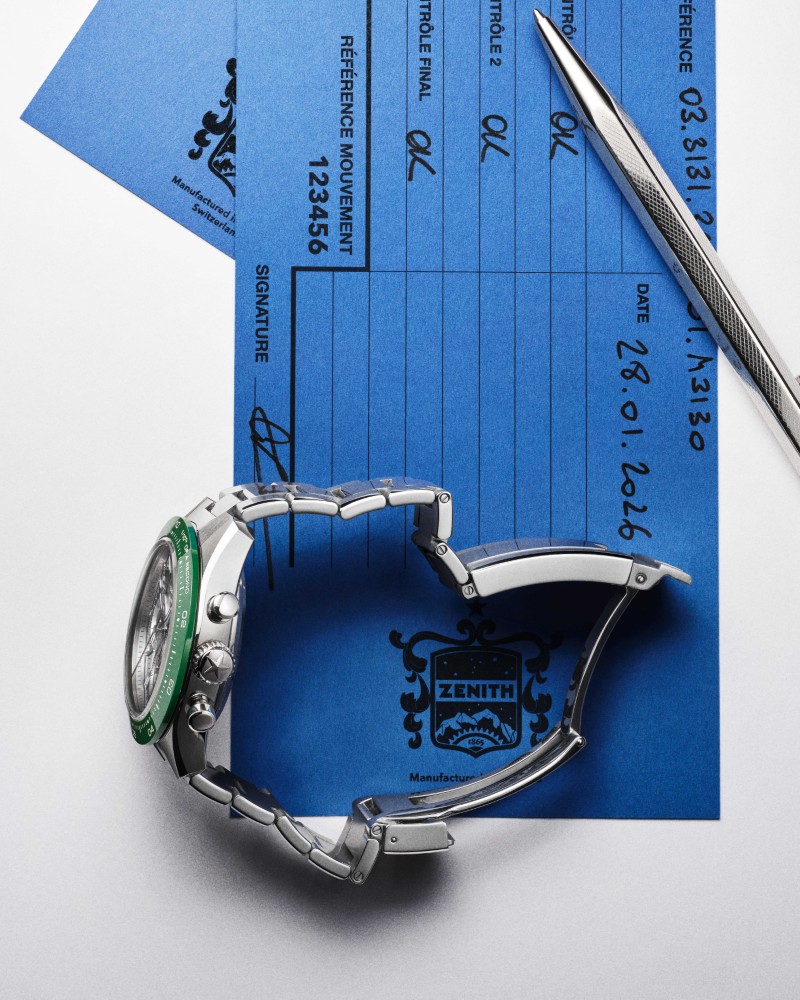
What is perhaps the most overlooked aspect of this new Chronomaster Sport Skeleton is the clasp on the bracelet. Yes, you read correctly. This clasp is a completely new patented folding clasp for the watch and took them three years, or 1,800 hours, of research to develop. The clasp is secured by a liftup cover and a fastening system reinforced by ceramic ball components. There is a new micro-adjust function on the watch that allows for 2 mm increments across five positions—a total range of 10 mm—without the need for tools, and lastly, it has been tested for use in simulations exceeding 10 years, which is more than 600,000 cumulative cycles.