Louis Vuitton Puts A New Spin on Their Spin Time Complication
One of the greatest things about the watchmaking industry is that there is often a very high ceiling when it …
One of the greatest things about the watchmaking industry is that there is often a very high ceiling when it comes to mechanical technicality, in the sense that there is no real limit to creativity save, perhaps, for the laws of physics. Of course, the cost of creating such things remains a realistic barrier to how far manufactures will push their creations, but even then, if the complications are compelling enough, there will be enthusiasts who have an equally high tolerance for this. There are countless real-world examples of this within watchmaking, but the one we are looking at in this article is the Spin Time complication from Louis Vuitton.
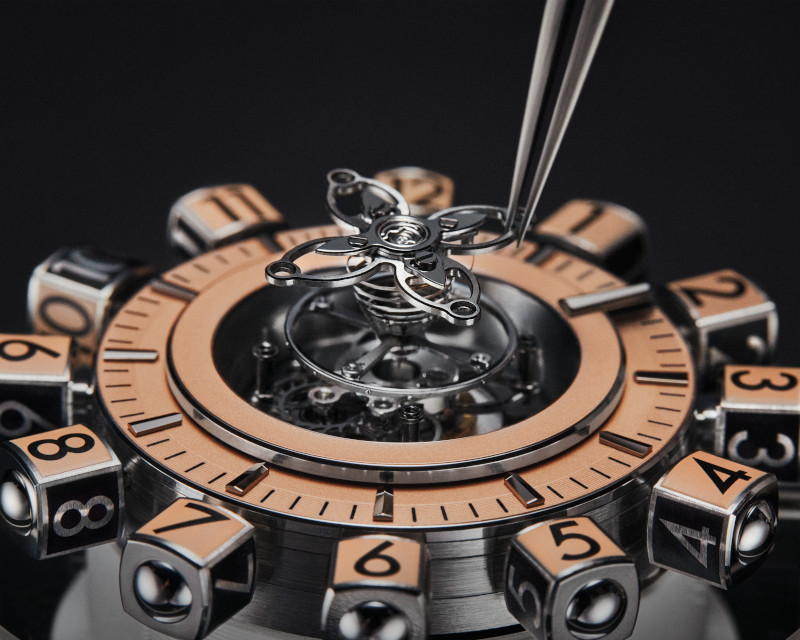
This complication is a great example of how a brand can take a known and, in this case, basic function of a watch, which is to tell time, and reinvent it with a novel concept. At its core, the Spin Time from Louis Vuitton is just another way to tell time. Instead of hands, it uses spinning cubes placed where the 12 hour markers should be, and each of these spins to reveal the hour and hides itself again once the hour passes. It sounds simple, but anyone with experience in watchmaking will tell you that going from hands to spinning cubes takes a whole other level of engineering. For one, it needs a jumping hour mechanism, because it would be unsightly to have the cubes rotate slowly over the course of the entire hour, and the magic would undoubtedly be lost. Secondly, moving these cubes requires more energy, which means the entire geartrain must be adjusted to deal with the extra torque.
The result, however, is well worth the extra engineering steps, as there is a sense of joy in seeing the hour jump from one cube to the next. The idea itself was conceived in 2007 by the founders of La Fabrique du Temps (LFT), Michel Navas and Enrico Barbasini, inspired by the mechanical departure boards found in airports and railway stations before everything went digital. In 2009, the Tambour Spin Time debuted and was the first movement developed by the manufacture for Louis Vuitton, before the manufacture was eventually absorbed into the brand to become its source of in-house capabilities.
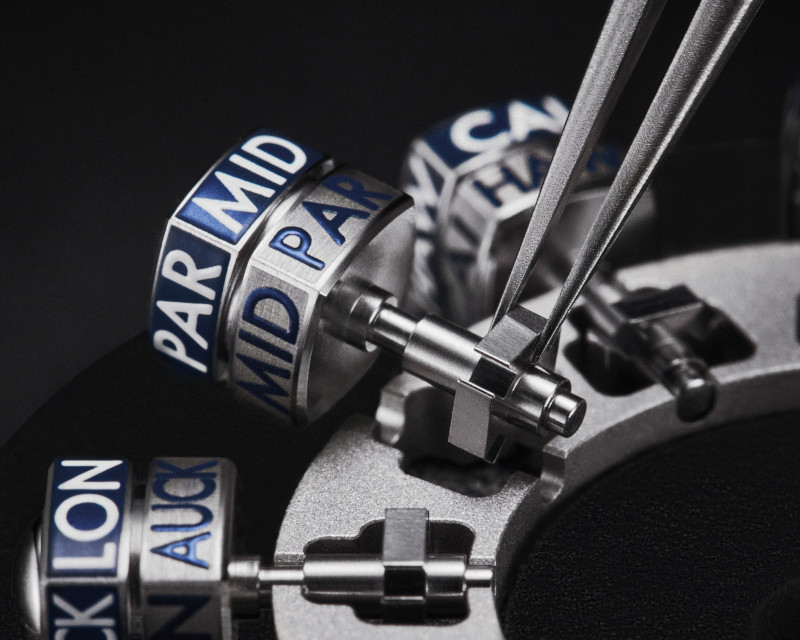
Since its conception, the Spin Time complication has become a signature for Louis Vuitton. It is one of the complications with the most direct connection to Louis Vuitton’s travel heritage, with the brand’s trunks having been taken on countless journeys since 1854. Frankly, it also offers a way of telling time that has become entirely unique to the brand. Over the years, the Spin Time has grown in complexity, offering more ways to enjoy this unique complication, and this growth can be observed in this year’s Spin Time novelties. From the base movement, it has been updated to reveal more of the spinning cubes with the Tambour Spin Time Air, given a world passport with the Tambour Spin Time Air Antipode, and even combined with a flying tourbillon that sits in the centre of the watch.
“When we launched the Tambour Spin Time collection in 2025, we knew it was the beginning of something, not the conclusion,” says Jean Arnault. “The permanent range is that next step — the Spin Time is no longer an occasion, it is a lasting icon that demonstrates the technical and artisanal savoir faire of the House.”
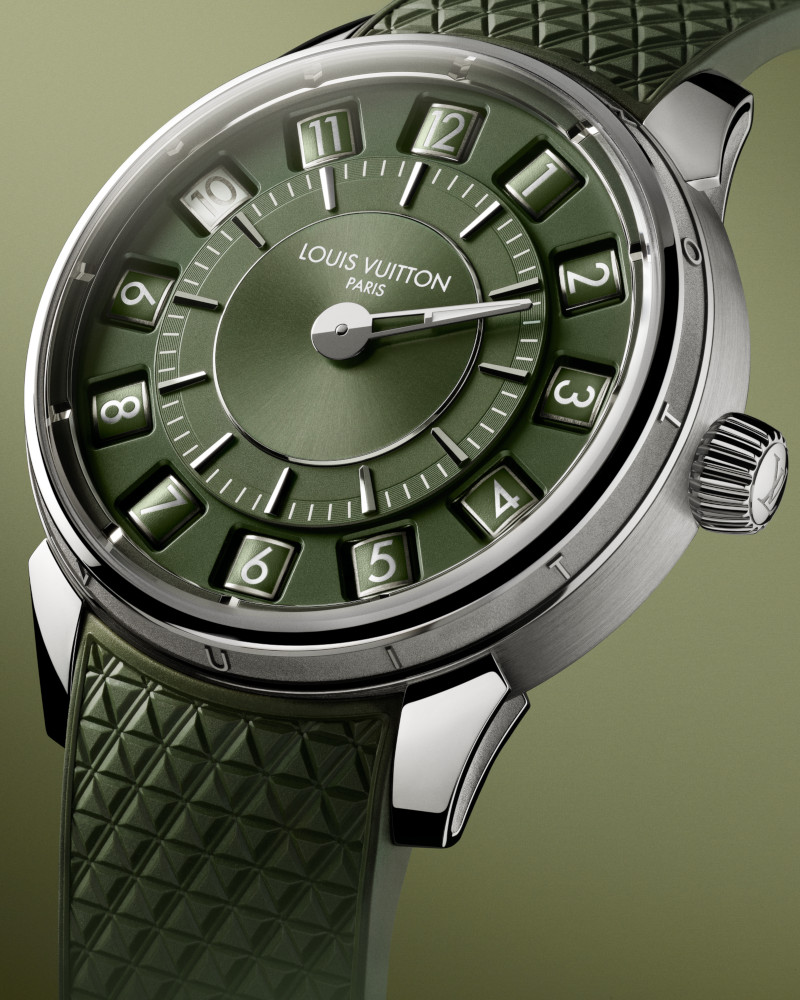
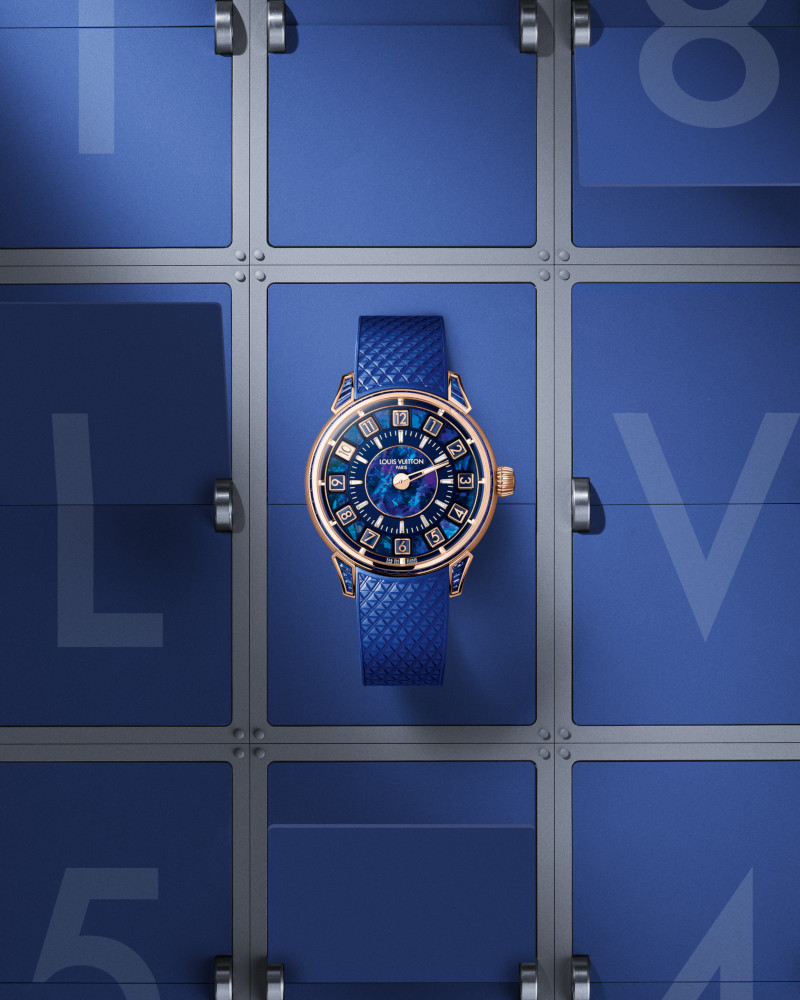
This year, the Tambour Spin Time is revealed with a sunray and sandblasted deep, earthy green dial, coupled with a white gold case. The case is 39.5 mm, an extremely versatile size for today’s collectors, considering the return to mid-size cases. To offer even more options, Louis Vuitton has, for the first time, given the Tambour Spin Time a natural stone dial, choosing Australian opal for its shifting colours, which alternate between indigo, teal, and cerulean as the light catches it from different angles.
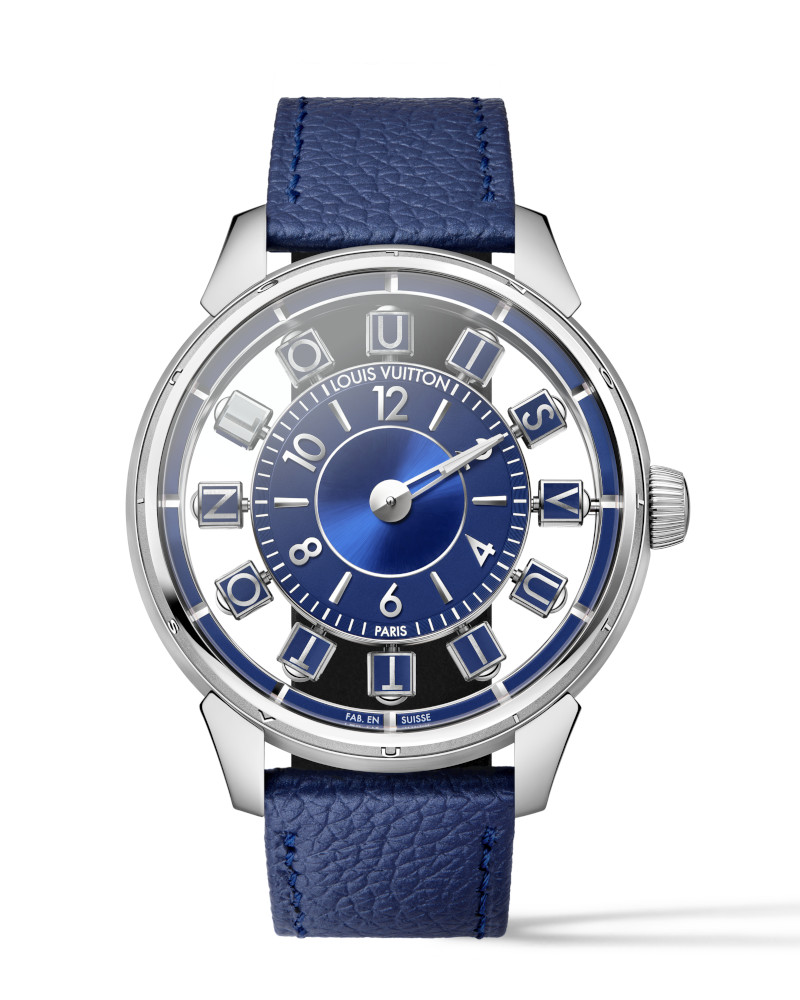
Granted, the Tambour Spin Time Air is not much of a departure from the original mechanism. It still uses the same calibre ST13.01 movement as the Tambour Spin Time from 2025, but with all the bits between the 12 cubes removed. The effect, however, is monumental, as the Spin Time Air looks as if the movement is floating at the centre of the watch. In a clever twist, the 12 hour markers coincide exactly with the number of letters it takes to spell Louis Vuitton, so instead of numbers, the 12 cubes carry these letters, and the hour is marked by a contrasting cube. The novelty for this year is that the Tambour Spin Time Air has entered the permanent collection, housed in a beautiful white gold case with the Tambour’s signature blue dial.
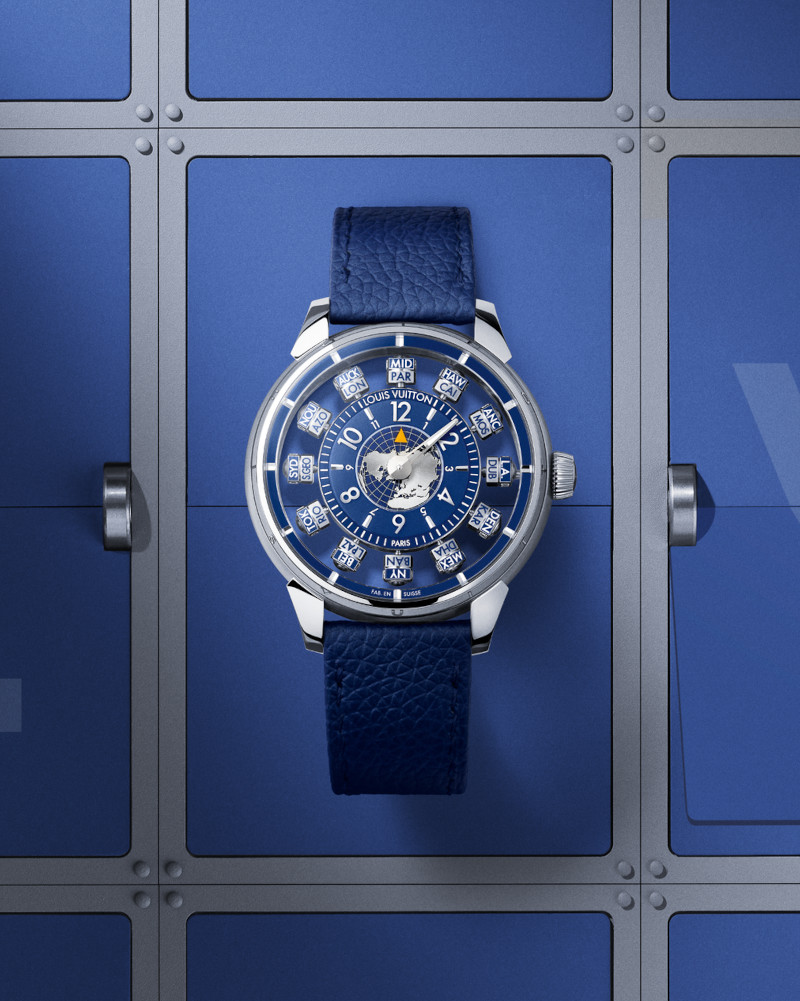
Adding a world time complication with the restriction of only 12 spinning cubes took a little creativity on LFT’s part. To achieve this world timer, they paired the 24 major time zones using two cities that are 12 hours apart. For example, Los Angeles and Dubai, New York and Bangkok, and Paris and the Midway Islands each share a cube. To read the time, the 12- hour scale on the inner disc jumps each hour, and the corresponding time for each city can be read intuitively. The cubes with the cities also rotate when one city of the pair moves from night to day, usually at 7 AM/PM, inverting the colours of both cities on the cube to indicate which is in daytime and which is in nighttime. A miniature-painted yellow pointer, a deliberate reference to the stitching found on Louis Vuitton’s leathergoods, can be set to point to the appropriate hour for the local time.
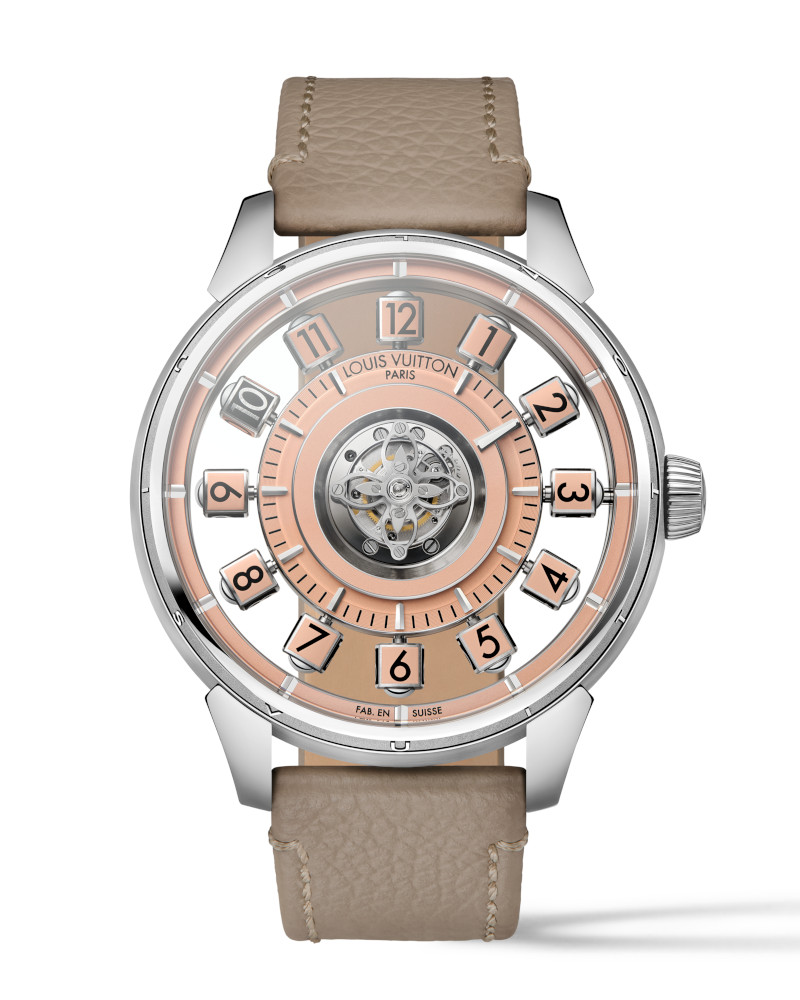
On the highest end of this complication scale sits the Spin Time with a flying tourbillon right at its centre. Putting a tourbillon at the centre of the watch has traditionally been complicated because it displaces the main stem that holds the hour, minute, and seconds hands, around which the entire movement is built. For this central tourbillon, it worked to the movement’s advantage that the hour hand did not need to be displaced, because it was already on the periphery of the timepiece; however, this doesn’t mean it wasn’t complicated to master. The in-house calibre LFT ST05.01 takes about 50 hours to assemble, which is more than double the time needed for any other movement in the current Tambour Spin Time collection. Giving the movement the respect it deserved, it is housed in a platinum case with a beautiful salmon dial. The dial colour was formulated in collaboration with La Fabrique des Cadrans, the specialist dial division of LFT, which chose among several shades before arriving at this soft hue to pair with the cool grey of the platinum case. All things considered, the Spin Time complication is, in and of itself, a fantastic complication to have. However, as we have mentioned at the top of the story, one of the joys of collecting is that there are a myriad of ways to increase the complexity of a movement. Therefore, with the Tambour Spin Time collection, no matter where one starts, there will almost always be a reference waiting when the wearer needs to up their game in terms of complication.