Patek Philippe And The Art of "On Demand" Complications
One of the joys of mechanical watches is the way it feels to manipulate, and what better way to experience …
Why do we collect watches? Among the many reasons why we are so enamoured with these little ticking timekeepers on our wrists, I suspect one of the major considerations is their mechanical nature. In a world increasingly entrenched in electronic infrastructure and the digital interfaces that come with it, there is a romanticism attached to the analogue. To escape the ennui of electronic devices, we instead engage with mechanical components dedicated to achieving a single specific task. It is the same romanticism that causes enthusiasts to prefer vintage cars over the EVs of today, the same ideology that drives the resurgence of film photography over chasing megapixels, and, for our purposes, the same philosophy that drives us to buy, collect and obsess over the “beating heart” nature of a balance spring over the droning tick of a quartz oscillator.
Through the demand for these mechanical timekeepers, brands like Patek Philippe have been able to invest considerable resources into both preserving and advancing, in tandem, the art of horology. By continuously making watches with traditional artistic crafts, they have the ability to keep these master artisans employed, thus keeping these crafts alive, not just within the manufacture but also by passing down the know‑how to the next generation. Additionally, the amount of innovation that goes into the making of these watches is incredible. Some of the things they have managed to achieve within the constraints of a wearable wristwatch are frankly astounding. Development is always present within the watchmaking industry, and it takes years, sometimes decades, to keep honing movements for chronometric precision and reliability.
One of the things that often gets undervalued in a mechanical watch is the way it feels to manipulate. This is something that is not entirely obvious but nonetheless has a very visceral and direct connection to its wearer. With each wave of development within watchmaking, such as computer‑aided design and higher tolerances on the various machines surrounding the industry, the watch becomes more pleasurable to manipulate. Which is why, to shine the spotlight on this aspect of watchmaking, we are dedicating this cover story to the watches that, for lack of a better phrase, love to be manipulated. These are watches with complications that require human intervention, the immediate transfer of energy from human hands to the mechanical components within, setting off a domino effect of movement to trigger a specific function. And let’s face it, these are the best kinds of complications, the kinds that allow their wearer to tinker and play with at any time of the day for that microdose of dopamine that comes with witnessing something beautiful happen at the push of a button, on demand.
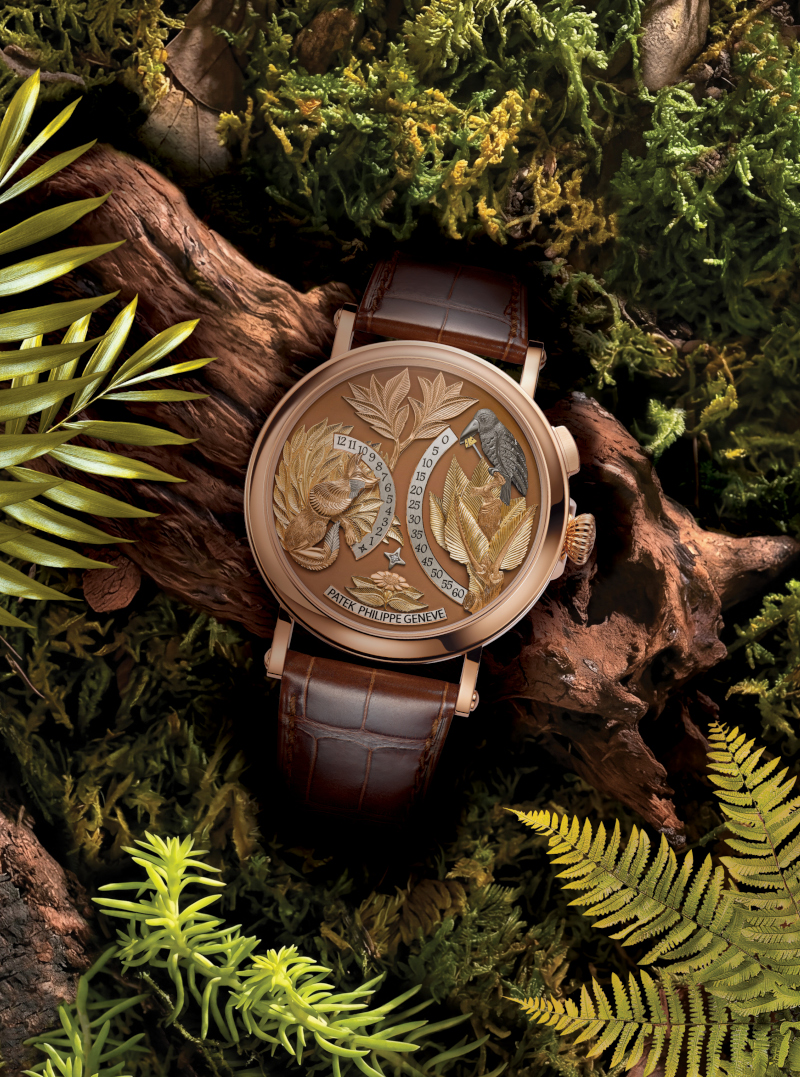
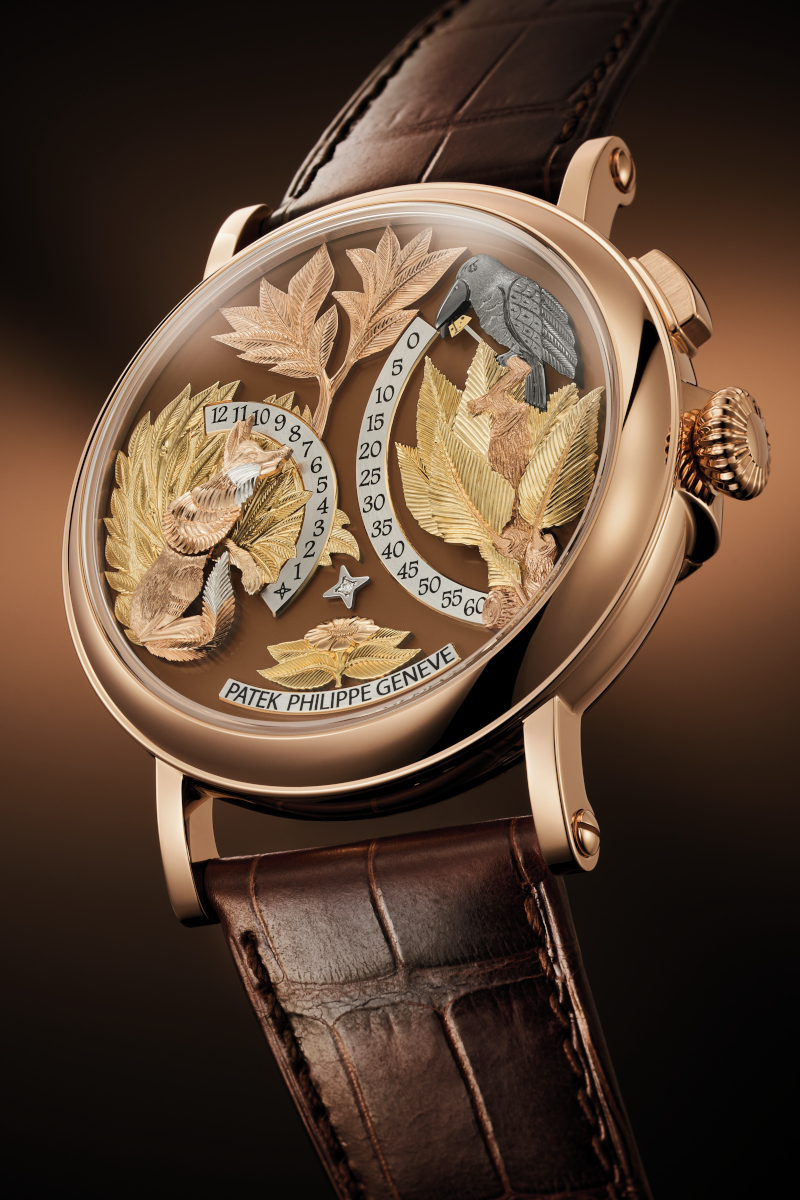
I can’t think of a better on‑demand complication than the automaton, for it represents the purely hedonistic aspect of luxury watchmaking. It is a complication that, when activated, often serves no practical purpose other than utilising its intricate mechanical construction to entertain the wearer. And for this reason, we chose the new Patek Philippe Ref. 5249R‑001 “The Crow and the Fox” as the watch on the cover of our Summer 2026 issue and as the main highlight to kickstart this article about on‑demand complications.
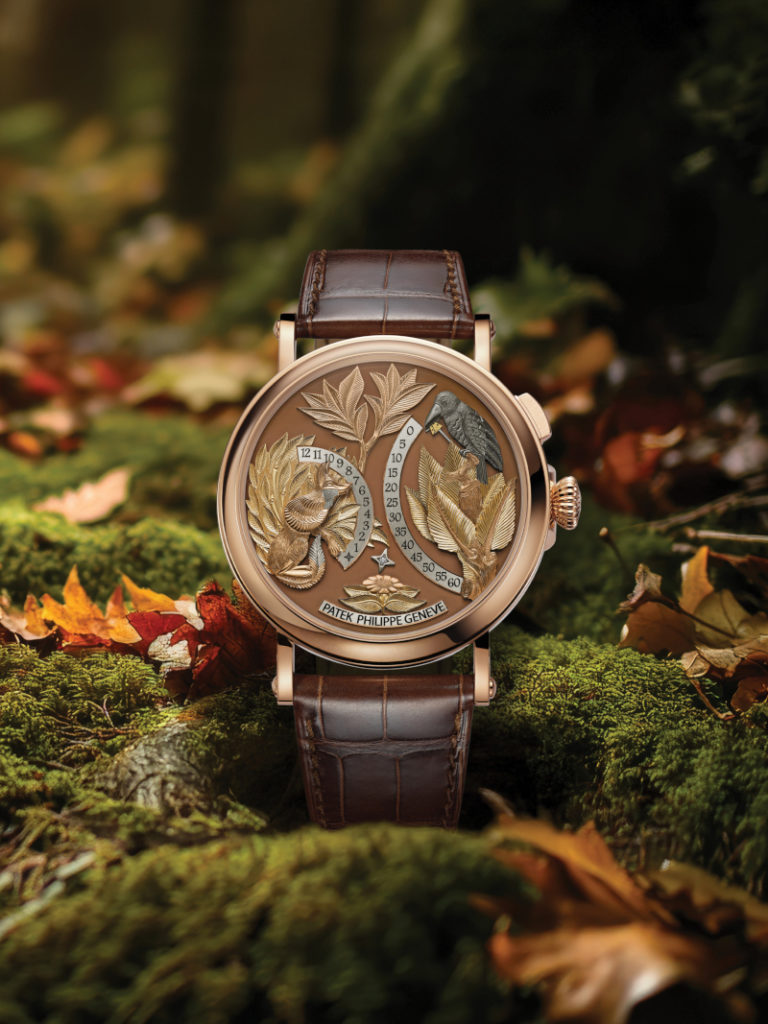
Although most automatons serve no practical purpose, the Ref. 5249R‑001 incorporates the automaton into the most important function of a wristwatch, which is to tell time. When activated, the fox and the crow on the dial take turns indicating the hour and minutes. It is important to note that this whimsical timepiece represents the first‑ever automaton wristwatch in Patek Philippe’s modern history. Inspired by a pocket watch with a similar automaton presented in 1958, this timepiece, also named “The Crow and the Fox,” is a horological jewel and can still be found exhibited in the Patek Philippe Museum. The pocket watch was originally inspired by a fable of the same name, written by Jean de La Fontaine, one of the most celebrated authors in French literature. In it, the fox tricks the crow with flattery, coaxing it to sing and, in doing so, drop a piece of cheese it had in its mouth into the awaiting jaws of the fox.

True to this fable, the Ref. 5249R‑001 works in a similar way. Upon activating the pusher at the two o’clock position, the fox indicates the hours either with its paw or muzzle depending on the time. Then, maintaining the pressure, the minute hand—decorated with a piece of cheese—drops from the crow’s beak to indicate the minutes on the retrograde scale. “Once the time has been read, releasing the push button will return all hands back to their respective resting position.” Because the time is only available on demand, there is a small seconds indicator with a star in white gold set with a diamond instead of a traditional hand to let the wearer know that the watch is working and time is in motion.
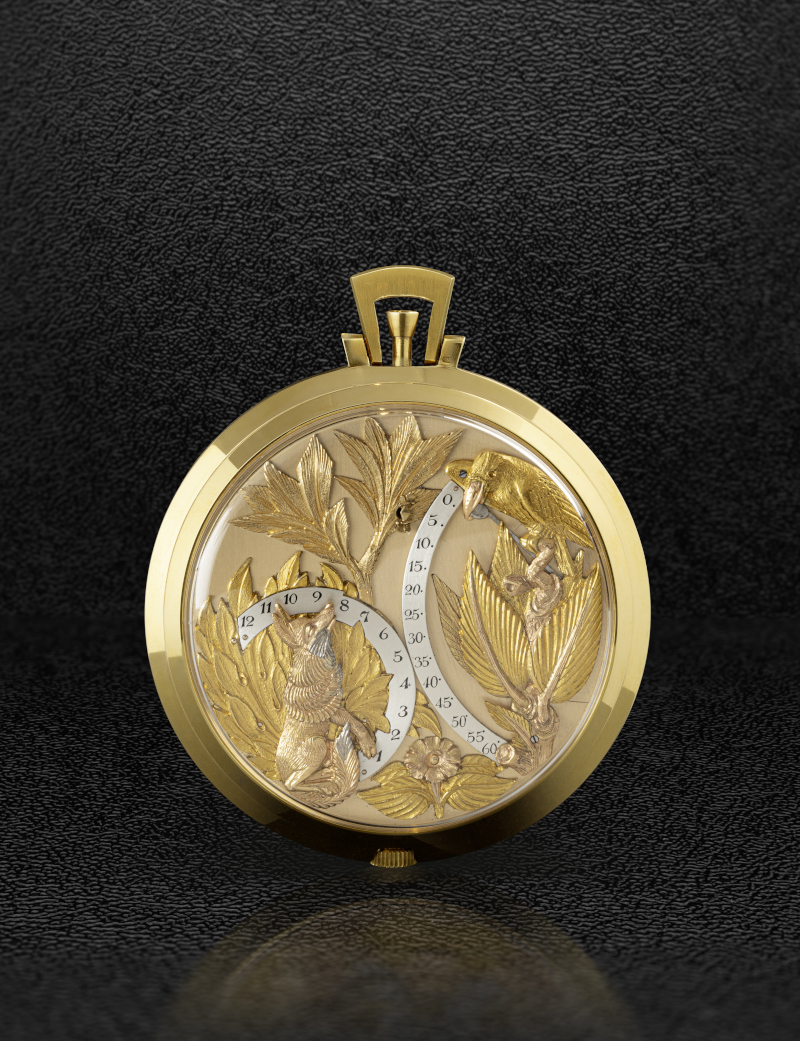
Interestingly, the pocket watch from 1958 was made with the calibre 17‑170 movement, which was a prototype that never went into full production. Its provenance was that the system of double retrograde indications was modified by the great Genevan watchmaker Louis Cottier, the same Cottier who invented the system for indicating time in multiple time zones. Bringing the new Ref. 5249R‑001 to life required a redesign of the mechanism so that it would fit within the confines of a 43 mm case. The calibre 31‑260 PS HMD AU takes advantage of the ultra‑thin micro‑rotor calibre 31‑260 PS and adds a mechanism to display both retrograde hours and minutes on demand. Because the retrograde mechanism functions by means of snail‑shaped cams, the time setting can only be done in a single direction. Turning the crown clockwise moves the hands backwards, and to avoid any damage to the movement, the mechanism is protected by a patented coupling system that activates if the crown is turned anti‑clockwise.
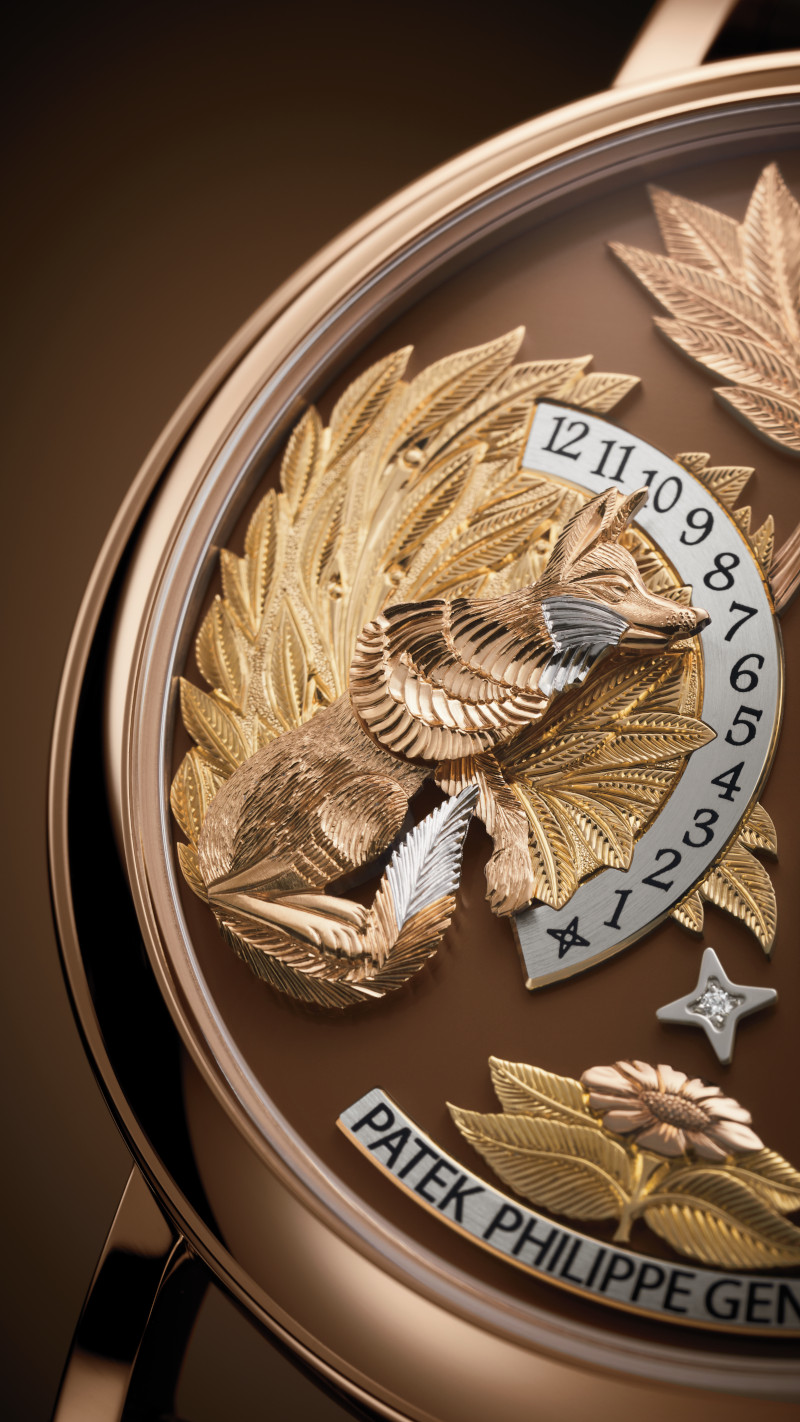
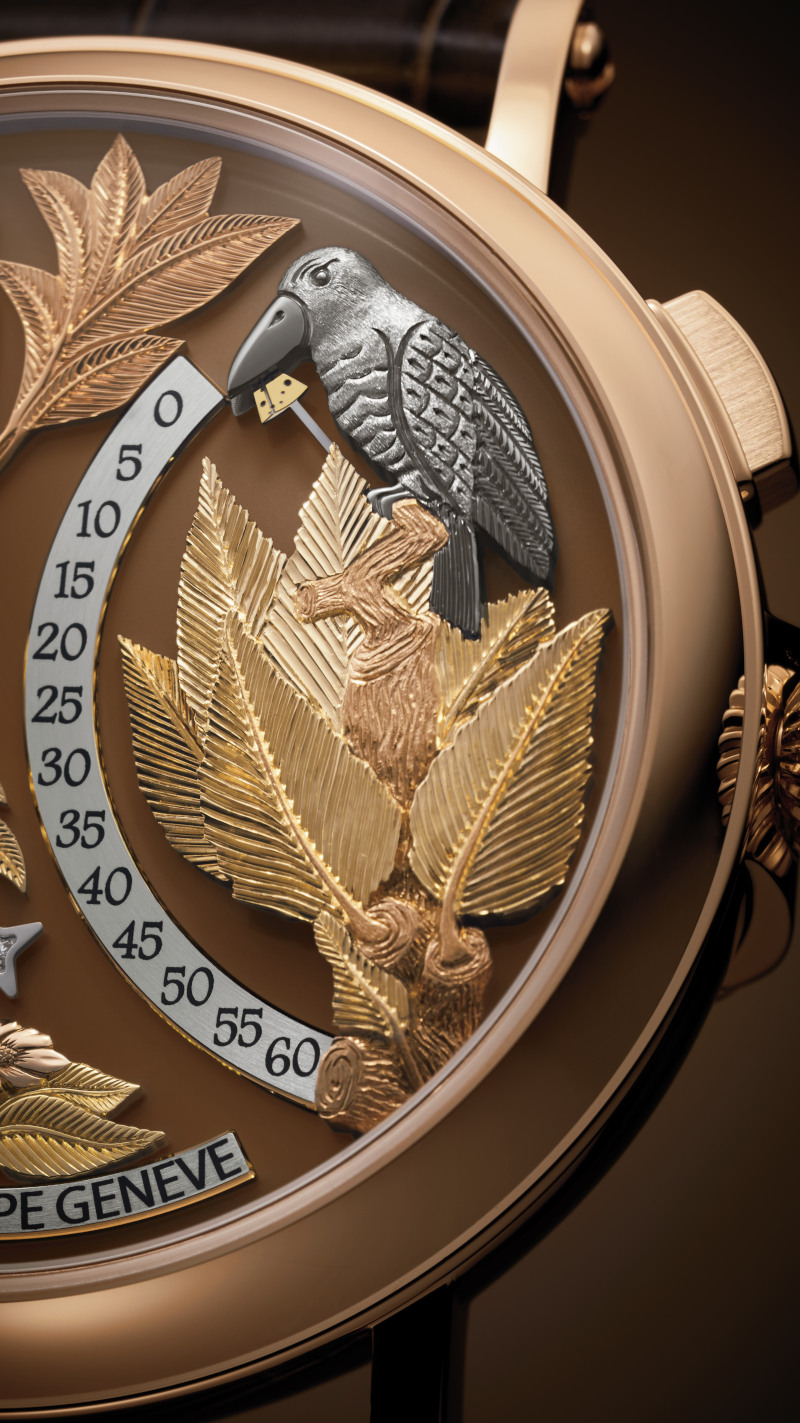
Beyond the intricate mechanism within the Ref. 5249R‑001, the artisanal crafts on this watch are also sublime. While the mechanical components required nearly 70 years of technological and engineering advancements to pull off, the more than 10 appliqués in rose gold, yellow gold and white gold on the dial are only achievable through exceptionally skilled human hands. Engraving the decorative parts is challenging enough, but on the functional parts like the fox’s head and paw, it represents an additional challenge. While engraving requires pressure to remove material, the engraver must take special care to modulate this force because deformation of the profile would risk causing the movement to malfunction. At their thinnest, some applied features measure a mere 0.2 mm in thickness. Even for the minute hand, the cheese had to be made of titanium instead of gold because it needed to be extremely light to prevent any deformation as the automaton is activated.
The case in rose gold is designed in the style of Patek Philippe’s “Officer‑style” watches. The officer‑style watch is so named because it borrows styling from the watches that military officers wore during the First World War. These watches were essentially pocket watches strapped to the wrist and are characterised by screw‑set lugs and the turban‑style crown, both elements found on the Ref. 5249R‑001. The hinged dust cover on the caseback, however, was borrowed from hunter pocket watches. These hinged covers were originally used to protect pocket watches carried by hunters in case they fell from their horses while riding at speed. In contemporary times, the hinged cover has moved to the back of the watch, “protecting” the transparent caseback. With a satisfying click, the cover opens to reveal the intricate and beautifully decorated movement within.
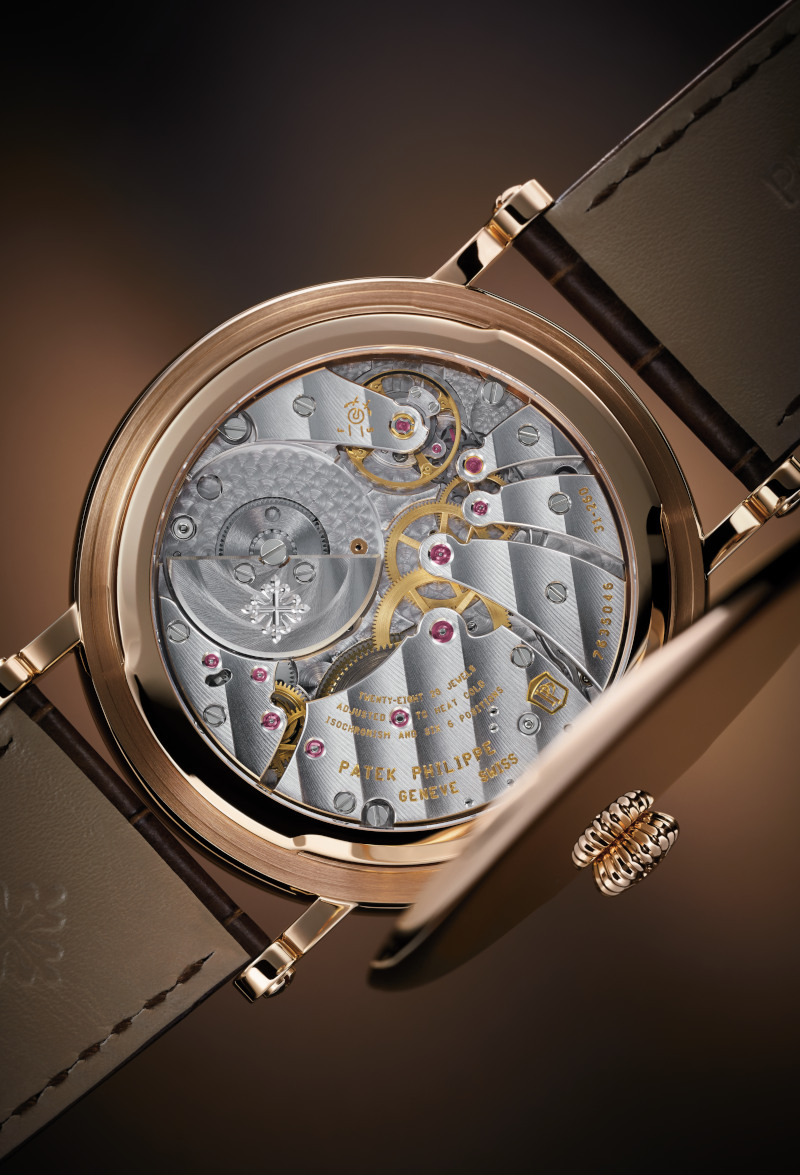
In the original fable, the moral of the story was to beware of flattery as it can sometimes come with an ulterior motive. This will be a hard ask as with the Ref. 5249R-001, there will most definitely be more than a few kind words directed at it. For Patek Philippe however, they chose to interpret this in a different way. In an excerpt from the Patek Philippe book “THE VALUES OF A FAMILY WATCH COMPANY” of 2004, Mr Philippe Stern, then President of Patek Philippe chose this as one of eleven watches that inspired him quoting “This fable is a knowing aside, which I interpret as demonstrating that our aim is not to flatter our clients. We passionately believe in offering them a set of permanent, timeless and intrinsic values that they can identify with from a qualitative, technical and aesthetic point of view, without having to resort to excessive or superficial praise.” In true Patek Philippe fashion they are able to incorporate the highly intricate Ref. 5249R-001 into the current collection of the brand. It won’t be a limited edition but alas, production will undoubtedly be limited considering the complexities of its construction.
If the on‑demand time automaton of the previous watch is the epitome of instant gratification, the alarm function represents a more delayed form of pleasure. With the alarm function of the Patek Philippe Calatrava Alarm Ref. 5322G, the user can set a time up to 24 hours in the future, in 15‑minute intervals, then wait in anticipation as it reaches the designated time and the alarm sounds in a trilling tone on the wrist.
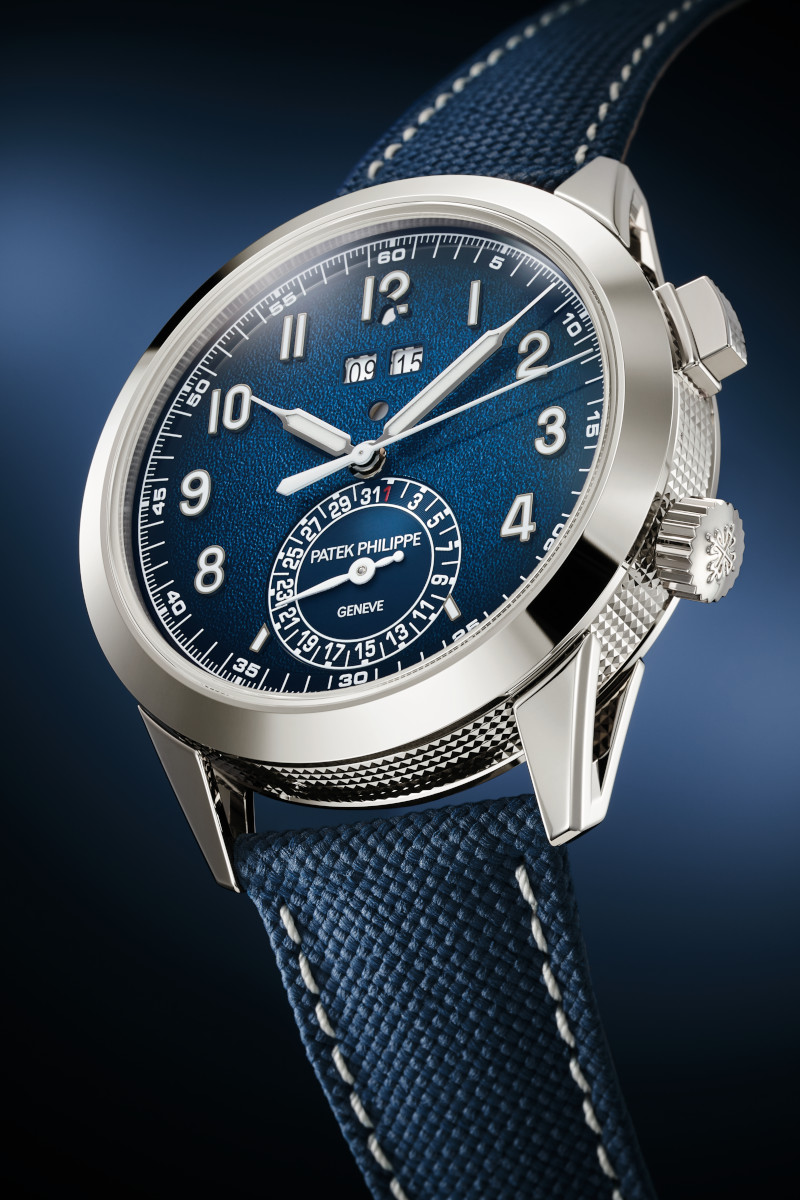
The alarm function is not new for Patek Philippe. The Calatrava Alarm Ref. 5322G may be a novelty for 2026, but it replaces the outgoing Ref. 5520 Pilot Alarm Travel Time presented in 2019, which combined both the Travel Time function and the alarm. This new version, the Ref. 5322G, distils the watch down to a single complication, making the alarm the star of the show. By doing this, the watch becomes a little less daunting to wear; it no longer has four crown‑button pushers but instead a single crown at the 4 o’clock position and a single pusher at the 2 o’clock position. The pusher activates, deactivates and interrupts the alarm, while setting the alarm time is done via the crown. When the little bell‑shaped aperture is white, the alarm is active; when it is black, it is deactivated. The digital time in the apertures just below this bell is the alarm time. This alarm function is also interactive for the wearer, as before the alarm can be activated, it must be given power via the crown. At the home position, turning the crown clockwise winds the barrel for the alarm mechanism, while turning it anti‑clockwise winds the regular barrel.
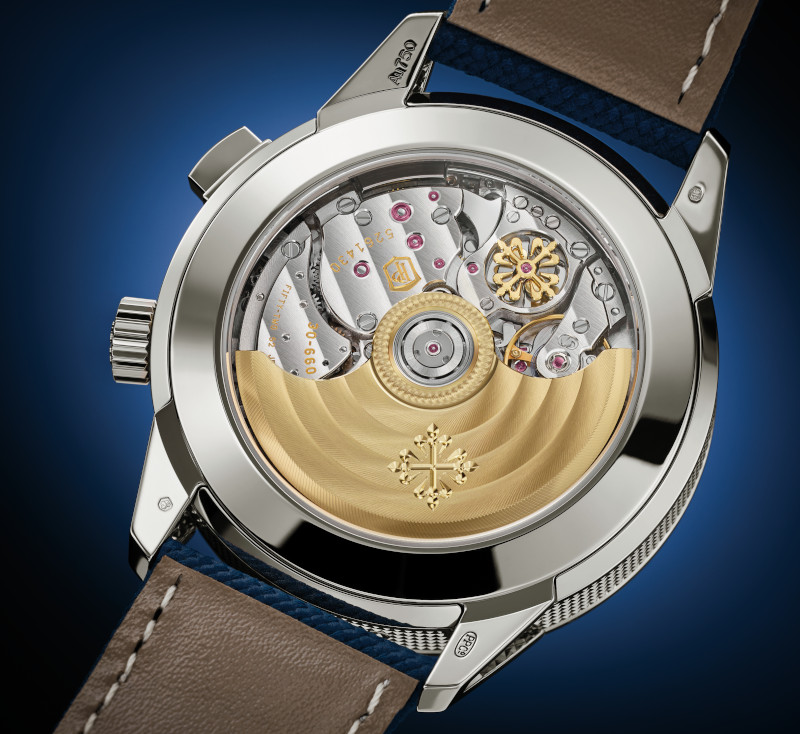
Another layer of complexity that Patek Philippe imparts on their alarm mechanisms comes via the sound. Most alarm wristwatches function by using a hammer to knock directly on the inside of the case, resulting in a more metallic hum. For the Ref. 5322G, however, the calibre AL 30‑660 S C movement sounds the alarm by striking a classic acoustic gong, much like you would find on a minute repeater. It even has the inertial governor component so that the striking is regulated at a constant 2.5 strokes per second for a total of 90 strokes. If left unattended, the alarm will sound for a total of 36 seconds.
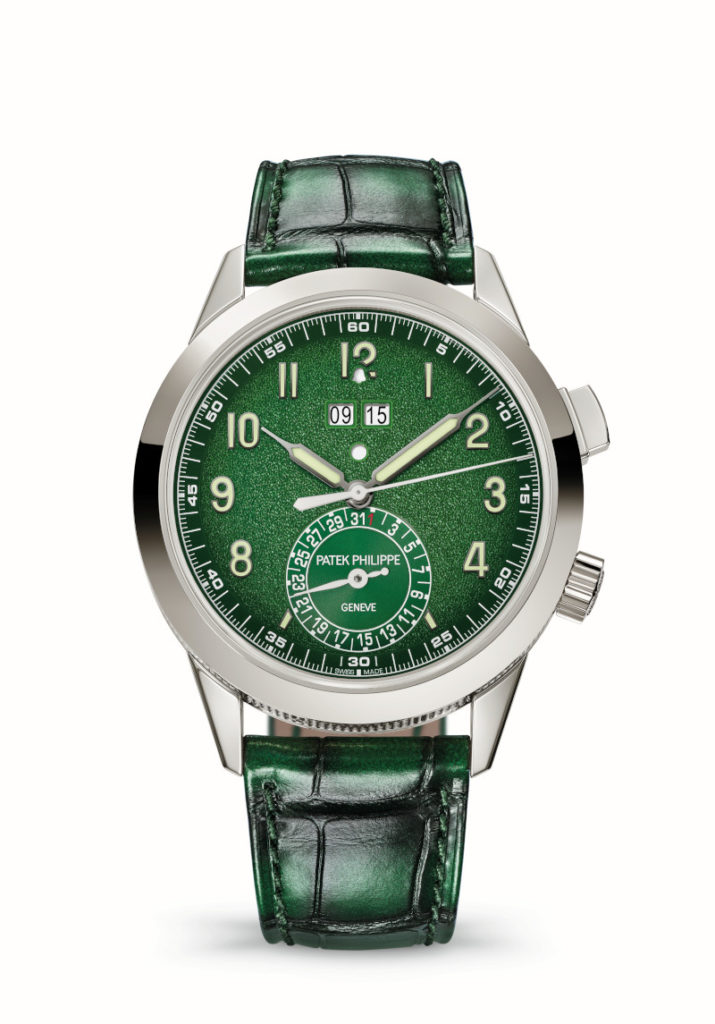
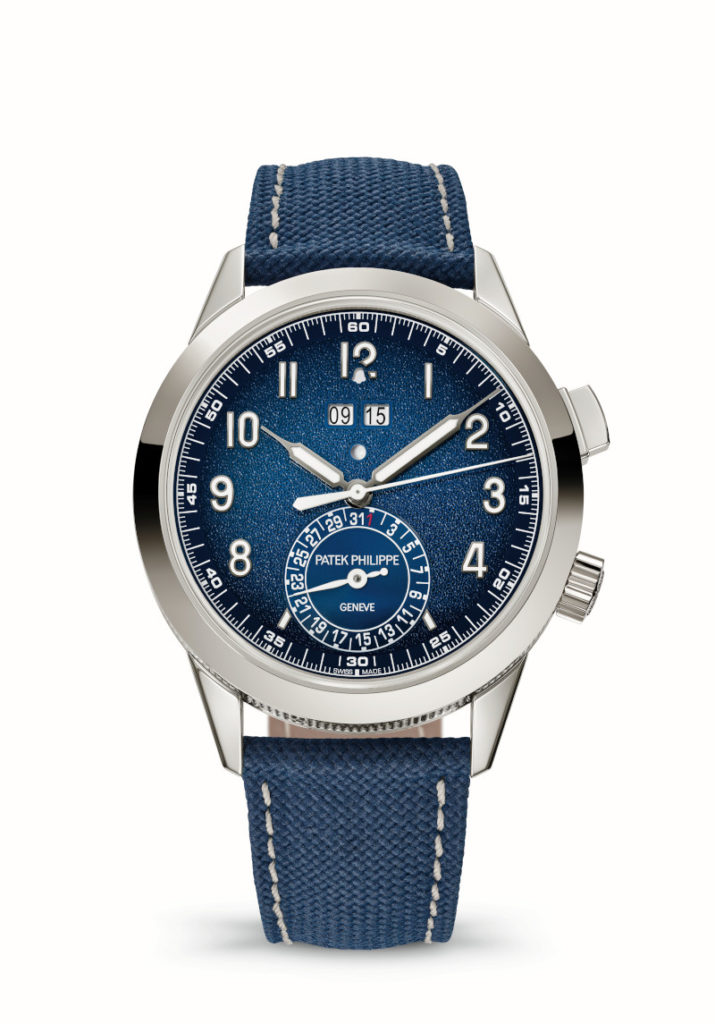
Accompanying such an interesting complication, Patek Philippe has updated the Ref. 5322G with more contemporary styling. The dial takes on a green or blue lacquer finish punctuated with a black gradient rim and a textured base to give it more depth. This aesthetic was first introduced by Patek Philippe in 2022 with References 5226 and 5326. Another recognisable design element on the Ref. 5322G is the openworked lugs on the 41 mm white gold Calatrava case and the brand’s emblematic Clous de Paris or “hobnail” guilloché motif on the side. To preserve the continuity of the motif, the construction of the case is unusual, with the lugs attached to the caseback rather than directly to the case. Interestingly, this is also the only Patek Philippe chiming watch to have water resistance, in this case up to 30 m.
Perhaps one of the most revered on‑demand complications in horology is the minute repeater. There are many variables that need to cooperate to make this complication great. Engineering and technical innovation are one thing, but a great minute repeater also has to sound beautiful, meaning watchmakers must pay special attention to the quality and clarity of the sound. This means fine‑tuning the gongs that the hammers strike, ensuring the vibrations resonate with the case so they can be broadcast to the wearer. Everything must be tweaked to make it near perfect, which is perhaps why every minute repeater that leaves Patek Philippe has to first pass the discerning ears of Mr Thierry Stern himself.
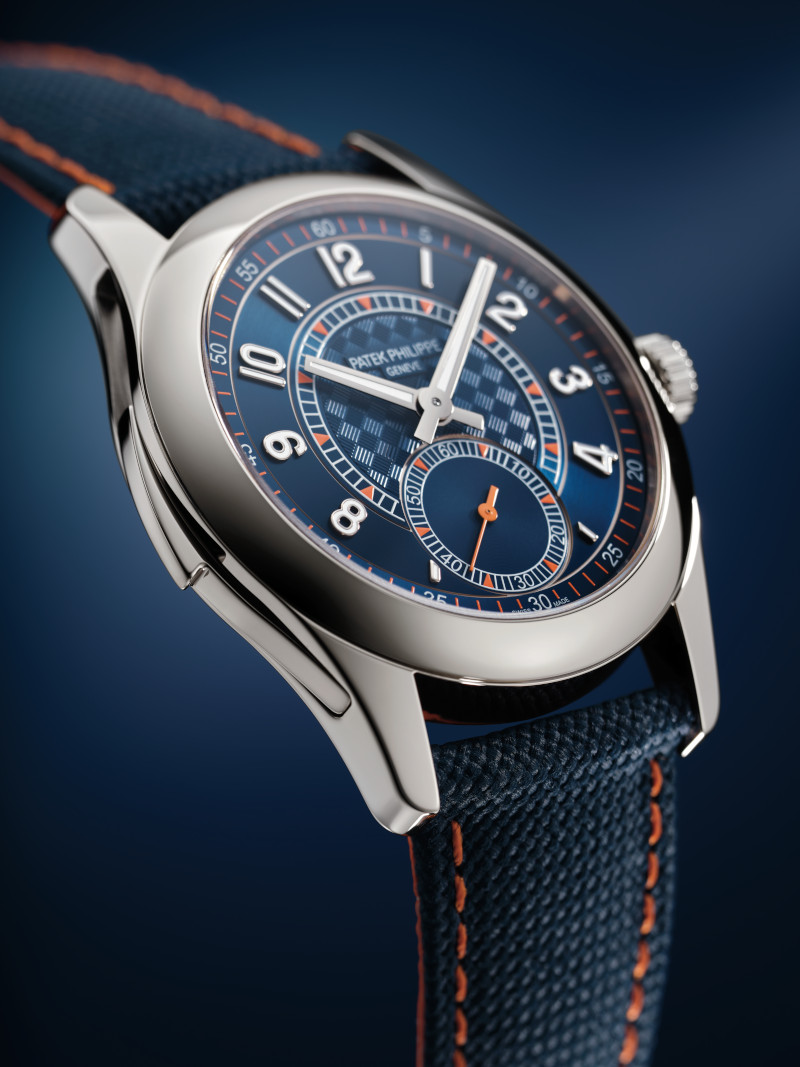
The minute repeater is special because it is one of the few complications on a wristwatch that has its own power source. In most modern minute repeaters, like the new Patek Philippe Ref. 7047G, this power comes from the hand that activates the mechanism. By pushing the slider, the wearer imparts the required energy into the complication, which is then discharged as a series of single and double strikes of the hammer on the gongs to indicate the hour and minutes via the resulting chime.
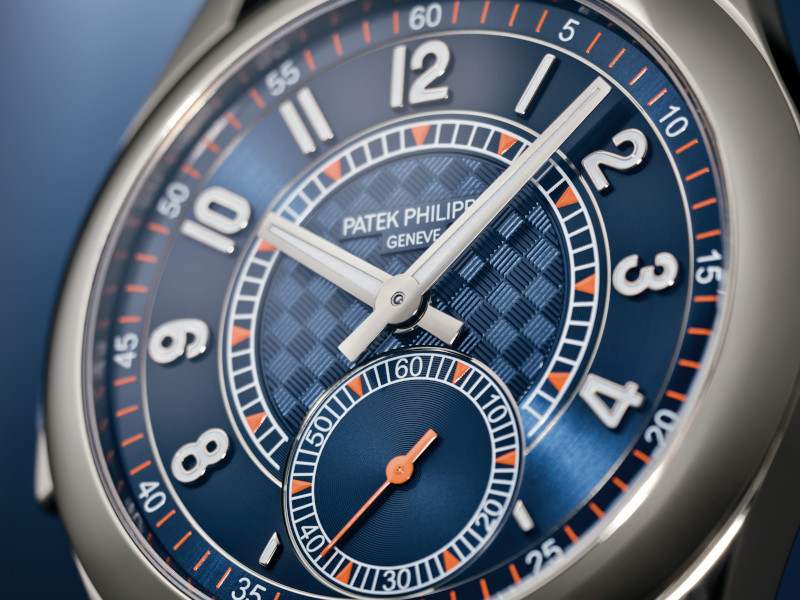
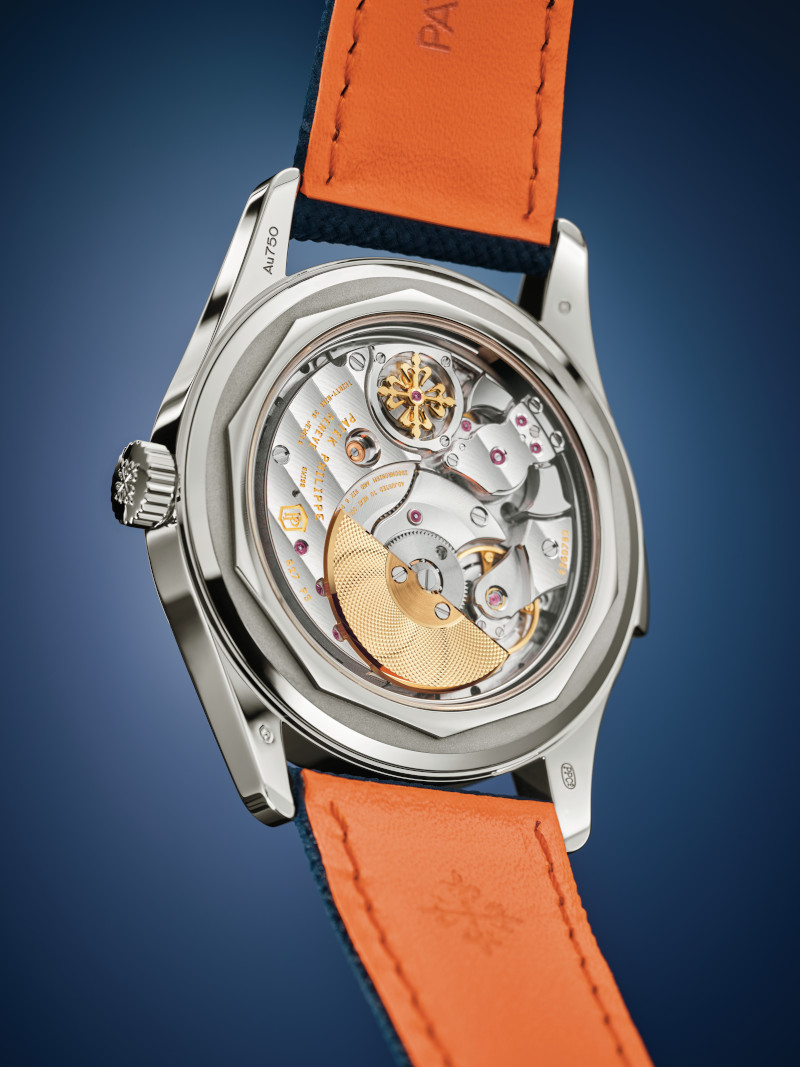
For this Patek Philippe minute repeater, they chose to interpret it with a modern twist, inspired by the Ref. 6007. The Ref. 6007 was a commemorative series in stainless steel issued in 2019 to celebrate the opening of the manufacture’s new production facility, PP6. One of its defining characteristics was a dynamic embossed carbon motif on the centre dial, an element clearly seen on the new Ref. 7047G as well. Considering that most of Patek Philippe’s minute repeaters are made with very classical aesthetic elements, the fact that this minute repeater has both hands and white gold numerals filled with a white luminescent coating is quite interesting. More interesting is the irony that while the original minute repeaters were made to help tell time in the dark, the luminescent glow means there is no real need to activate the mechanism, as it will help you read time in the absence of light. Sorry, what I mean is that there is no practical need to activate this, but there will always be an emotional appeal to sliding the lever of a minute repeater and basking in the glorious chimes that follow.