The Fall and Rise of IWC's Famed Ingenieur
Engineered Ingenuity
They called it their most brilliant failure. And frankly, I respect that IWC had the guts to label their original Ingenieur for what it was. A brilliant failure. Sometimes in the watch industry, things don’t work out, and whether it’s the design or marketing, or a combination of these and perhaps other factors, the Ingenieur didn’t quite become a sensational hit. Not many brands dare to admit when they got it wrong. But IWC did, and as the decades crept by, the collection was slowly consigned to obscurity, going to rest within the brand’s vast archives.
Unlike time, which steadily moves forward in a linear fashion, trends tend to be cyclical, and now, 70 years later, the demand for sporty, more casual timepieces with integrated bracelets is peaking in demand. This was exactly the moment that IWC chose to bring back this so-called failure. They had the chance to look with fresh eyes upon the Ingenieur collection and right the wrongs of their predecessors. With all of their amassed technical experience, design refinement, and business acumen, in 2023, the Ingenieur was relaunched, this time to an audience hungry for everything it stood for. And IWC is confident that timing, tastes, and savoir-faire are in alignment. They are confident that this time they have got it right because for 2025 the Ingenieur line has been expanded to encompass a variety of case sizes, material options, and even its first complication.
Much like the executives at IWC, to understand why the early Ingenieur failed, one has to travel back in time, going back to the impetus of its creation. At the time, IWC thought they had identified a gap in the market, making a watch that was targeted directly to engineers. Hence the name, Ingenieur. The idea was to offer a timepiece that was highly resistant to magnetism, which would thus appeal to the engineers as they often work with machines that generate significant electromagnetic fields.
The very first Ingenieur was launched in 1955, the Ref. 666, and IWC put a soft iron cage between the case of the watch and the movement to protect the regulating organ from the magnetic fields. The resulting watch was antimagnetic up to 1,000 gauss, which roughly equates to 80,000 A/m. According to Christian Knoop, IWC’s Chief Design Officer, this method of using a soft iron cage to shield the movement from magnetism had already been developed earlier for the Pilot’s Watch Mark 11 in 1948 for the British Royal Air Force and was adopted for the Ref. 666. What is new for this Ingenieur, however, was the Calibre 8531 that was the first of IWC’s movements to use the now-famed Pellaton winding system. Although this meant that the watch was incredibly functional, the sacrifice came at the cost of a greater thickness. Reports suggest that the Ref. 666 was 36.5mm in diameter and 13.2mm in thickness.
The very first Ingenieur didn’t quite look like the Ingenieur of today. Instead, it was dressier and came without a bezel. The true spiritual origin of today’s Ingenieur came a little later in 1976 with the debut of the legendary Ingenieur SL “Jumbo”. Not much has been said about whether the Ref. 666 was successful, but it was replaced in 1967 with the Ref. 866, and already by the end of the 1960s, there were talks of a “new, heavier Ingenieur Steel model” among IWC’s management. Gérald Genta was already known to IWC, having designed a steel chronograph model for the brand in 1967, which never materialised. So, they commissioned him to create this new Ingenieur, and in 1976, the Ingenieur SL “Jumbo” Ref. 1832 was born.
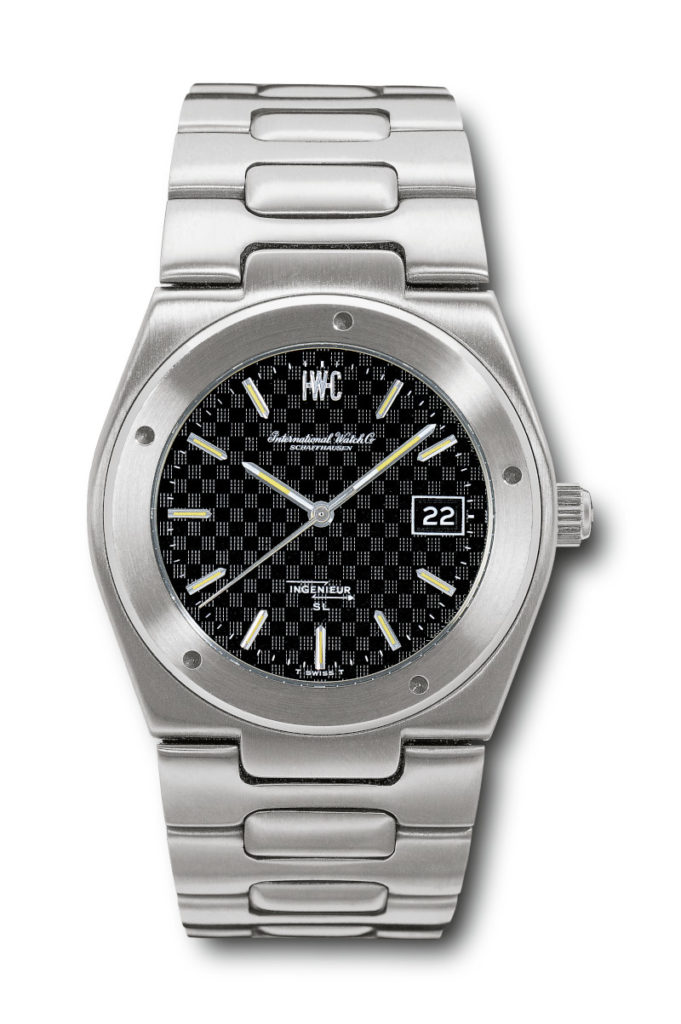
The Ref. 1832 was nicknamed “Jumbo” because it came in a 40mm case, normal by today’s standards, but quite a bit bigger than the watches of the 1970s. Just as the original Ref. 666, the Ingenieur SL also had a soft iron inner case which shielded it from magnetic fields of up to 80,000 A/m. Funnily enough, when asked what the SL actually stands for, Hannes Pantli, IWC’s veteran Sales and Marketing Director, says, “They did not have any specific meaning. For the Italians, it meant “Super Lusso”, for the French “Super Luxe”. But you could also have interpreted it as “steel” and “luxury”. To be honest, we never actually committed ourselves, and that is why there’s never been an official answer to the question. The truth is that we were inspired by a well-known model produced by a German car manufacturer.”
Unlike some of the other Genta-designed watches of the time, the Ingenieur just never found its footing. It could have been that the watch felt large, heavy, and almost bulky on the wrist for the watch wearers of the time, in contrast to the slim and precise quartz watches, which were starting to flood the market. It could also have been that the Ingenieur SL commanded quite a high asking price at CHF 2,000. According to Patli, “The termination of the Bretton Woods agreement in 1971 uncoupled the convertibility of the US dollar to gold. In the early 1970s, a dollar was still buying you 4.30 Swiss Francs, but by 1978 the rate was down to less than 1.50. That made our products much more expensive abroad.”
Between 1976 and 1983, IWC tried various iterations of the Ingenieur, some in a steel-gold combination or pure gold, some with quartz movements, but it just never found commercial success. Within this time, just a little over 1,000 pieces were sold. As you can imagine, when collectors started to become aware of this Genta-designed gem in the 1990s, it suddenly became one of the most sought-after watches from IWC’s history, driving prices sky high. Demand and supply, simple as that.
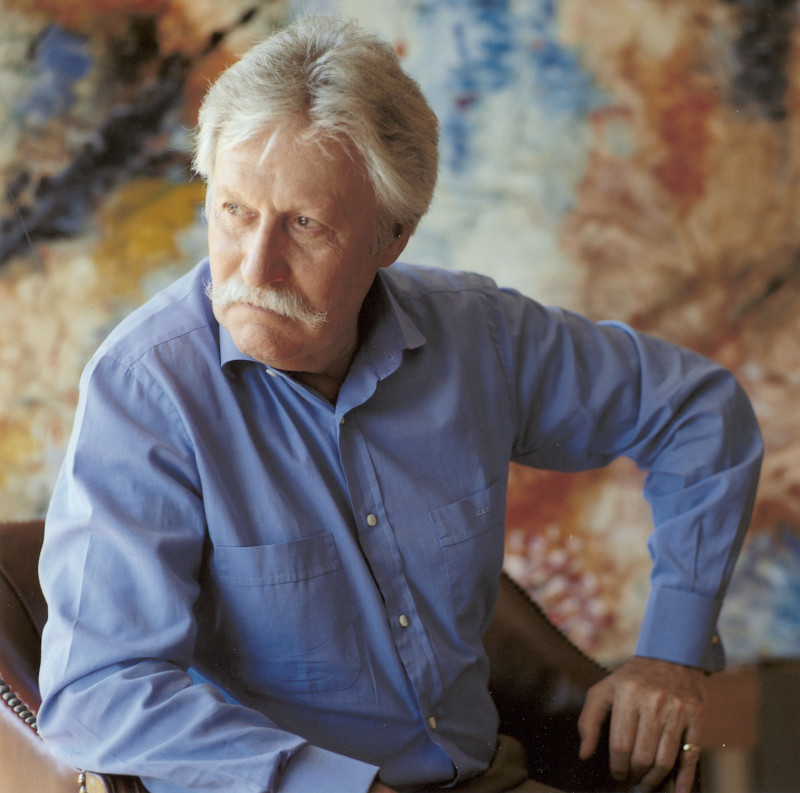
In the decades that came after the Ingenieur SL, IWC has tried many times to revive the Ingenieur collection without much impact on the market. With the version that was relaunched in 2023, however, they may have found a winning formula. Interestingly, according to Christian Knoop, there was an idea to just re-issue the original Ingenieur SL, which I think would appeal to quite a number of watch collectors, but Knoop says, “Initially, we discussed that idea but quickly discarded it because merely reissuing a historical design does not fit in with our aspirations for the Ingenieur collection. As engineers and designers, continuously improving and perfecting something that already exists is our DNA. Evelyne Genta, Gérald Genta’s long-time spouse, business partner, and founder of the Gérald Genta Heritage Association, told us her husband was constantly developing his ideas and refused to cling to old designs. Ultimately, that encouraged us to take the Ingenieur SL as the starting point for a new and contemporary interpretation.”
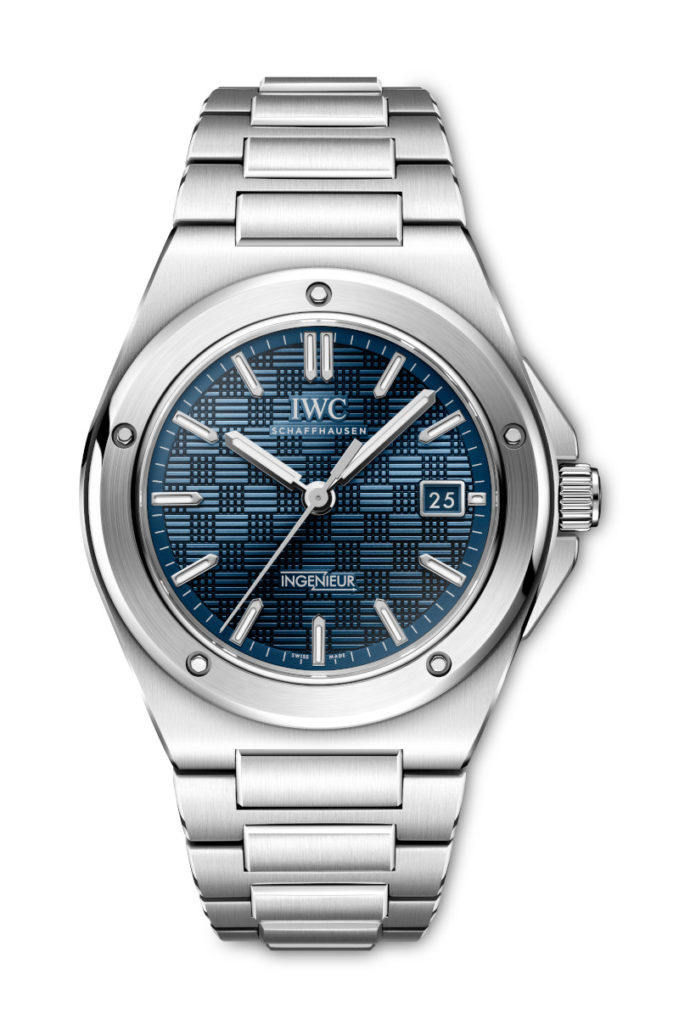
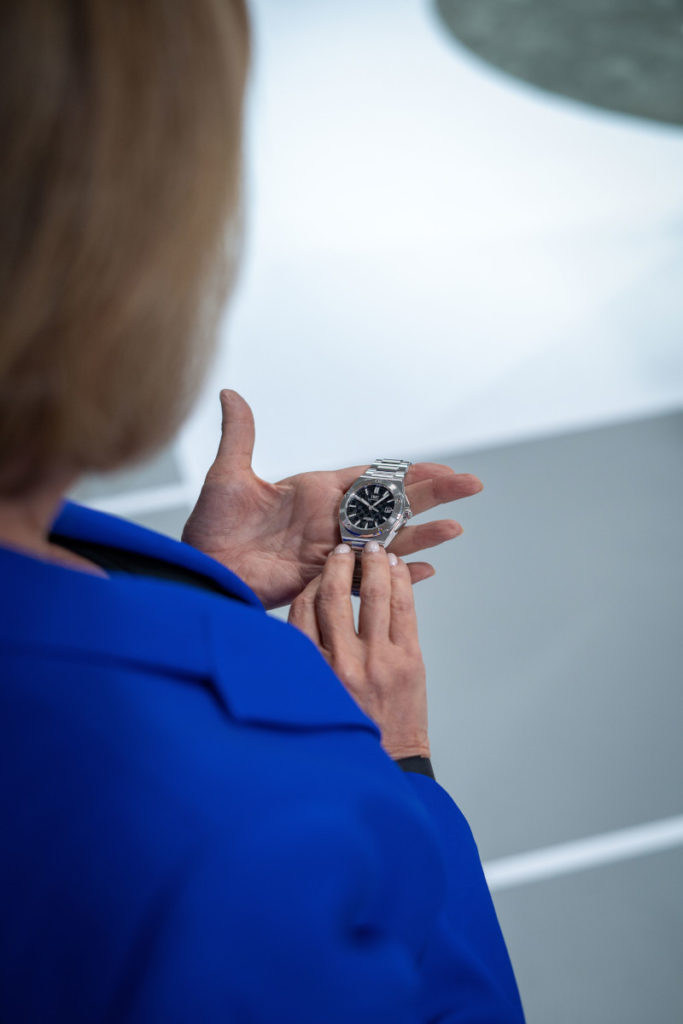
Thus, the new Ingenieur was overhauled, completely redesigned whilst preserving the design codes established with Gérald Genta’s Ref. 1832. The iconic bezel with the five dimpled recesses still remains, along with the stylistic H-Link bracelet, but of course, with all of the incremental upgrades that IWC has garnered over its years of designing and crafting luxury timepieces. For example, one anecdote that Knoop shared about one such attention to detail is the bezel with the five recesses. On the Ingenieur SL, the bezel was simply screwed onto the case, meaning, as Knoop explains, “The position of the recesses was purely random, and they were never in the same place. I’m a perfectionist, so that always bothered me. With the Ingenieur Automatic 40, five screws now secure the bezel to the case ring. The screws have a technical function and, as a result, are always in the same position.”
In terms of proportions, while the 40mm diameter of the Ingenieur SL was considered “Jumbo” for 1976, today it is considered quite a versatile size, and thus the new Ingenieur remains at 40mm. The thickness, however, has been reduced from the 12.5mm of the original to a much slimmer 10.8mm. Besides this, the profile of the case has also been tweaked because it takes more than just the diameter and thickness of a watch to ensure a snug and comfortable fit. After testing countless prototypes, they have added a slight curve in the case ring and a new middle-link attachment on the bracelet, which provides the watch with a better fit on the wrist. All of these improvements have been afforded to the new Ingenieur without compromising the soft iron inner case, which retains the anti-magnetism properties on which the entire collection was founded. And what would an update be if not with an improvement to its movement as well? The relaunched Ingenieur makes use of IWC’s current generation Calibre 32111, which comes with an automatic pawl winding system and 120 hours of power reserve.

With the new Ingenieur, even though it has retained the original name, it is no longer being marketed as a tool for engineers but rather a luxury timepiece that can withstand the rigours of an engineer’s workplace. And as such, there are plenty of subtle craftsmanship details added to the watch. The most obvious of which is the “grid” structure, consisting of small lines and squares, on the dial, which adds an interesting texture and more depth. Knoop adds, “We have optimised countless details you would hardly notice at first glance. For instance, the upper parts of the bracelet now contain closed links without visible pins. This feature not only enhances its overall quality but also underscores the superb finish. The integration of a clean, simple butterfly folding clasp gives full rein to the beauty of the bracelet. Another example is the slightly curved front glass. It is even more finely tuned to the overall proportions of the watch, underscoring its value and sophistication.”
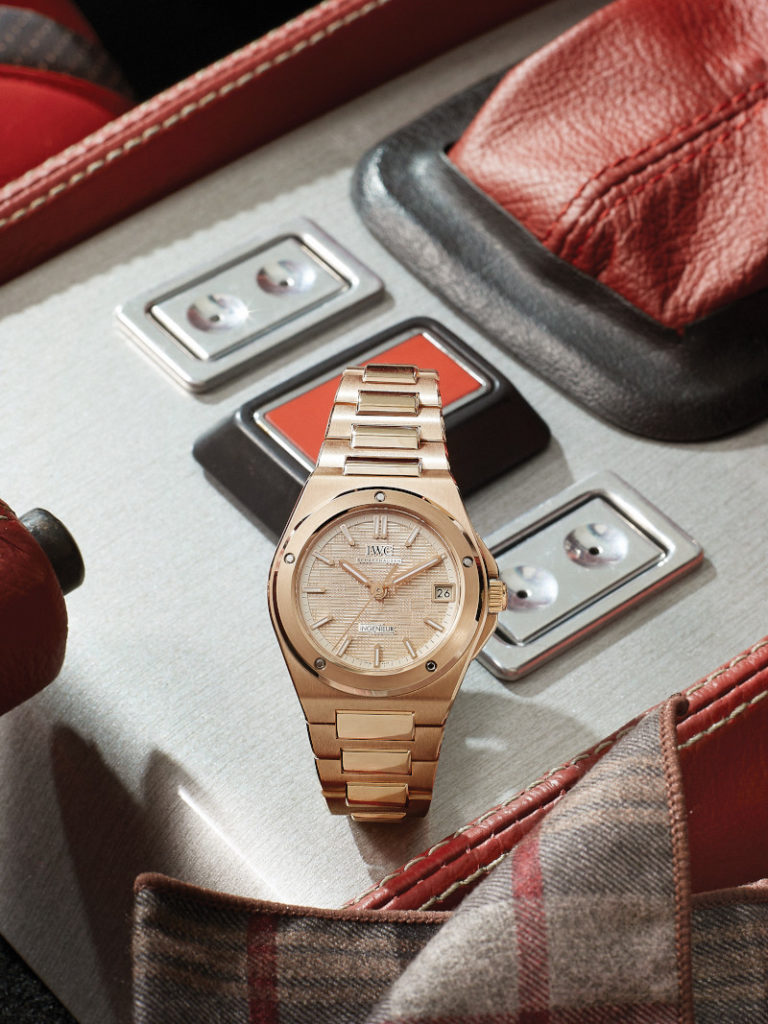
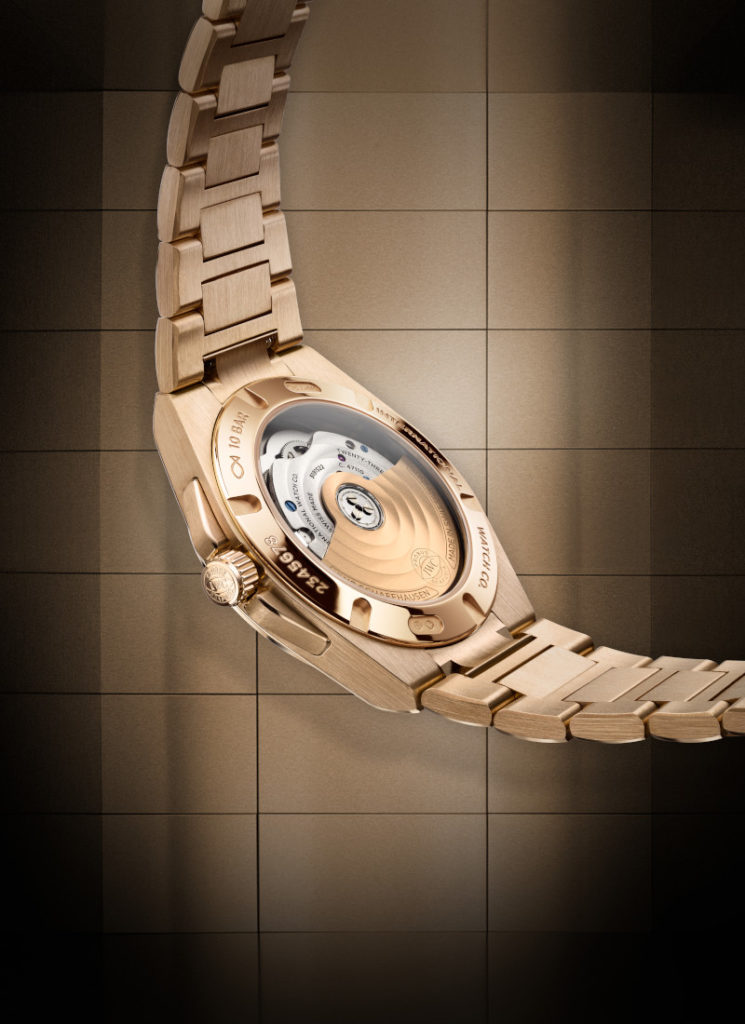
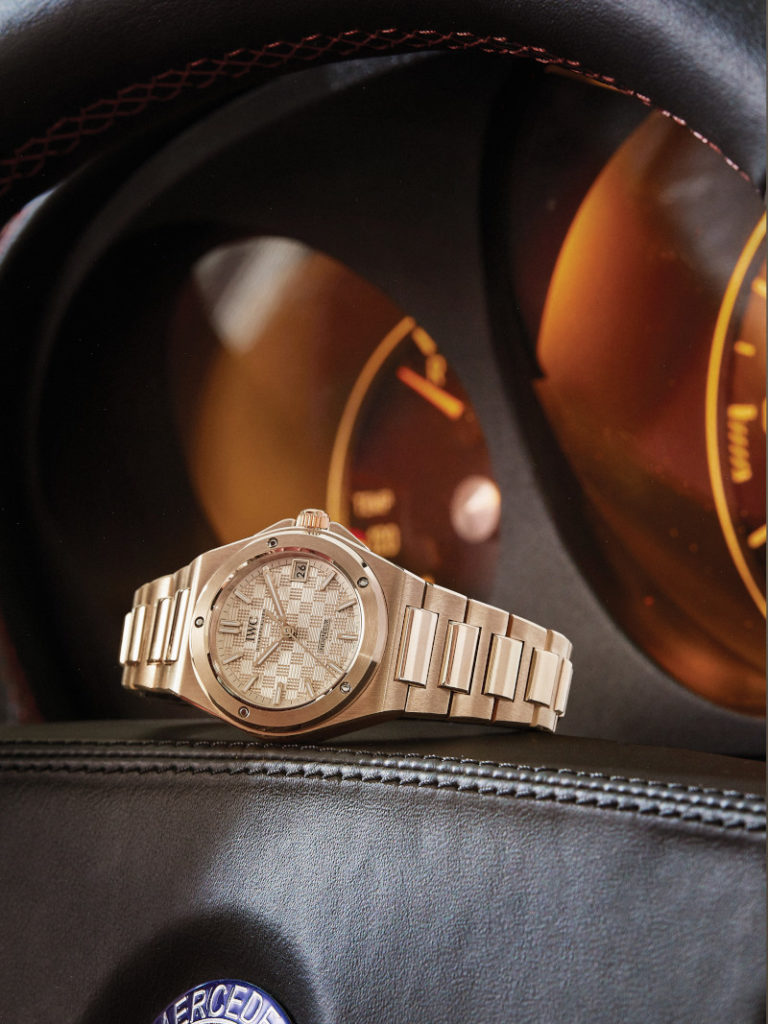
Two years later, as a testament to the success of the new Ingenieur, IWC has been able to build upon the foundation of the Ingenieur’s relaunch to roll out a whole compendium of references offering more options than the collection has ever had before. What is most intriguing is the 35mm case option for the Ingenieur, suggesting that the collection is even appealing to men with smaller wrists, or perhaps the brand is trying to convert some female customers to the luxury sports watch segment. What is nice about the smaller size is that not only does it offer a variety of dial options, nearly on par with the staple Ingenieur Automatic 40, but it is also available in a full 18ct 5N gold case and bracelet version. This version is simply stunning as it offers a unique combination of a tone-on-tone dial and case combination, not found in the larger 40mm size (the 40mm Ingenieur with a gold case comes with a black dial).
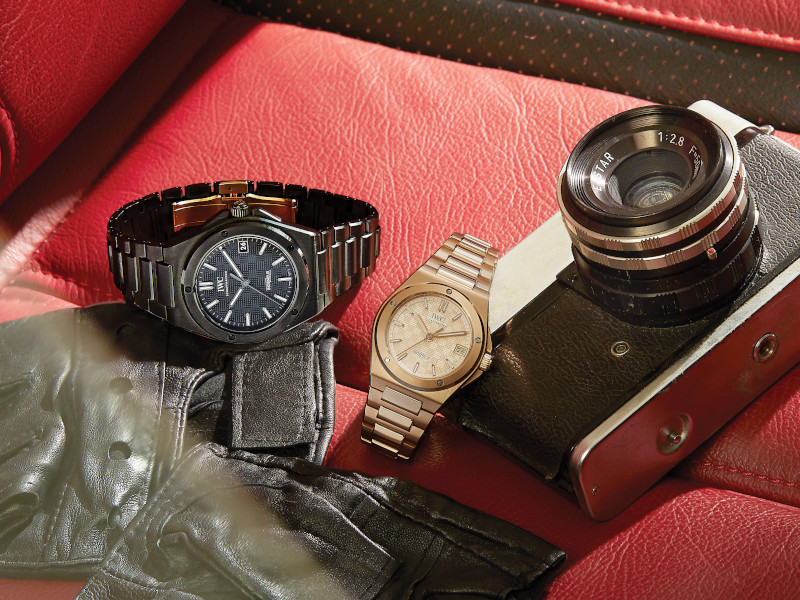
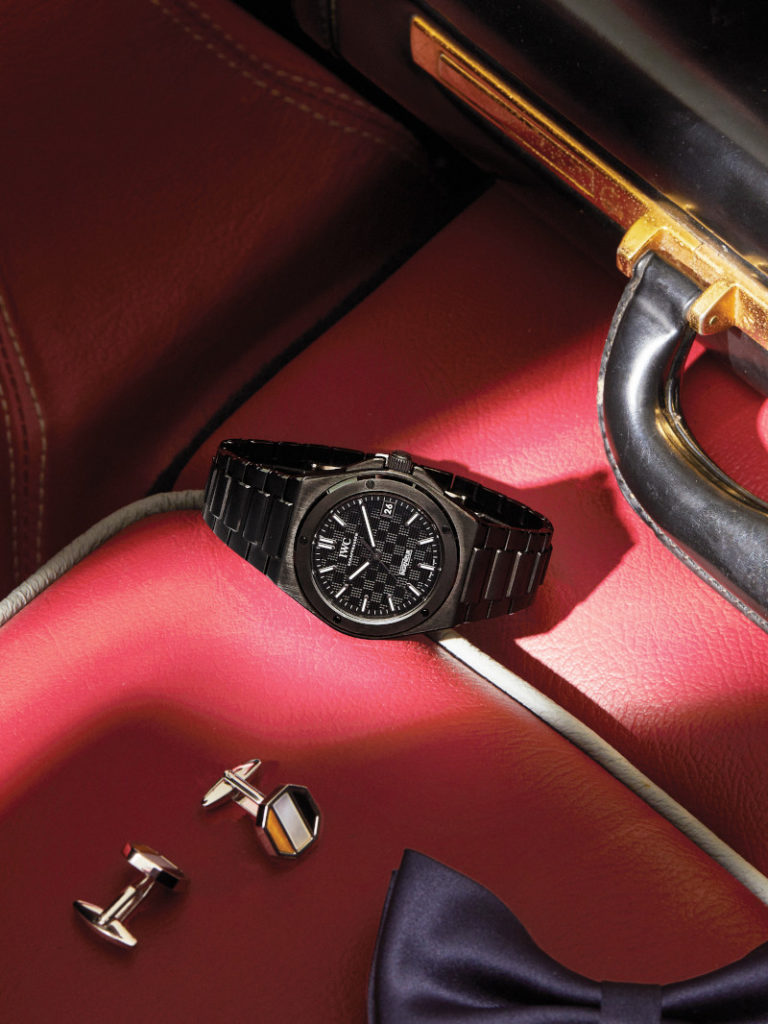
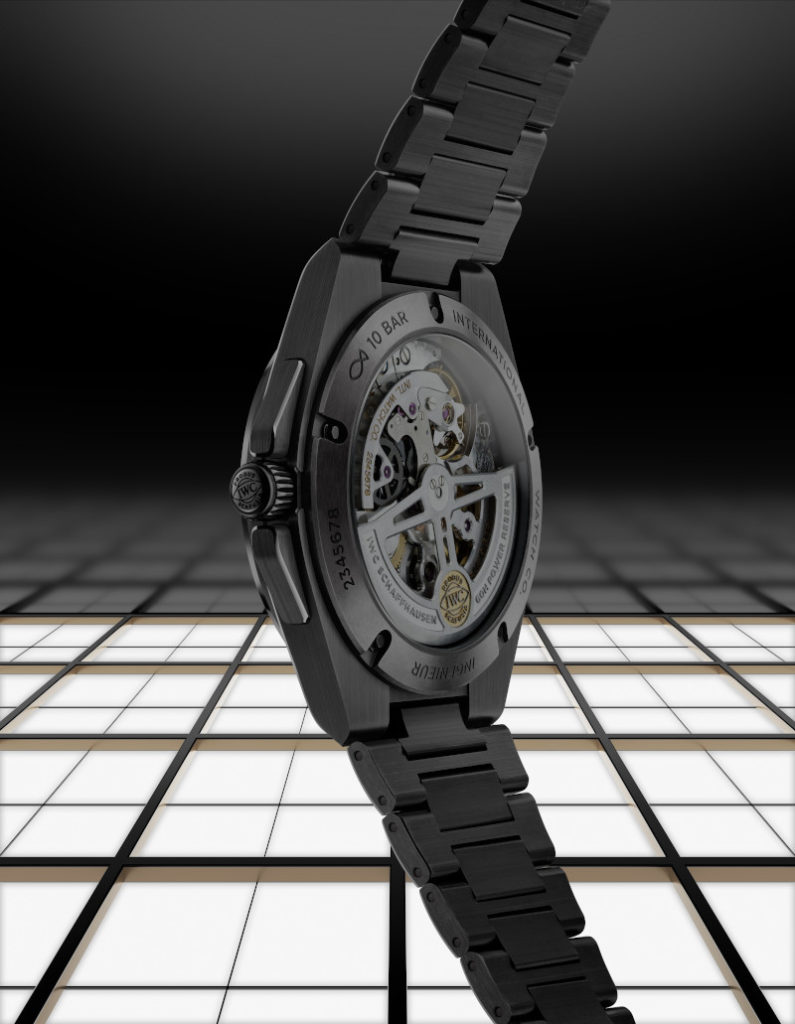
I think that with this new Ingenieur collection, IWC also has more room to flex its innovation muscle. Take, for example, the Ingenieur Automatic 42 in ceramic. Sure, IWC has more than its fair share of ceramic cases, especially in the Pilot’s Watch collection, but with the Ingenieur, they are able to also showcase their manufacturing savoir-faire by offering a full ceramic bracelet to match the case. Which, if you ask a watch engineer, is sometimes harder to manufacture and to finish correctly as compared to its case. We had a full-blown conversation on the Ingenieur Automatic 42 ceramic with both the Editors of WOW Singapore and Thailand in our Summer 2025 issue of World of Watches, so be sure to check out that deep dive.
Taking a little detour, because this issue is, after all, based on the theme of speed and innovation, we can’t help but mention the special edition Ingenieur that was released for the recent film F1® The Movie. One of the curse of being a watch guy is that even if you are just enjoying a movie, your eyes will tend to involuntarily flick to check out the wrist of the actor on screen, and if, god forbid, you see something interesting, it doesn’t matter how action packed the film is, all you can think of is: what the hell was that watch?! This was exactly what happened whilst watching F1® The Movie. That green dial Ingenieur SL-looking watch on the wrist of Brad Pitt’s character, Sonny Hayes. Yes, that’s the one.
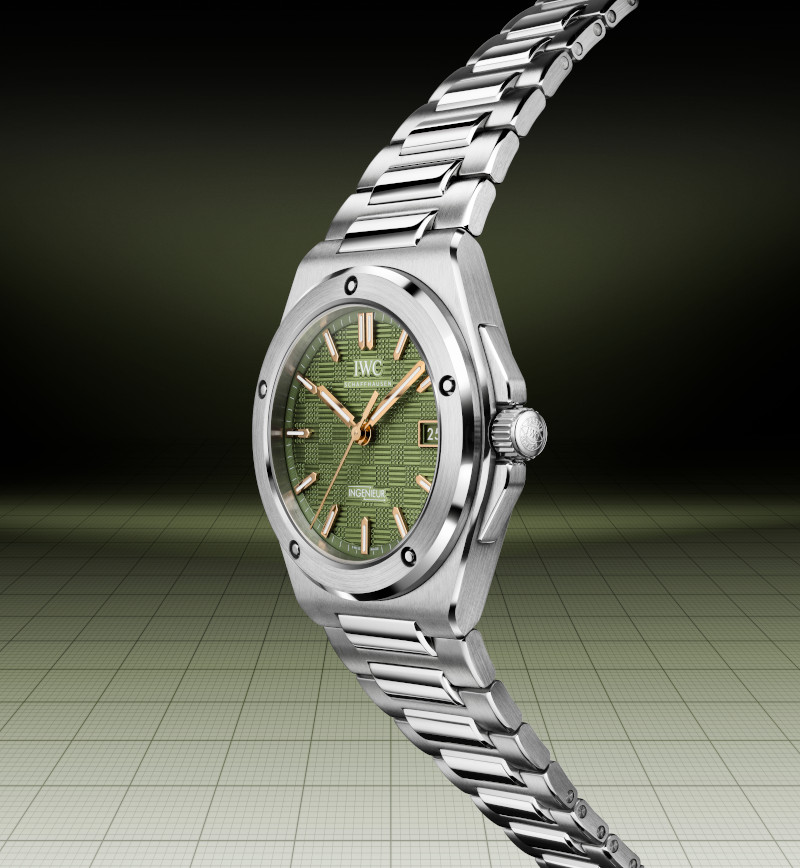
Thankfully, there are other watch nerds out there with a better network of watch sleuths than I, because the watch in question was a prop and was never for sale by IWC. There was a whole backstory of the significance of this watch in the movie, but I will leave you to watch the film for that. The actual watch itself, however, was a timepiece inspired by the Ingenieur SL Ref. 1832 but had a fantastic green dial, no date, and the signature bezel with the five recesses had been polished. This prop was made as a collaboration timepiece between IWC and the Cloister Watch Company, a design studio that specialises in creating bespoke timepieces from vintage watches. Unfortunately, as far a we know, it is a piece unique for the film, and who knows where the watch is at the moment. Perhaps it will turn up at an auction a couple of years down the road, or maybe it will go into deep storage within the brand’s archives. What is not a piece unique, however, is the limited edition Ingenieur Automatic 40 that was launched in tandem with the film. This version was inspired by the watch of Sonny Hayes and comes with a green dial too, albeit in a slightly different shade. Limited to only 1,000 pieces, this Ingenieur takes all that retro old-world charm of the prop watch and transfers it to its modern counterpart.
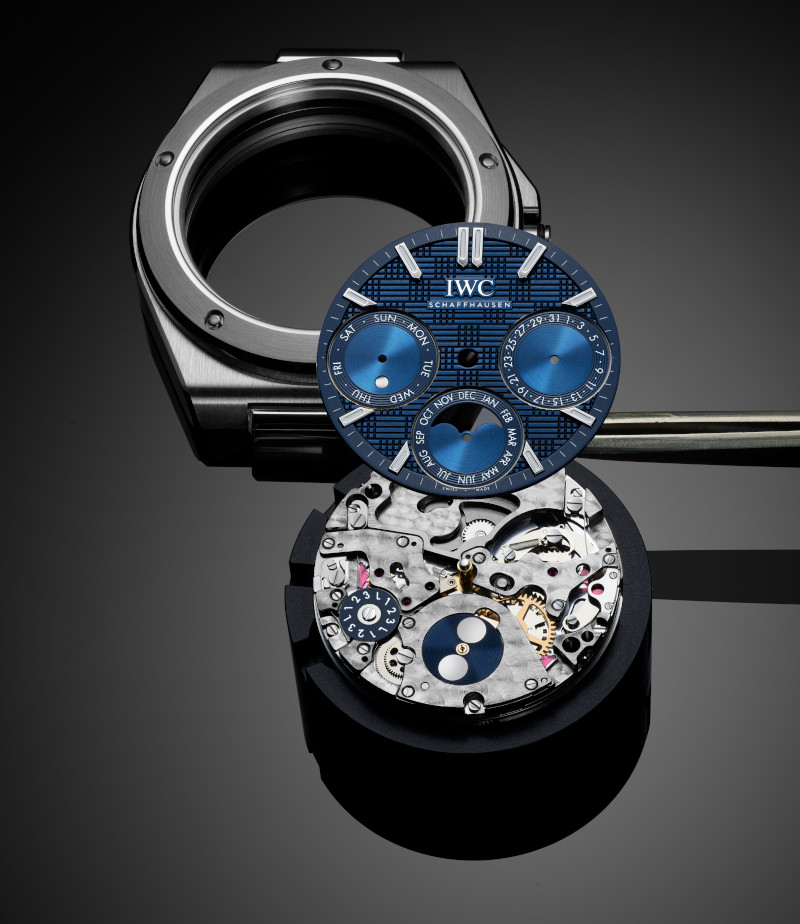
Anyway, back to the main story, with this year’s extension to the Ingenieur line, it is a clear signal that the collection is doing well alongside its more established brethren like the Pilot’s Watch and Portugieser. What I think is fascinating for this collection is that even with the seven new references launched earlier this year, it is still early days for where this collection can go. In terms of colours and case materials, there is so much still left to explore. And this year, the collection got its first taste of complication with the perpetual calendar, but I am almost certain that IWC already has a slew of complications that will go very nicely with the Ingenieur style of watch. I mean, how can there not be an Ingenieur chronograph, right?
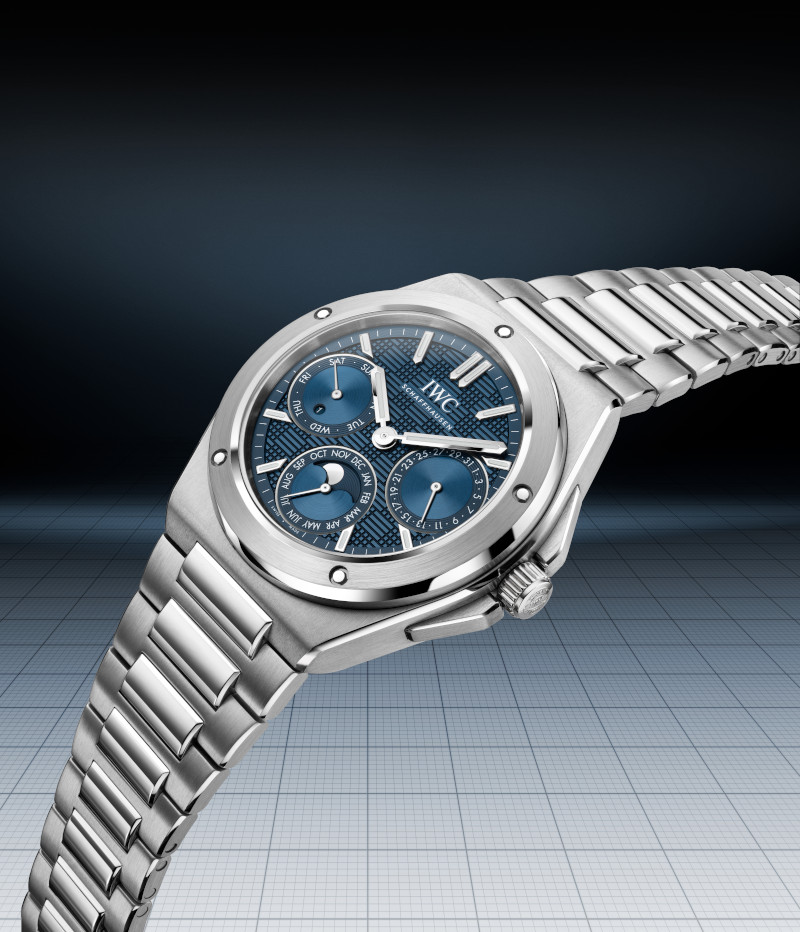
The story of the Ingenieur is a fantastic adage about how times can change. It is utterly unfortunate that Gérald Genta is no longer around to see one of his lesser-known designs brought to life in such a big way. But his widow, Evelyne Genta, is certain that he would have been pleased with what IWC has done with the Ingenieur. Watch tastes and trends can definitely be cyclical, and the Ingenieur is a great example of how an unsuccessful timepiece shouldn’t necessarily be deemed a failure. All it needs is a little time. How does that saying go? If at first you don’t succeed, try, try again.