Laurent Dordet of Hermès Horloger Explains Why Their Watches Are Deliberately Different
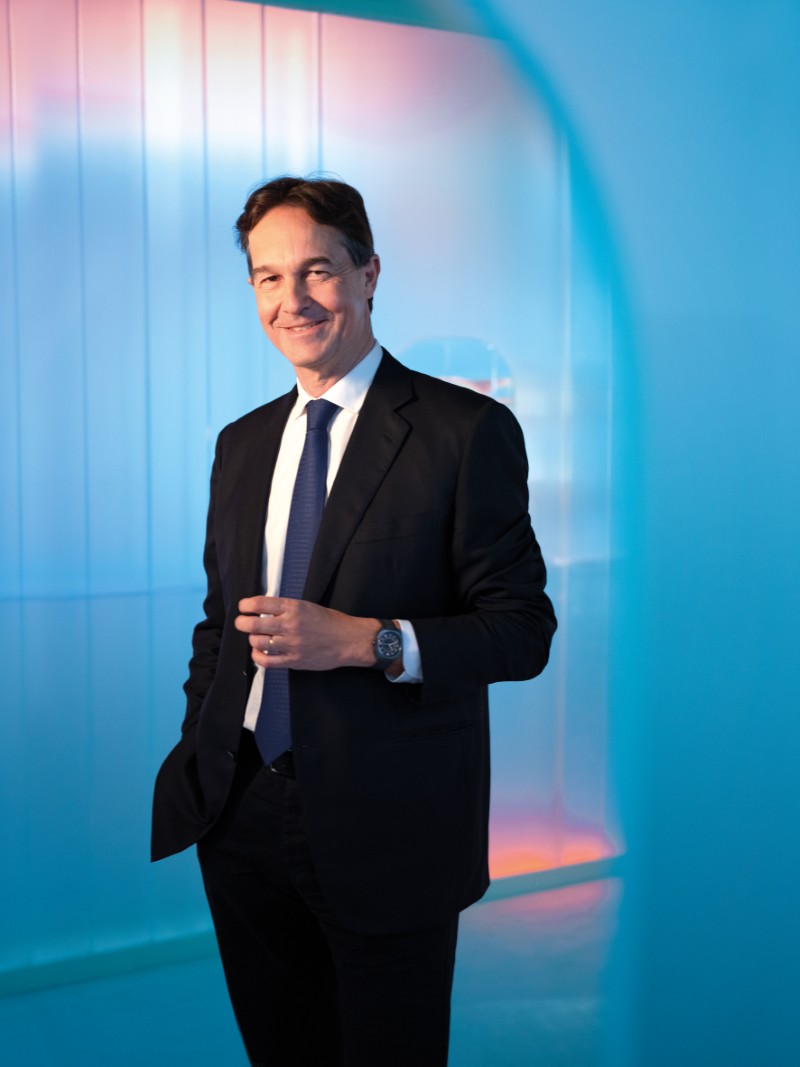
We do things seriously without taking ourselves too seriously,” Laurent Dordet often says when describing the philosophy of Hermès Horloger. It is not quite a mantra but it has served Hermès and Dordet well. Since taking the helm as CEO in March 2015, Dordet – an Hermès veteran who joined the group’s finance department, of all things, in 1995 – has overseen a decade of transformation that has delivered impressive growth. Under his leadership, the house has successfully navigated the fragmented watch landscape by leaning into its unique identity: whimsical, creative, and strictly independent.

This commitment to independence was reaffirmed in July 2025, when the maison announced a major expansion of its Le Noirmont manufacture. The project, scheduled for completion by 2028, will see the site grow to 11,000 square meters, consolidating the production of cases and dials under one roof. This strategic move not only secures Hermès’ vertical integration but also strengthens its sustainable roots in the Swiss Jura, with the new facility featuring solar panels, green roofs, and an architectural design inspired by equestrian arenas (because of course).
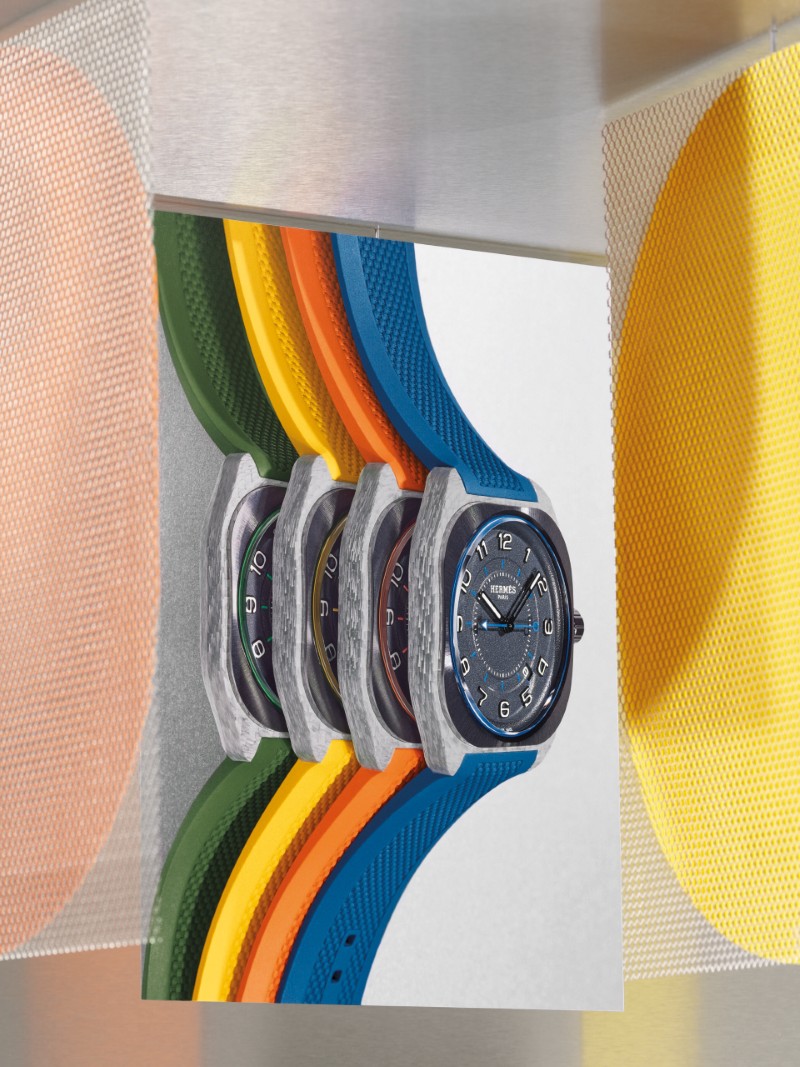
Yet, even as the industrial footprint grows, the spirit remains light. In this exclusive interview, Dordet reflects on navigating “tricky times” and the return of the brand’s beloved Le Temps Suspendu (“Time Suspended”) complication. From the gender-fluid success of the new Hermès Cut to the technical evolution of the H08 in titanium, Dordet explains why, in an industry obsessed with precision, Hermès’ true genius lies in knowing when to keep its own pace of time.
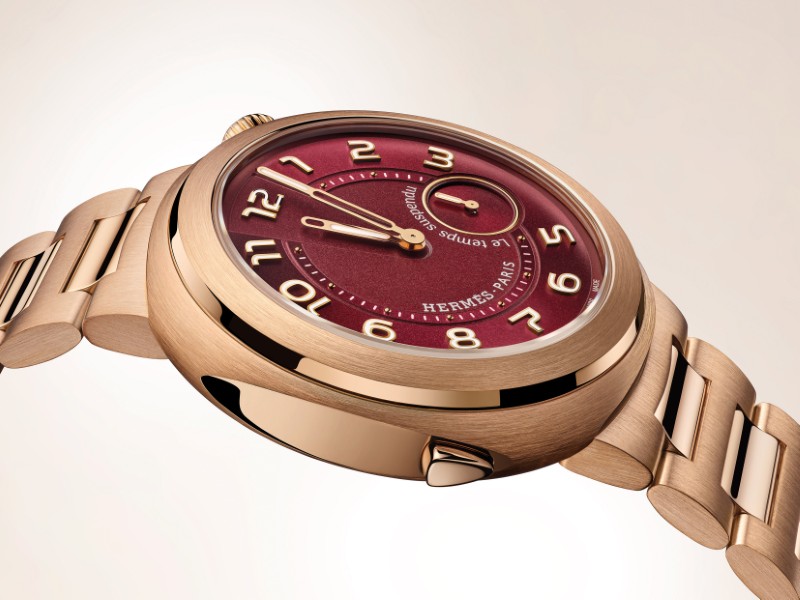
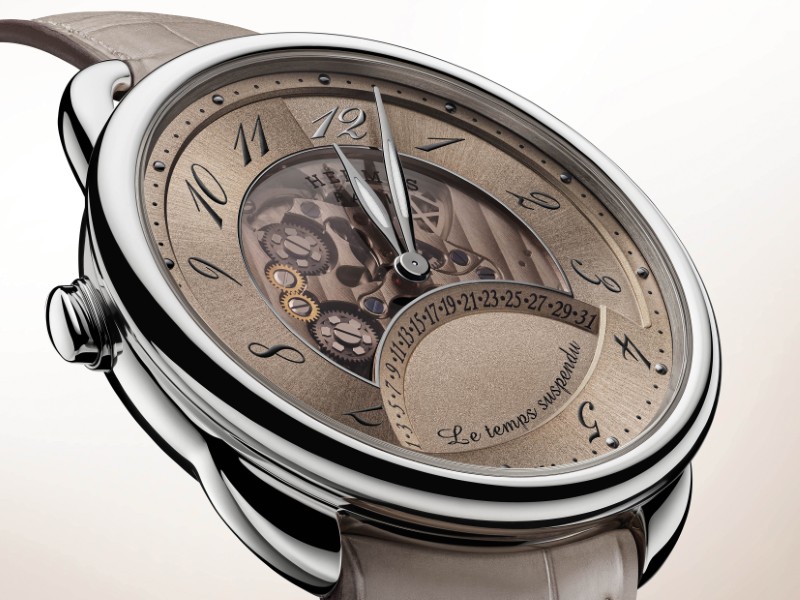
We were excited to see the Hermès Cut when it premiered last year, and now we also hear there are men very interested in it. You also made the decision to include the “Time Suspended” (Le temps suspendu; we will go with the translation for the rest of the text) complication in the Cut collection with an interesting anti-clockwise seconds counter. Why did you choose that collection for this execution?

First of all, what we wanted to reassert for years was “Time Suspended” in general, because it was our founding complication in 2011. It was the first time we had a high complication and the first time we had a message about the way Hermès envisages time, and our relationship with time.

So, we definitely wanted to reintroduce it into our collection (it was just a matter of where and how). We redeveloped it five years ago with a Vaucher (base) movement – because in 2011 it was an ETA movement – so we were ready to relaunch it. But every year we had other opportunities: Arceau L’Heure de la Lune, Le Temps Voyageur, the H08...

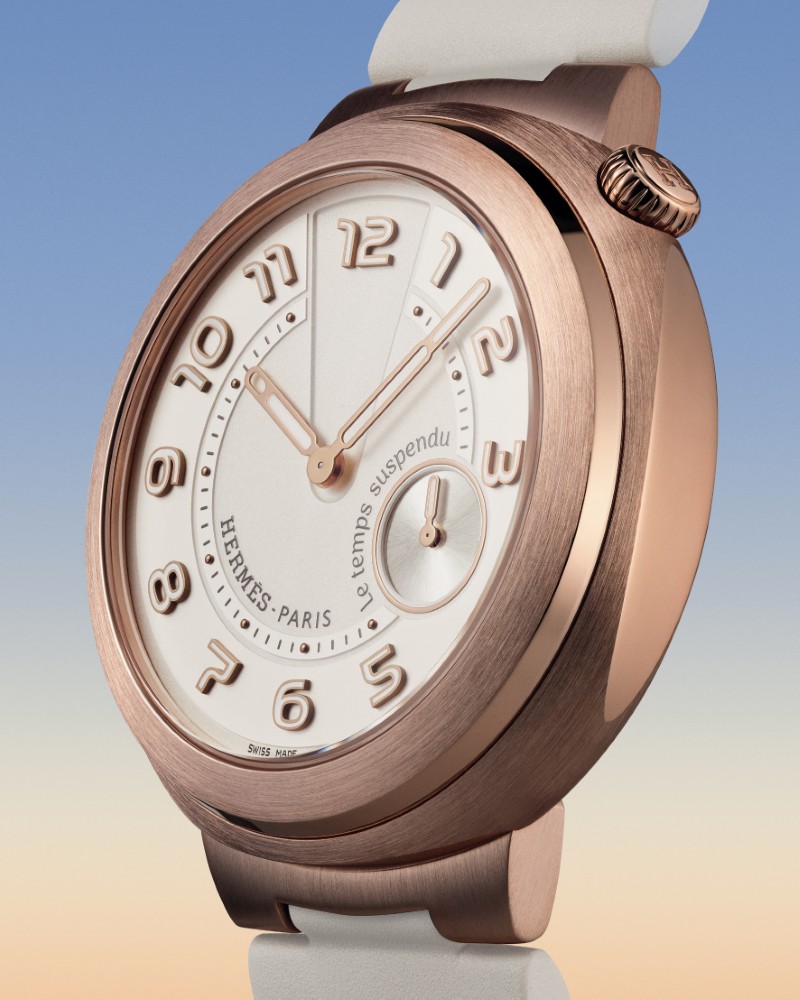
When Hermès Cut was introduced in 2024, we said, “Why not take this new collection to reintroduce Time Suspended?” We did it not only in the Arceau in two sizes as before, but in a big size (42mm) for Arceau and a smaller size (39mm) in Cut, because we consider it a transversal complication that embodies Hermès philosophy regarding time.

What about the gender split here in terms of sales? Any changes, overall?

When it comes to gender numbers, I would say our sales are more and more gender fluid. We don’t know exactly to whom we sell; a lot of women buy our men’s watches because they like what we are proposing, including the H08 and Arceau Time Suspended. Conversely, a lot of men are buying the Cut Time Suspended <and this is just in the time between when the complication was reintroduced in April and this interview, in September 2025 – Ed>.

Of course, some collections are specifically feminine or masculine given the size (or design), but it’s not as important as it used to be 10 years ago. We are gaining more masculine watch collectors. The proportion is still majority feminine because most Hermès customers are women, but the proportion of men is growing.

It is rare to have a debut like “Time Suspended” in 2011 that everyone still remembers. It generates a lot of positive feelings for the brand. Where is that positive feeling coming from?

I took this job 10 years ago, and by that time, Time Suspended was already out of the collection. I always found that this idea of suspending time, when you are Hermès, is genius. It is exactly who we are. We like to forget about constraints and live fully in the present moment: forget about your phone, your watch, your time, and focus on your loved ones or time for yourself.

This notion could have been invented by many watchmakers, but Hermès did it (in terms of the technical challenge and even the function itself). Since 2011, we definitely think that our “reason to be” in this industry is to propose watches that are frankly different from the competition. The competition is super strong and super technical. So, the reason for Hermès to be here is to propose something new. We must be extremely credible technically, but always in service of something different. Time Suspended really embodies the lightness and playfulness we want to convey.
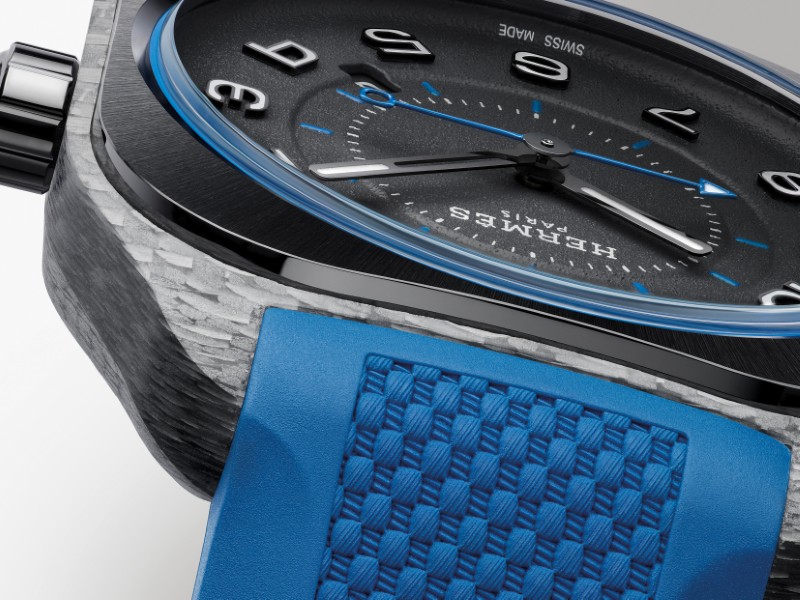
Speaking of technical efforts, I just saw the new H08 in titanium. We think titanium and ceramic are going to be a big deal for the value they offer. What do you think? Do they fit with the feeling of luxury given that sports watches are a big category?

We built up our mechanical collection starting around 2011 with collections like Arceau and Slim d'Hermès that were more classic or structured. We definitely wanted a sporty line.

I remember an Hermès advertisement from the 1930s with the slogan: “Elegance and comfort for sport and travel.” Hermès has always been a casual brand, privileging lifestyle, sport, and travel – not too “red carpet” or strict. We needed to develop lines that were more casual, which is why H08 and Cut arrived.

H08 really plays with materials: ceramics, titanium, carbon fibre, fiberglass, and more new materials to come. These are more technical, casual materials, but they are still super elegant and compatible with luxury. We don’t just foster a material; we build a line with a different spirit and choose the right material to adapt to that territory. For H08, there is no steel or gold (just a bit of gold on one), mixed with ceramic and titanium. It really opened up a new clientele for us.

That brings us to the confluence of new clients and the spirit of Hermès. I was talking with Mr. Delhotal in Geneva about humour, specifically the horse motifs related to the Arceau Rocabar de Rire. This kind of humour is rare in watchmaking. Is that niche appeal interesting to you?

Once again, our reason to be is to be different. If you look at our collections, the shapes are tricky – we have very few round shapes.

When it comes to designs coming from the scarves (where the Rocabar de Rire finds its origins), it makes our arts and crafts very serious in terms of technique because we work with the best Swiss and French craftspeople like Anita Porchet and Olivier Vaucher. But we use strange designs, including those from English artist Alice Shirley. I’m super happy when I see a minute repeater with a tourbillon featuring a T-Rex design in leather marquetry (the Arceau Pocket Aaaaargh! Minute Repeater in 2020).

For me, it’s exactly what we are. We present a half-a-million dollar piece to collectors who buy Patek Philippe, and now suddenly they have this complication with these designs. We are probably one of the only brands to dare to do this, and this is why (collectors) love us. Maybe many prefer Patek, but the ones buying from us do so because we dare to bring the Hermès spirit. We are here to create elegant objects, but if we can add a touch of humour to make people laugh, we don’t lose any opportunity to do it.

Regarding the H08, it is a “sports elegance” watch, a trend that we have been talking up since roughly 2016. How do you define success for yourselves without just following trends?

We never know. We don’t make market studies because we don’t create specifically for Europeans or Asians, young or old. When you launch a sport line, you try to bring an identity you believe in.

I remember journalists asking, “Where is the Hermès code?” Sometimes there is no code. We have to create new identities that may one day become iconic. In the case of H08, the most valid explanation I heard regarding its success came from a customer in the US who simply said, “Because it’s a cool watch.” It’s the right balance between an elegant watch and a pretty chill, easy-to-wear watch. It probably made Hermès watches more easy-going.
We note the expansion of your manufacture. Today, many suppliers are under pressure. How do you manage these expansions sustainably?

First, building a factory for 2028 means we are confident in the medium-to-long-term future of Hermès watches. Even though we are facing more challenging times right now, after six years of great expansion, our concern is not to expand capacity drastically, but to gather all our staff in the same place. We grew so much that teams are separated, so we want to offer them a more comfortable place to work.

Secondly, as you mentioned, suppliers are suffering. We might face a situation where we are obliged to integrate know-how that is not currently in-house. Big components (cases, dials, movements) are made in-house, but some operations are not. We must be ready to integrate small operations on a case-by-case basis if we have to. We generally don’t invest in brands, but we do take positions in partners, including Vaucher, to ensure our main collections are backed by a secure manufacturing process.
You’ve been in this job for 10 years and at Hermès for much longer. What keeps you coming back for more?

I don’t know exactly why I joined Hermès, but I know why I stayed. The philosophy, values, and vision have not changed one iota in 30 or 40 years: quality, creativity, fantasy, and respect. I am aligned with those values. They are not marketing values; they are the foundation of the relationships between our people.

We do what we say, and we say what we do. If we say bags are made by hand, you can visit the factory and see it. This authenticity is part of our success. I’ve never been bored because I am surrounded by passionate people contributing to sustainable objects that convey happiness.

After 10 years in watches, I am convinced our business model is a virtuous one <relative to some peers – Ed>. Expanding Hermès in this industry is a good mission because Hermès deserves a better place here. Our model – ethically manufactured in Switzerland, repairable, transmittable – is good for the industry and the customer.
TAG Heuer Movements Director Carole Forestier-Kasapi talks innovation within the brand

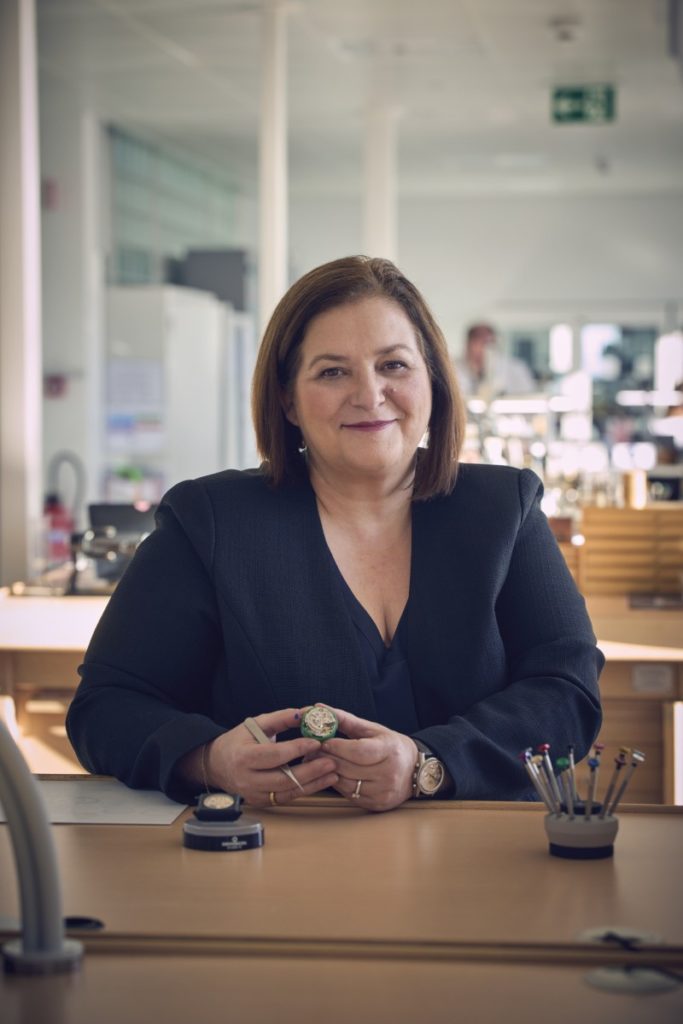
Carole Forestier-Kasapi, Movements Director at TAG Heuer

Carole Forestier-Kasapi does not get emotional about watchmaking; she favours the engineering side of her background when it comes to her role as TAG Heuer Movements Director. This might surprise those who know Forestier- Kasapi by her Queen of Complications sobriquet, and her family background. Born in Paris into a family of watchmakers, she spent more than three decades shaping the industry’s mechanics.

Her career began with a meteoric rise, highlighted by her 1997 Breguet Foundation Prize win for a central carousel tourbillon concept that would eventually birth the legendary Ulysse Nardin Freak. She later spent 15 years as the Director of Movement Creation at Cartier, where she oversaw the development of nearly 30 in-house calibres and revolutionary concepts such as the ID One and ID Two.

Since joining TAG Heuer as Movements Director in 2020, Forestier-Kasapi has pivoted from pure watchmaking complexity to a strategy focused on industrial resilience and performance. Her tenure has been defined by a “fix the basics” philosophy – improving reliability and precision – while simultaneously pushing the boundaries of material science.

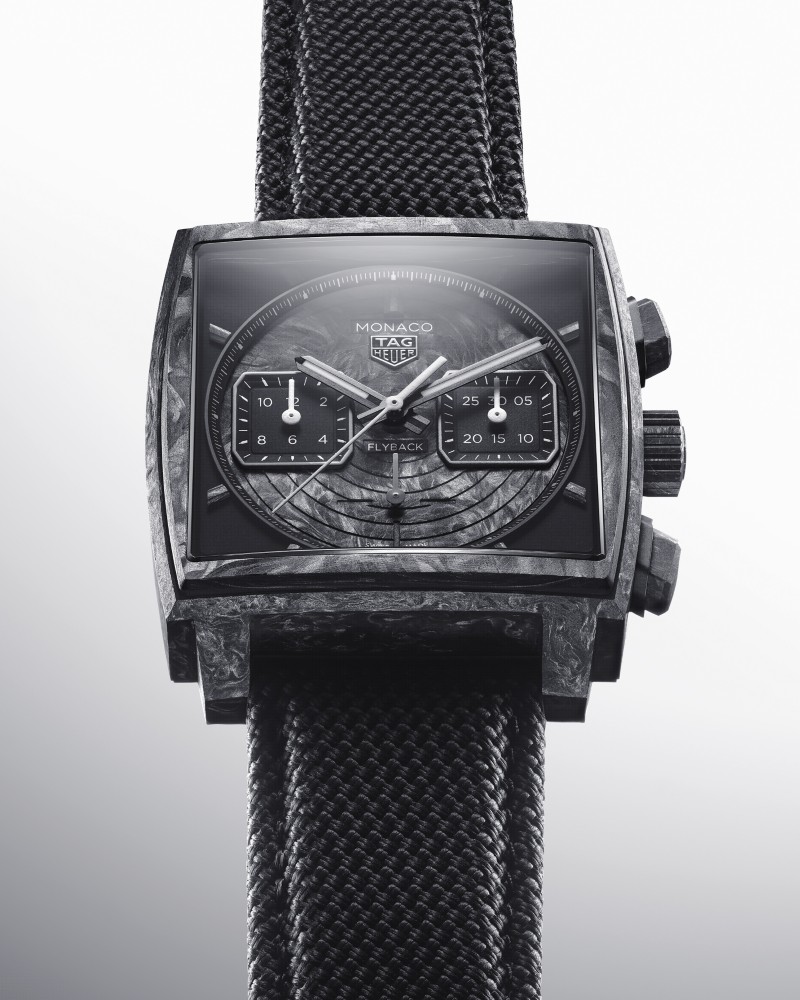
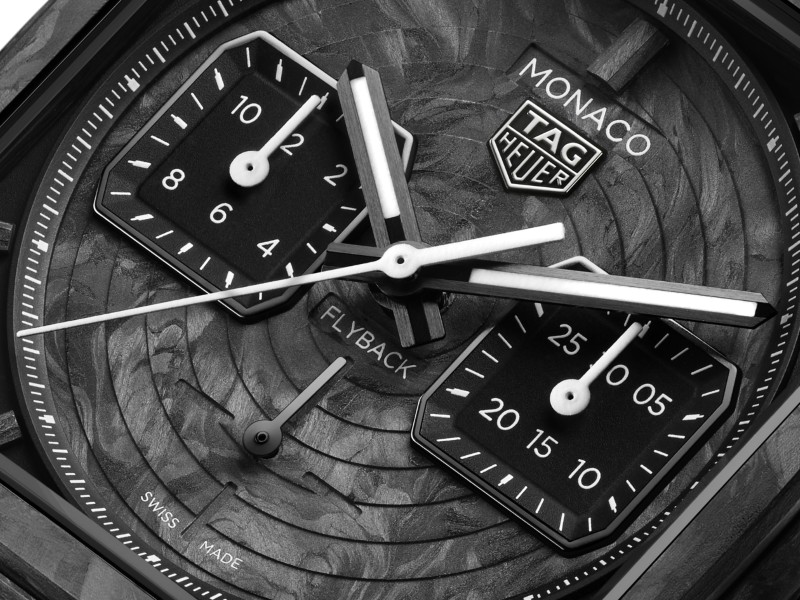
Somehow, we have missed speaking extensively with Forestier-Kasapi since her Cartier days, but we finally corrected that problem in 2025. It is particularly apt given the debut of the TH-Carbonspring at Geneva Watch Days this year. We do like to geek out on escapement technology but, fortunately for all, Kasapi-Forestier stays level-headed and also gets into the Solargraph and the realities of industrial production.

You championed the idea of surprise in watchmaking, and the importance of that surprise for the client when they see and feel a watch for the first time. What is the value of a surprise like this?

To the eyes of our clients, it is a question regarding the expression of desirability. First, of course, I think that is the key element. You will never buy a watch if it is not desirable in your eyes.

If the expression (of the watch) connects to something you want to achieve, and it speaks for itself, it is a win-win situation. You don’t need to explain it; it is a self-explanatory design.

If you look at the history of the Maison, watches were always... not just a new way to innovate, but innovating with sense (or purpose) behind it. I think it is very important. It is not just innovation for innovation.

Right. The idea of this “surprise” occurred to me not only because of the Split-Seconds Chronograph, but also because of things like the Plasma Diamant case. You think: “What is this? Why are you doing this? What is the plan?”

It’s not just developing a movement; it is really a succession of impacts serving a strategy – a movement strategy that makes sense for the Maison.

The most important thing for me at the beginning, when I joined TAG Heuer, was to put a long-term strategy on the table. A movement strategy for the Maison: What do we want to achieve? Where do we see TAG Heuer in the future?

Once you have a clear long-term movement strategy, you can develop and accomplish your roadmap.

On that note, when you look at the assortment, you have a variety of things. You have in-house movements developed, where the priorities seem to be reliability and good power reserve. But then there are other elements, including partner or supplier movements.

Yes, because they (the suppliers and partners) are serving the main strategy. Independently from where the movements are coming from, the most important thing is: Are they serving the strategy or not? It’s not a question of the supplier.

We don’t want to become 100% in-house; this is not our strategy. The movement strategy is about more durability and more quality. The orientations are there (as you said).

For example, with solar movements, we want more durability. We want to switch totally from quartz watches with regular battery movements to solar movements <referring here to the Solargraph> to achieve more than 10 years (of autonomy). Everything is connected to the strategy.

Why Kenissi movements? It is the same: more durability, more qualitative movements. Same with [Vaucher]. Today, [Vaucher] is the best high-end movement supplier in Switzerland, delivering very high-qualitative movements.

To be clear, TAG Heuer currently has normal quartz, and you have solar... You prefer to actually have everything be solar in the future?

Yes, because it makes sense for the client. More durability – you don’t need to change your battery every two or three years. Here we have an accumulator in place of a battery, and the life of this accumulator is more than 15 years. Imagine how convenient it is for the client. That is really what we want to target: more durability and quality with these new movements. We believe solar is the smart solution for the client – very smart.

In terms of innovation, how do you decide where to put your efforts?

Because we are focused on durability and quality (and there’s a lot within quality)… Inside, or within quality, what we want to achieve is more performance. So, more precision, more accuracy, more power reserve. We want to tackle “weekend-proof” power reserve for all mechanical movements.

It is really a client-centric topic. I think today that is the most important thing for a luxury brand to achieve first. After that, we can play with complications... but the basics must be fundamentally very strong.

Take us through some of these basics, please!

In fact, it is easy. We looked at the most important reasons why watches come back to the manufacture for servicing when there is trouble (or problems with the running of any given watch). We analysed and classified these kinds of troubles. One of the most important ones is related to magnetism.

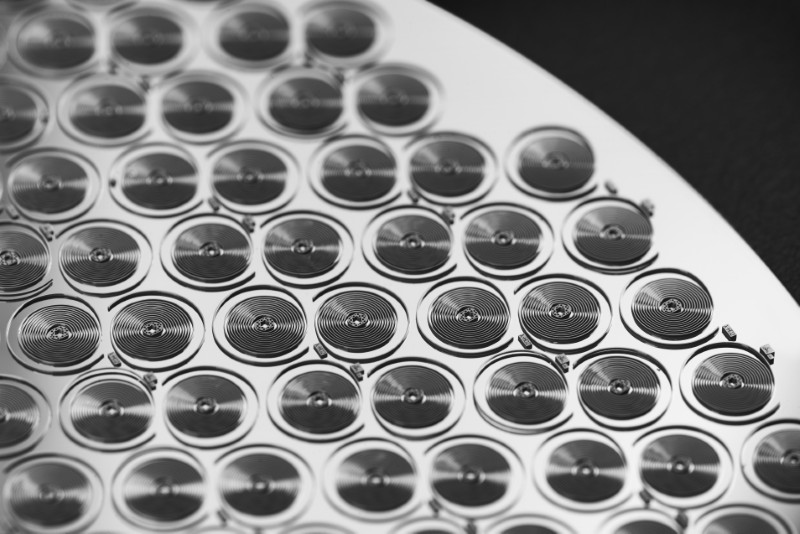
For mechanical watches, magnetism implies you need to find a solution regarding the escapement – an amagnetic (also known as antimagnetic) solution – and the same for the balance spring or hairspring. So, on the subject of innovation <as we covered at length in the Legacy issue this year, to which Forestier was responding – Ed>, at TAG Heuer, we had already developed and invented this Carbon Hairspring (called the TH-Carbonspring). It takestime to finalize this level of innovation <TAG Heuer announced a production version of this hairspring in 2019, which ultimately did not happen – Ed>. We worked very hard on it, and we are happy today. We present during Geneva Watch Days the very first solution with two new Carbon Hairsprings: inside the TH20-60 chronograph calibre and the TH20-61 tourbillon chronograph calibre.

Finally, we have the mental strength at TAG Heuer to finalise this high level of innovation. This is the most complicated thing you have to monitor when you are a watchmaker – doing something regarding the material of the hairspring.

Mental strength indeed, because it took 10 years?

Yes, it took 10 years. And now we will extend this material and this hairspring everywhere in the Haute Horlogerie collection because the production is small (in terms of how many are being made, or planned). The price is high due to the production size, so we will have this first step only in Haute Horlogerie pieces. So, the Haute Horlogerie pieces, like the novelties of next year, will be equipped with the TH-Carbonspring (in the balance assembly).

It is a nice solution to present this year during Geneva Watch Days because, I don’t know if you know, but this year is an extraordinary anniversary. It is 350 years since the invention of the hairspring.

Oh yes, the original developed independently by both Christiaan Huygens and Robert Hooke?

Exactly. We are lucky to be able to celebrate this year (with the TH-Carbonspring).

It is often very exciting for people like us in watch magazines because the hairspring is the heart of the mechanical watch. But at the same time, we have to acknowledge that it is very difficult to market a watch based on the idea that there is an interesting hairspring.

For me, the topic is to solve the magnetism problem. That’s it.

In terms of overall strategy, we heard this year about plans for the different brands within LVMH watchmaking to leverage their respective strengths to benefit each other. How does this impact the broader strategy for movements at TAG Heuer, since you have the largest volume?

So, we are sharing some elements. All the Maisons have their own strategy. We don’t share the strategy, product plans, or development plans. But of course, if it makes sense to share something – if there is no added value to do two different things at the same moment – of course, we can share. It is just a question of doing the smarter thing.

What is cool in this group is the fact that we have the freedom to share, or to decide not to share. This is the most important. Our group is a group of entrepreneurs.

We recently published our interview with [the now former] CEO Antoine Pin, and he was talking about the importance of moments, as he did during his keynote in Geneva. Precision is important on a fundamental level, but it is also an emotional thing. How does that feeling inform your perspective on watchmaking?

Every moment is important. Sometimes it is destiny, you know? More than just a moment of deciding. It is also a chance to be opportunistic. Sometimes you have to be opportunistic, and sometimes no. It depends on what kind of thing it is – if it is work or personal. Myself, I consider I am on the side of the engineer, as far as work goes. So, I am not very emotional on the work side. I am more emotional for my lifestyle. You have to separate the things; I don’t like to mix emotion in my work. Otherwise, decisions taken are not correct in the end. When you look back at your old decisions... when it is emotional... (it doesn’t work).

A. Lange & Söhne self-winding classic debuts in the exclusive Honeygold

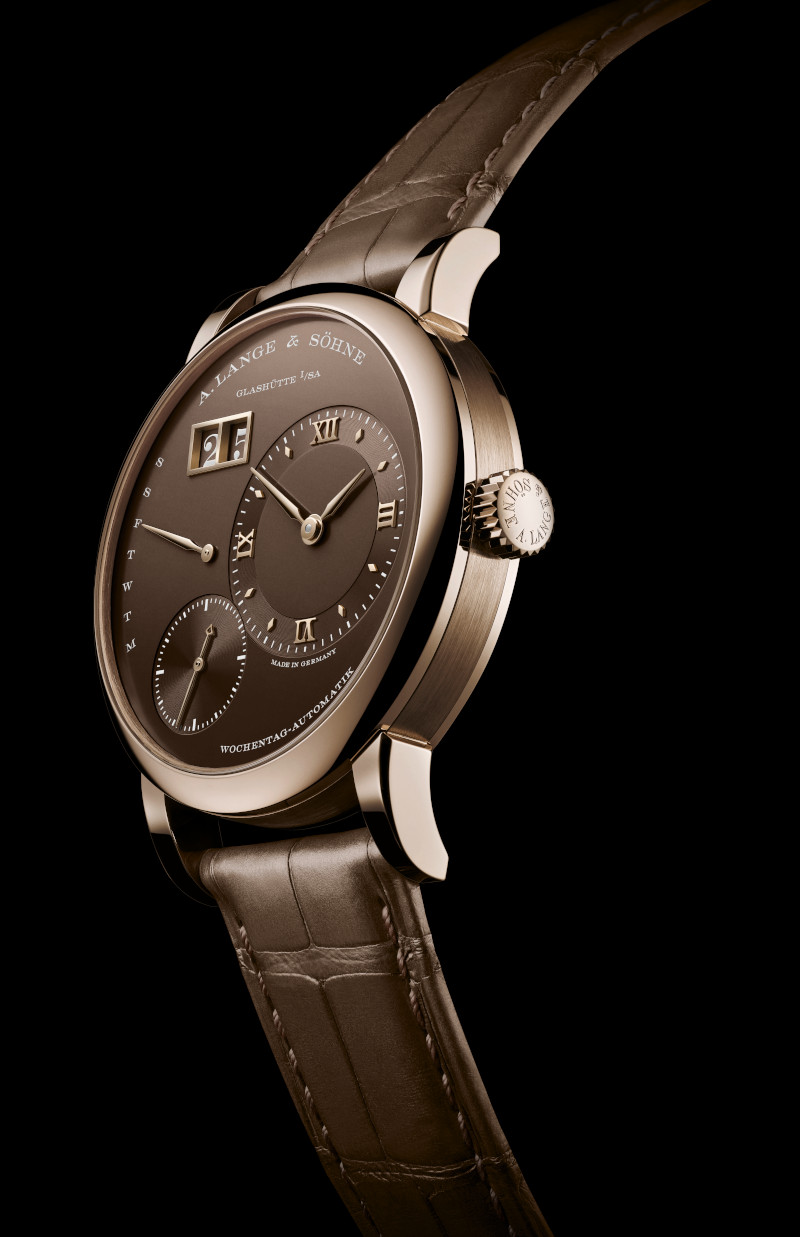
Quick, what do you call a watch that is both automatic and shows the day of the week? Hang on to that admittedly easy ask because there is a date to bear in mind too: December 7. Last year, that date marked an important milestone for A. Lange & Söhne and Glashütte, Germany. It marked a dual anniversary for the Saxon town – 180 years since Ferdinand Adolph Lange established his manufacture in 1845, and exactly 35 years since his great-grandson, Walter Lange, relaunched the brand in 1990. Amidst this celebration of heritage, A. Lange & Söhne unveiled a surprise that collectors had been quietly hankering for: the return of the Lange 1 Daymatic. And yes, that is what an automatic that shows day of the week is called.

For years, the Daymatic had been the practical, self-winding sibling to the iconic manual-wind Lange 1, distinguished by its mirror-image dial layout. However, as noted by industry observers, ourselves included, the model had quietly exited the catalogue after its last major appearance in 2019, leaving a void for those who preferred an automatic movement in the brand’s most famous design language.

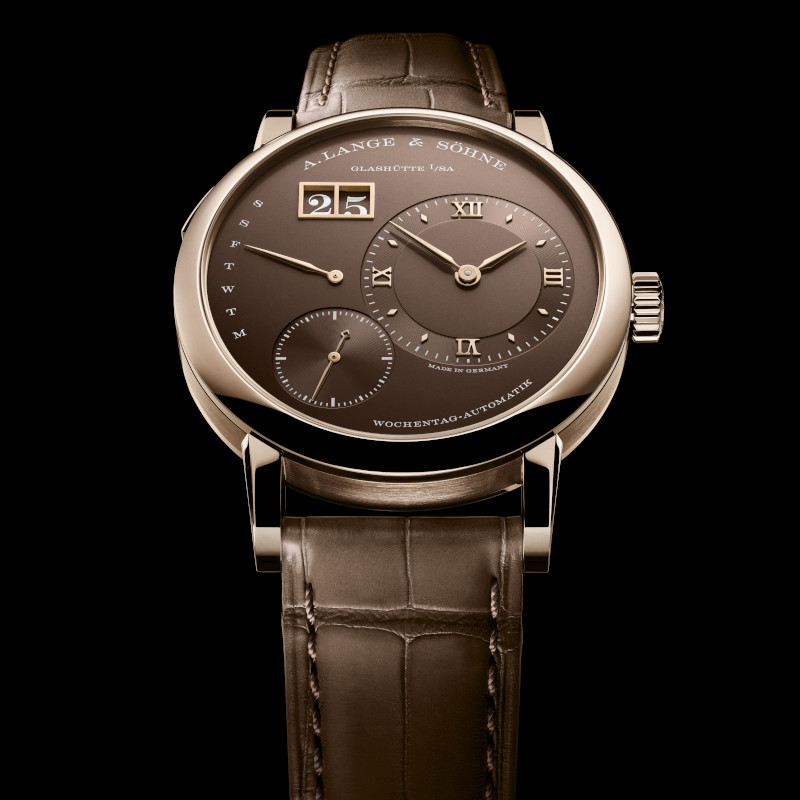
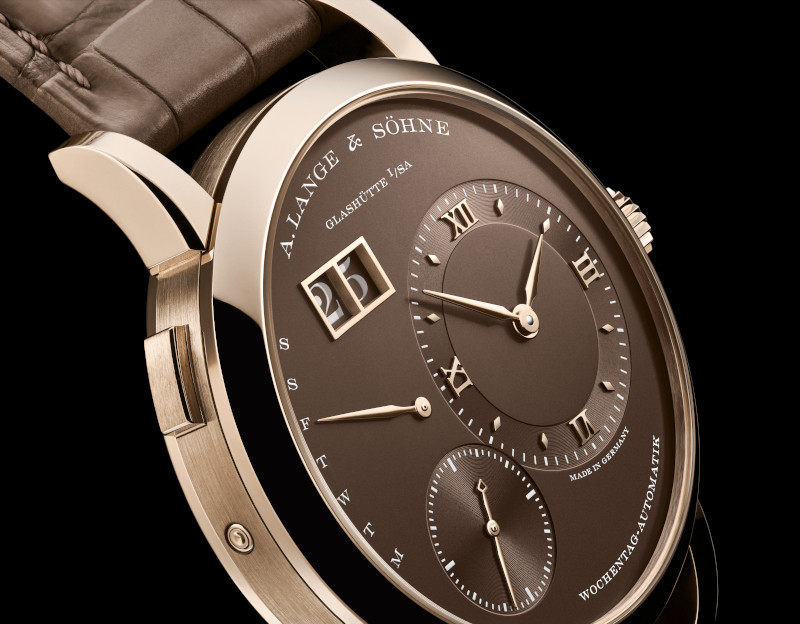
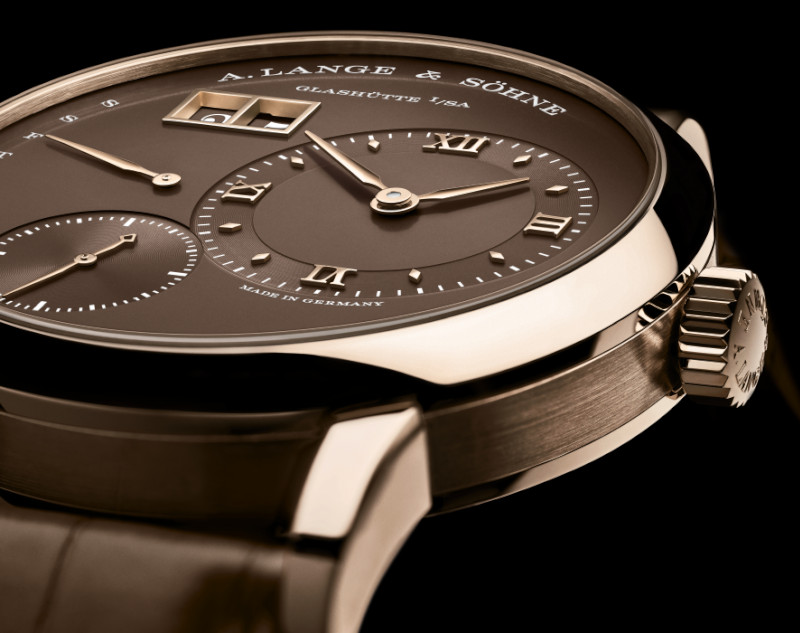
The silence was broken with the debut of the Lange 1 Daymatic Honeygold (that is Ref. 320.050 for those who care for such details). This release was not merely a reissue but a refined evolution, marking the first time the Daymatic was crafted in Lange’s proprietary 750 Honeygold. The exclusive alloy, known for its extreme (relative) hardness (for gold) and warm sheen, was paired with a brown dial made of solid 925 silver. The combination created a “refined personality,” with the luminous gold contrasting against the dark, chocolate hues of the dial.

On the wrist, the watch should feel both familiar and distinct; we have not yet experienced the Daymatic in the metal. The 39.5mm case is 10.4mm thick and will slip easily under a shirt cuff. But unlike the standard Lange 1, the Daymatic’s face tells a different story. The time display is shifted to the right, while the outsized date and subsidiary seconds resides on the left – an inversion designed for optimal legibility when peeking out from a sleeve, as noted by WOW Thailand Editor Ruckdee Chotjinda.

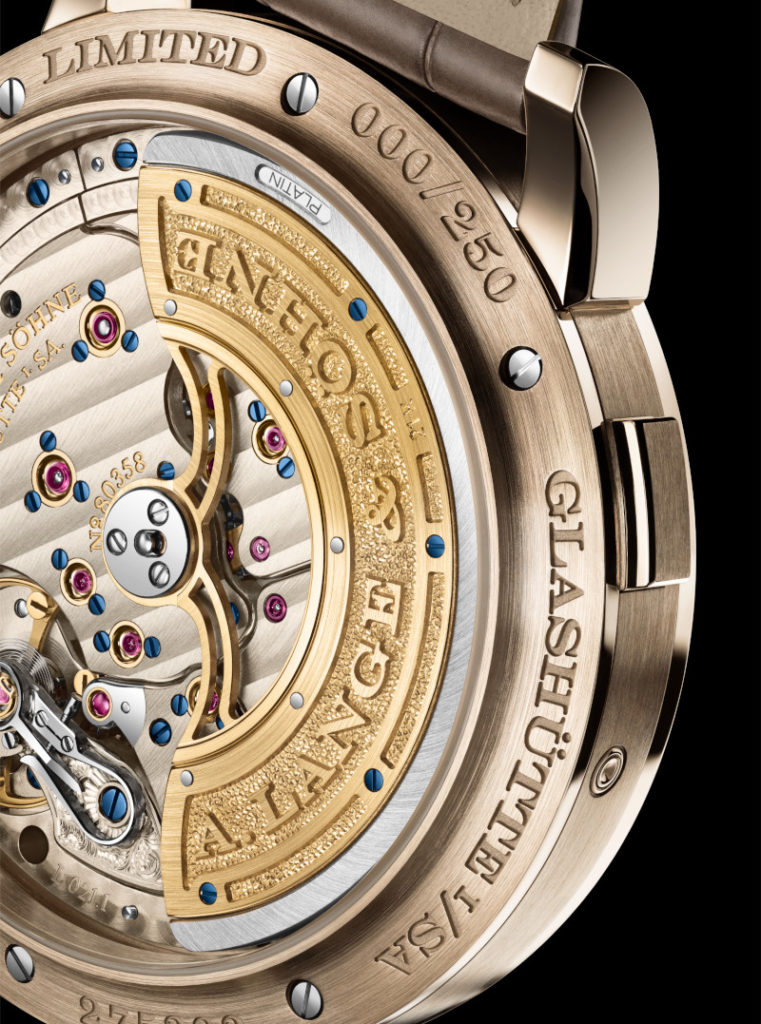
Where the manual version features a power reserve indicator, the returning Daymatic prioritizes stealthy utility. The aforementioned retrograde day-of-week display is on the left periphery. The outsized date itself is appropriately colour-matched, displaying white numerals against a brown background. Beating inside the case is the heart of the machine: the self-winding manufacture calibre L021.1. The movement is the visual feast that we expect from A. Lange & Söhne, featuring a large central rotor made of 21k gold with a platinum centrifugal mass; the power reserve remains 50 hours, just as it was on its debut in 2010.

To complete the picture, the watch is fitted with a hand-stitched, taupe-coloured alligator leather strap secured by a Honeygold buckle. With this iteration in Honeygold, the Daymatic has clearly been elevated; the model is the 17th from A. Lange & Söhne to use the material. Limited to just 250 pieces, this “warm-hued” revival served as a fitting tribute to the brand’s 180-year legacy of precision and elegance.

Six Desirable Watches That Will Not Break the Bank

Bulova Super Seville Precisionist 38mm in stainless steel

The title says it all and we think these watches really do not break the bank or leverage you like an AI start-up. The modern market is teeming with what we call “guiltless pleasures” — timepieces that offer robust engineering, historical significance, or impressive complications without the extra zeroes. Whether it is the pragmatic durability of Super Titanium, the retro charm of a TV- shaped case, or the technical marvel of a perpetual calendar that will not put your BTO dreams on hold, value is the order of the day. Here, we curate six standout models that prove you can build a serious collection with a clear conscience.

CITIZEN ZENSHIN AUTOMATIC SMALL SECONDS

Citizen Zenshin Automatic Small Seconds 40.5mm in Super Titanium

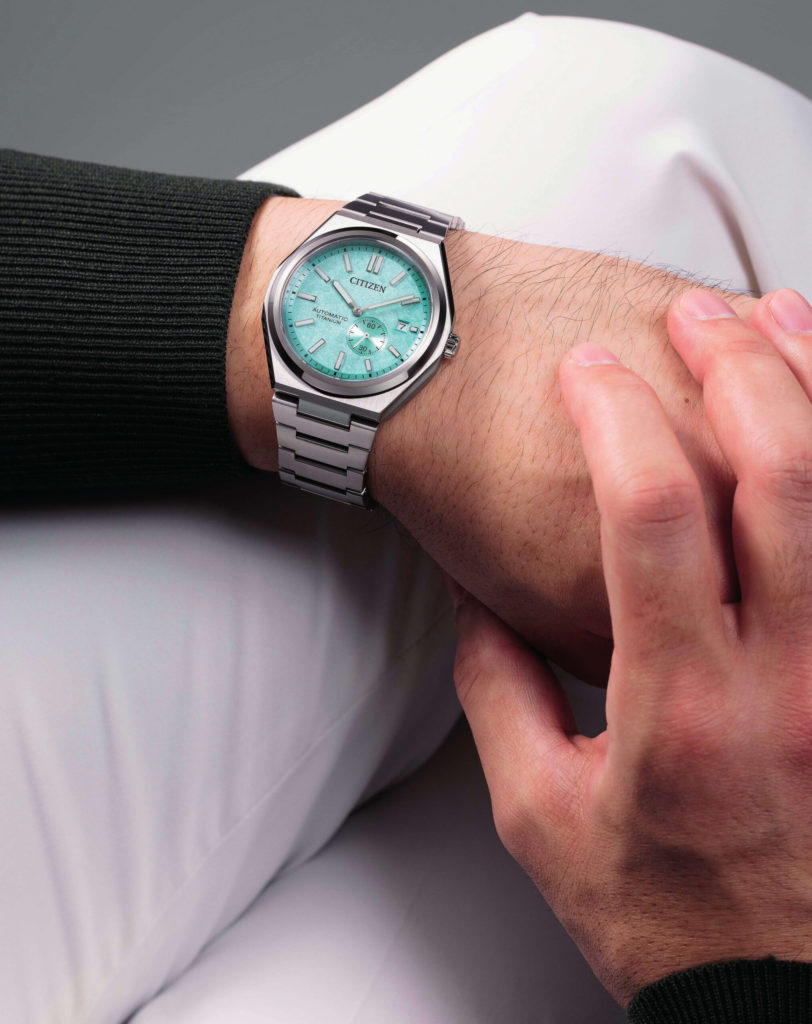
We begin with the first model for this article: the Citizen Zenshin Automatic Small Seconds. It is heartening to see Citizen giving this model a proper name, rather than just a string of letters and numbers, as it helps establish a distinct identity for the watch. This is seriously an issue with Japanese makers and we confess to being intimidated by the reference numbers. Rest assured, even the brand executives do not recall all the references nor what they might mean. Happily, we can tell you that, in Japanese, “Zenshin” means progress, a fitting reflection of Citizen’s forward-thinking vision. This brand was, after all, one of the first watchmakers to pioneer the use of titanium in timepieces, if not the first. That was way back in 1970.

The Citizen Zenshin features a 40.5mm case and an integrated-style bracelet, both crafted from what Citizen likes to call Super Titanium. A proprietary Duratect treatment is, of course, applied to enhance surface scratch resistance, which is what the “Super” refers to. While the overall design leans towards the sporty, the refined details ensure it can be worn suitably in a professional setting. That said, it is just as fitting for leisure activities, with a water-resistance rating of up to 100 metres. The watch is powered by a self-winding movement with a 42-hour power reserve.

With six dial colours of white, black, navy, blue, green, or, salmon, there is surely something to suit every style and occasion. Each version is priced equally at SGD 872 (Approx. MYR 2,600) but deals abound so shop around.

BULOVA SUPER SEVILLE PRECISIONIST

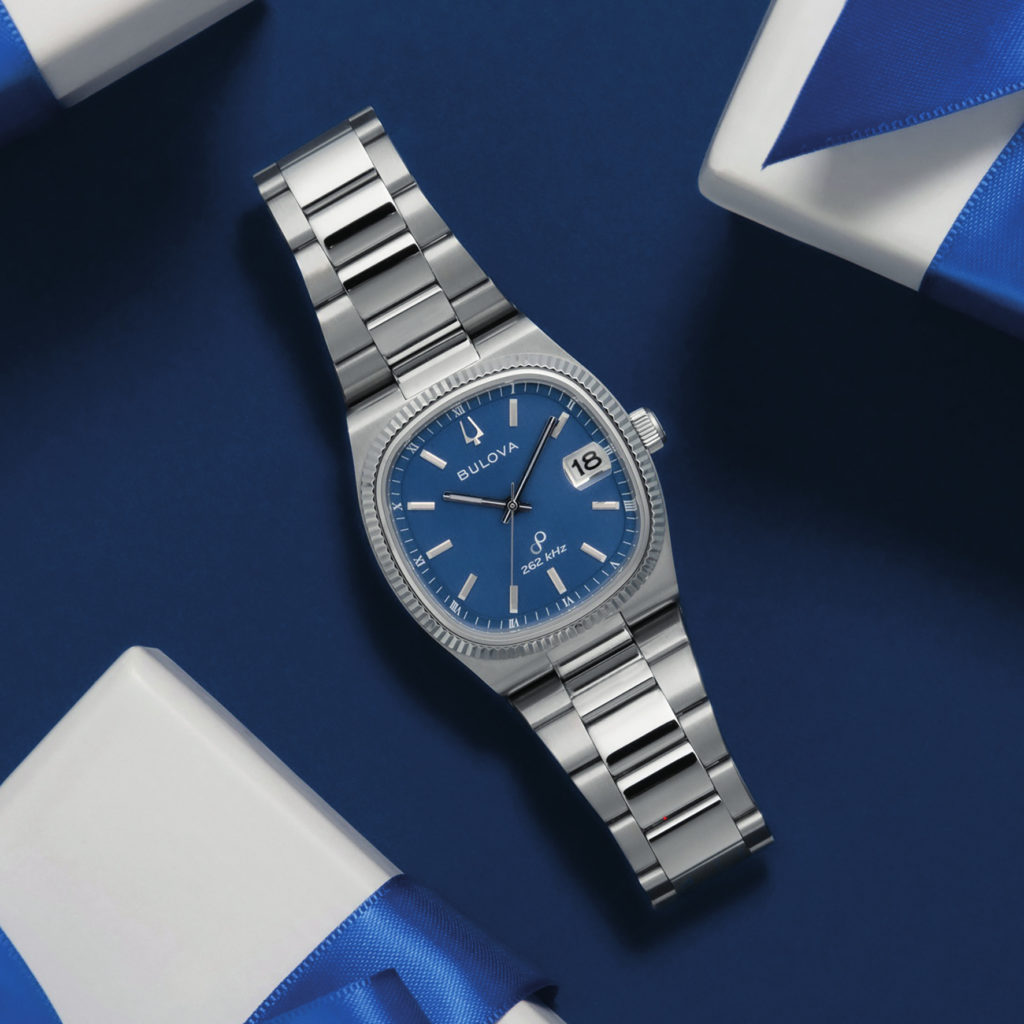
With a distinctive TV-shaped case that exudes our favourite kind of 1970s vibe, this watch comes in three core versions: stainless steel with a green dial, stainless steel with a blue dial, and yellow gold PVD-coated stainless steel with a silver dial. The model is suitable for both men’s and women’s wrists with a median 38mm case size. The Super Seville Precisionist features a sapphire crystal with a date magnifier, framed by a fluted bezel reminiscent of a coin edge that is designed to catch the light. A closer look at the dial reveals the “P” logo and the marking “262 kHz” above the 6 o’clock position, referencing the Precisionist quartz movement within. This high-frequency movement offers superior accuracy with an annual deviation of no more than 10 seconds. If you fancy owning a retro-styled timepiece from a historic American brand (turned Swiss Made and now Japanese owned) that is celebrating 150 years of history, do check out this Bulova watch model. Prices start at a very approachable SGD 859 (Approx. MYR 2,600).

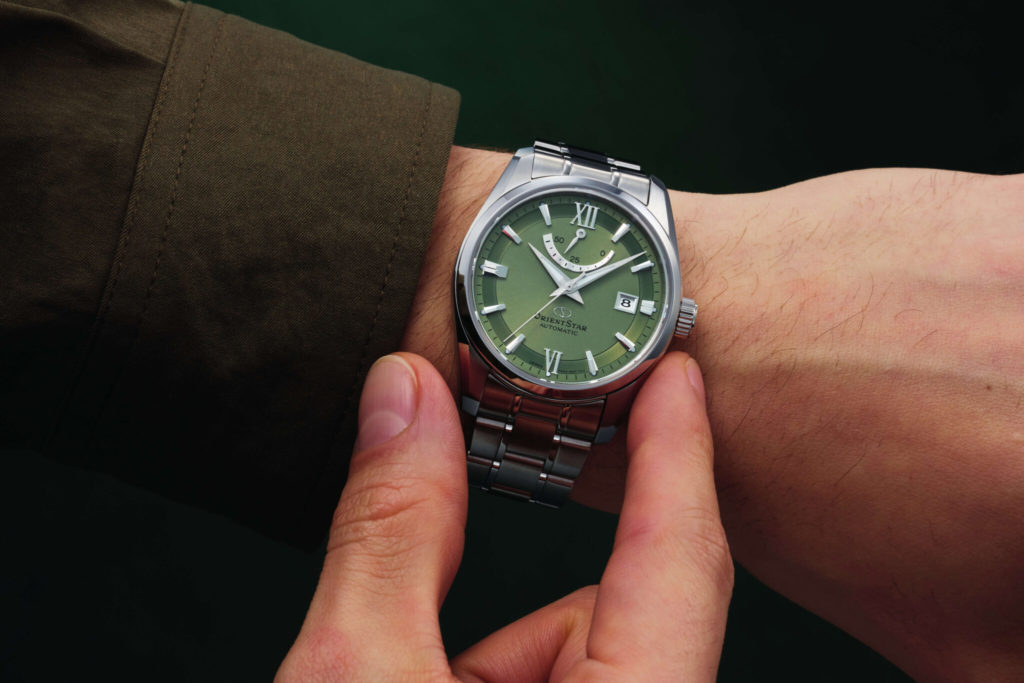
ORIENT STAR CONTEMPORARY DATE

Orient Star frequently catches our eye – true to their slogan, “Capture Your Gaze” – with the launch of multiple models in the first quarter of the year. Among them, the Contemporary Date collection stands out the most, featuring four earthy dial colours: leaf green, desert copper, clear water blue, and stone grey. These hues have been specially treated to soften their saturation, creating a unique and captivating visual appeal beneath the anti-reflective sapphire crystal. This makes the watch a versatile companion, suitable for any occasion, whether dressed formally or casually.

The Orient Star Contemporary Date is powered by the in-house self-winding Calibre F6N43, which boasts a 50-hour power reserve and a corresponding indicator at 12 o’clock. The case size is officially listed as 38.5mm, and on the wrist, it indeed feels true to size – perhaps even slightly larger. Unlike some watches that claim to be 38mm but wear closer to 36mm, this

one maintains its presence. If you need a refresher here, Orient Star is the premium line of Orient, a storied Japanese name that is often mentioned in the same breath as Seiko and, most notably, Grand Seiko. Confusingly, Orient and Orient Star are imprints owned by the Seiko Epson Corporation, which is not affiliated with Seiko.

For those seeking an effortlessly wearable daily timepiece, this model comes highly recommended, particularly given its attractive pricing of only SGD 966 (Approx. MYR 2,900) for “Made in Japan” quality. Shopping around is recommended.

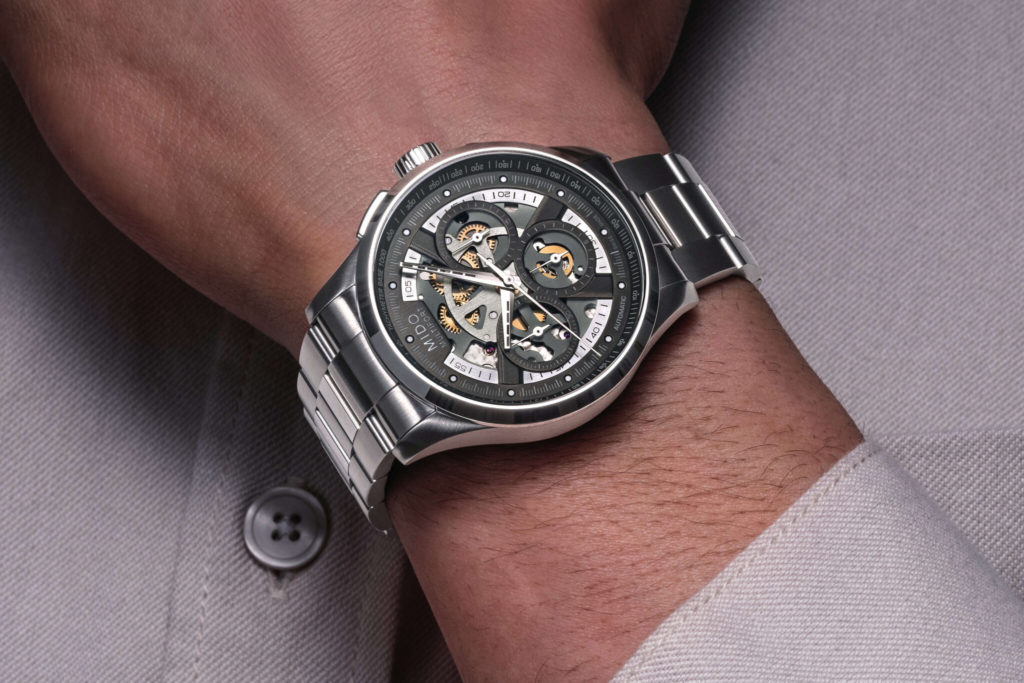
MIDO MULTIFORT SKELETON CHRONOGRAPH

Mido Multfort Skeleton Chronograph

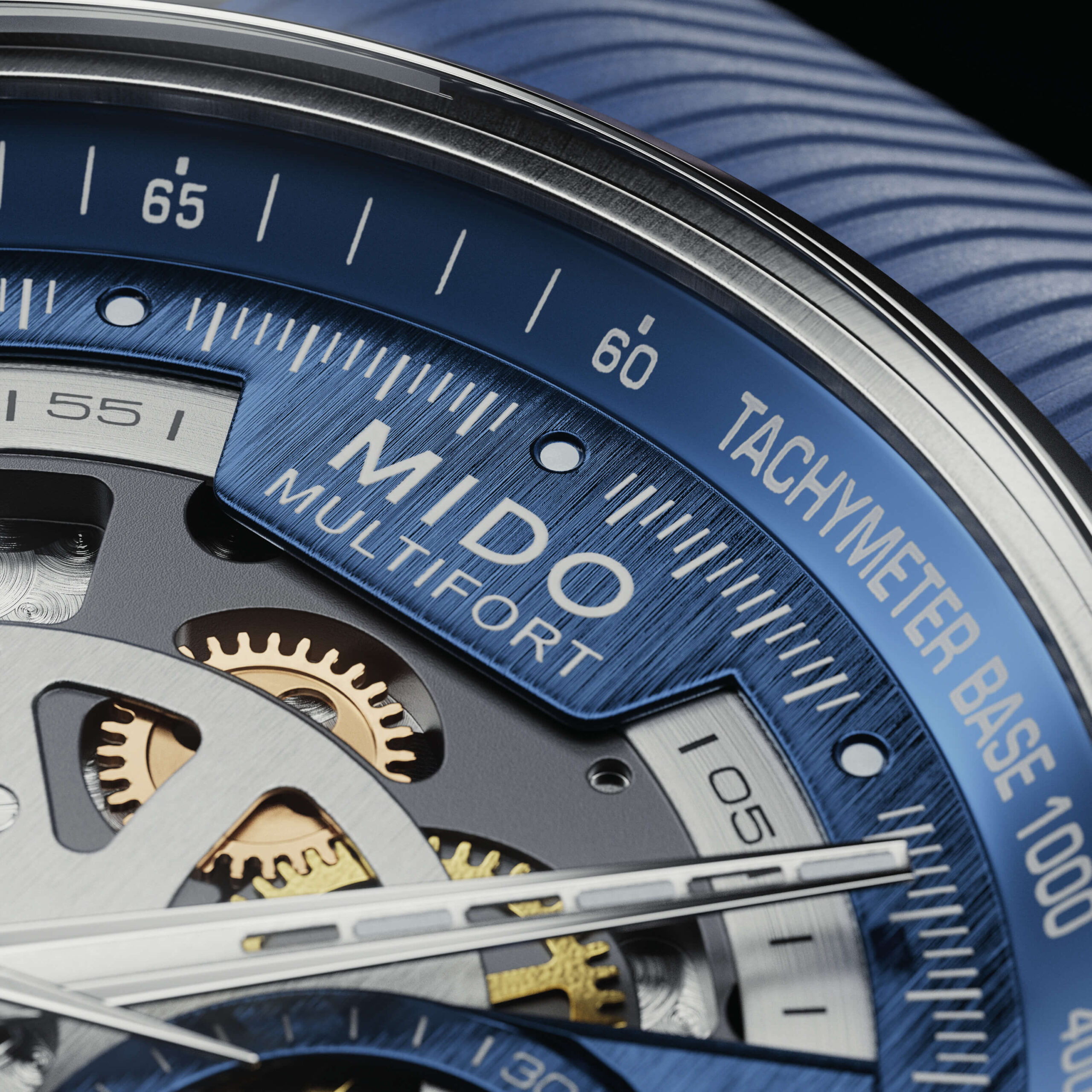
No story about big-name affordable watches would be complete without something from Mido. The Swatch Group-owned brand seems to have a well-thought-out strategy for rolling out new releases each quarter, ensuring they remain consistently in the spotlight, or at least not far from it. Whether it was last year’s Ocean Star 39 or the more recent Multifort 8 Two Crowns, there is always something exciting to admire and talk about. And now, they have introduced the Multifort Skeleton Chronograph… This is a watch that proudly proclaims your passion for mechanical timepieces through its openworked dial and movement.

Mido Multifort Skeleton 38.5mm in stainless steel Chronograph

The Multifort Skeleton Chronograph boasts a 43mm case that is water-resistant up to 100 metres. It is a fully functional chronograph, as its name promises, with a 30-minute counter at 3 o’clock, a 12-hour counter at 6 o’clock, and a small second subdial at 9 o’clock. The self-winding movement inside is the Calibre 60, based on ETA A05.951. Its rotor, also skeletonised like the dial, winds the barrel to deliver a power reserve of 60 hours, which is very decent for this price segment (more on this shortly). The sapphire crystal is treated with anti-reflective coating on both sides to improve legibility, which is somewhat uncommon at this level. Currently, Mido offers the Multifort Skeleton Chronograph in two main variations: one with an anthracite dial on a bracelet (MYR 11,350), and another with a blue dial paired with a blue rubber strap (MYR 11,200).

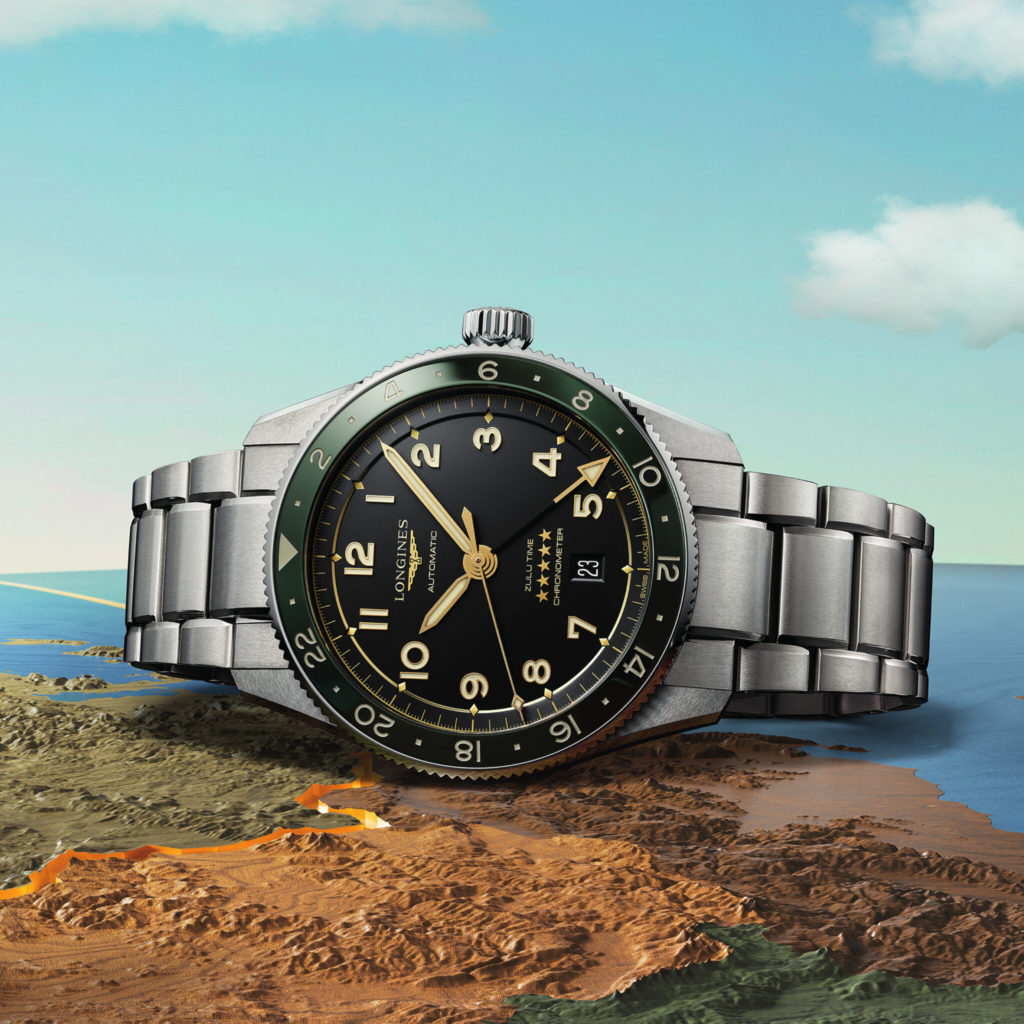
LONGINES SPIRIT ZULU TIME

Longines Spirit Zulu Time 42mm in stainless steel

Spirit is the name of the sports watch collection that Longines introduced in 2020, and it has been the subject of our cover stories multiple times since then; most recently, the Spirit Zulu Time 1925 took centre stage in the Legacy issue. Unhappily, that prevented us from using this story in the Legacy issue because the collection (but not that watch) was selected for inclusion here. In the end, the story covered the entire Spirit collection. No matter because a good watch deserves more than a few good turns.

As a quick recap, the design of the Spirit collection is fundamentally inspired by pioneering aviators and global explorers – individuals who embodied a strong spirit of perseverance in overcoming the challenges before them. The collection did not exist in the pioneering era of aviation, but it represents continuity for Longines with iconic models such as the Weems, the Hour Angle and the original Zulu Time.

One of the highlights from this collection is, thus, the Spirit Zulu Time, a true GMT watch built for international travel. While many GMT watches on the market feature a 24-hour hand, they often lack the ability to independently quick-set the regular hour hand to local time. The Spirit Zulu Time, however, offers this convenient feature. It is powered by the self-winding Calibre L844.4, which delivers a power reserve of 72 hours.

Longines currently offers the Spirit Zulu Time in two case sizes of 42mm and 39mm to suit wrists of varying sizes. The ceramic bezel insert is highly resistant to scratches and is available in colours such as black, blue, and, green. Prices start from SGD 4,620 depending on case size and strap type (i.e. stainless steel bracelet, leather strap, or fabric strap). Titanium and bicolour models are priced higher at MYR
20,450 and MYR 22,560, respectively.

FREDERIQUE CONSTANT CLASSIC PERPETUAL CALENDAR MANUFACTURE

Frederique Constant Classic Perpetual Calendar Manufacture 40mm in stainless steel

To close this article, let us turn to the most sophisticated type of calendar complication in watchmaking: the perpetual calendar. This mechanical invention is capable of automatically recognising whether a given month has 31 days or fewer, and even accounts for leap years. Traditionally, perpetual calendar watches have been reserved for the uppermost price tier, but a few watchmakers dared to buck that tendency. Frederique Constant was part of a new wave of brands that also disrupted this norm in 2016. It also managed this with rare class, developing and producing a perpetual calendar movement that was far more accessible to the broader public.

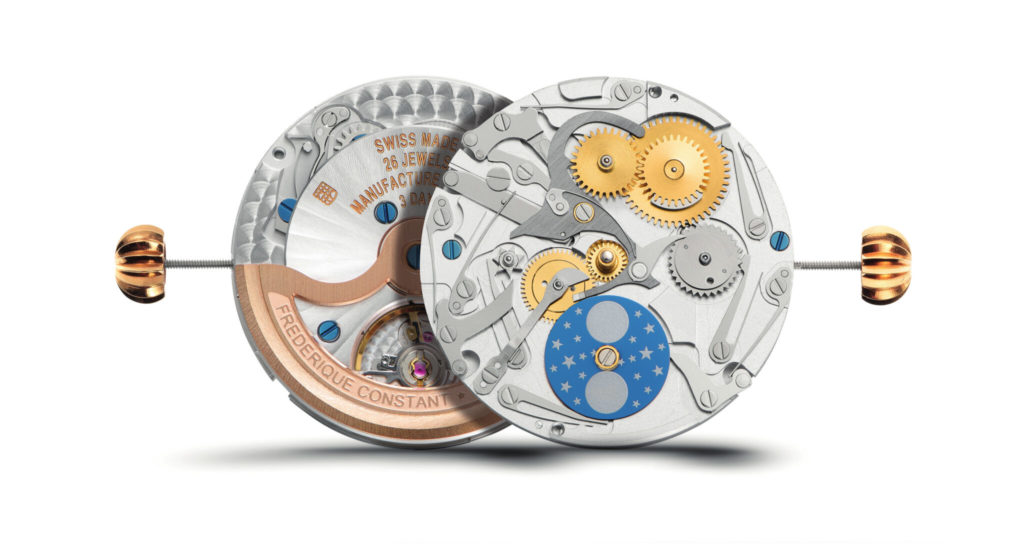
Frederique Constant’s new Manufacture FC-776 Calibre

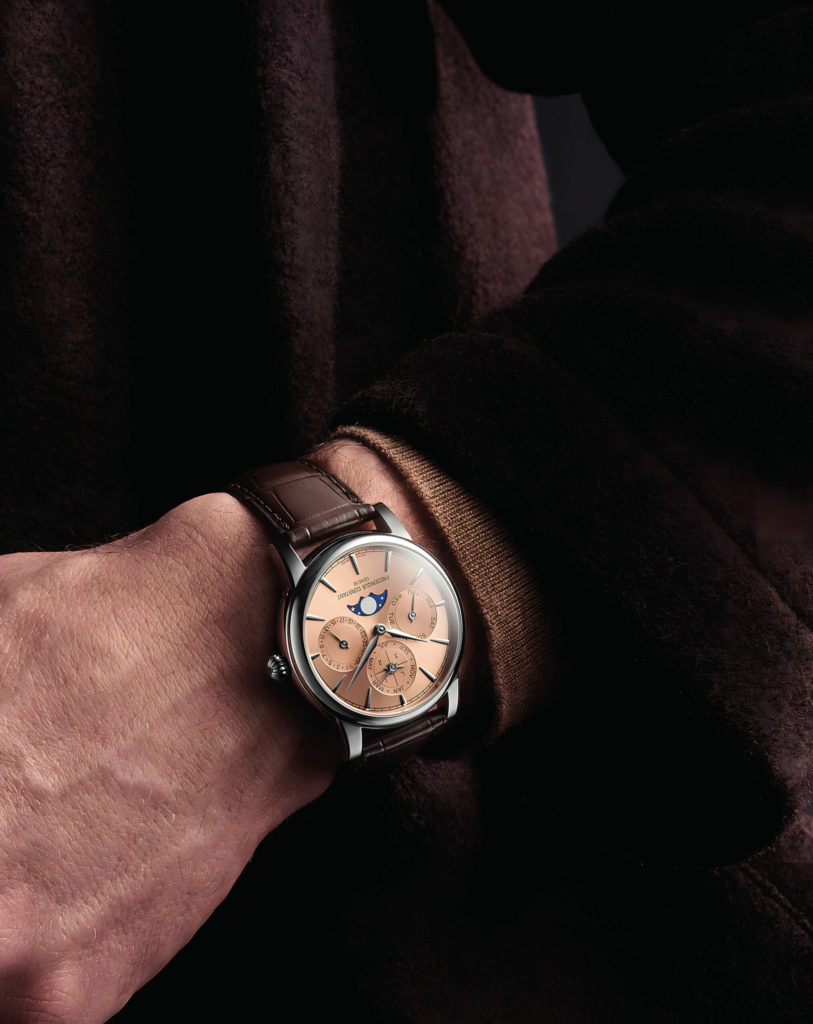
This year, Frederique Constant has updated its Classic Perpetual Calendar Manufacture with the new in-house Calibre FC-776, which now boasts a power reserve of three days. The case has also been reduced in size, from 42mm to a more refined 40mm. This appears to be the first time Frederique Constant has introduced a salmon dial to this model. The three subdials that make up the calendar display are slightly recessed into the sunray-brushed dial surface, which plays beautifully with the light. They are framed by applied hour markers that complement the elegant dauphine-style hands. Paired with a brown alligator leather strap, the watch commands an official RRP of CHF 9,995. It is a compelling option within the world of high complications indeed but the unbeatable value proposition here is well known. This means this model is frequently sold out, so be aware of this.

Opinion: The Reality of Watch Development Cycles

Bell & Ross BR-X3

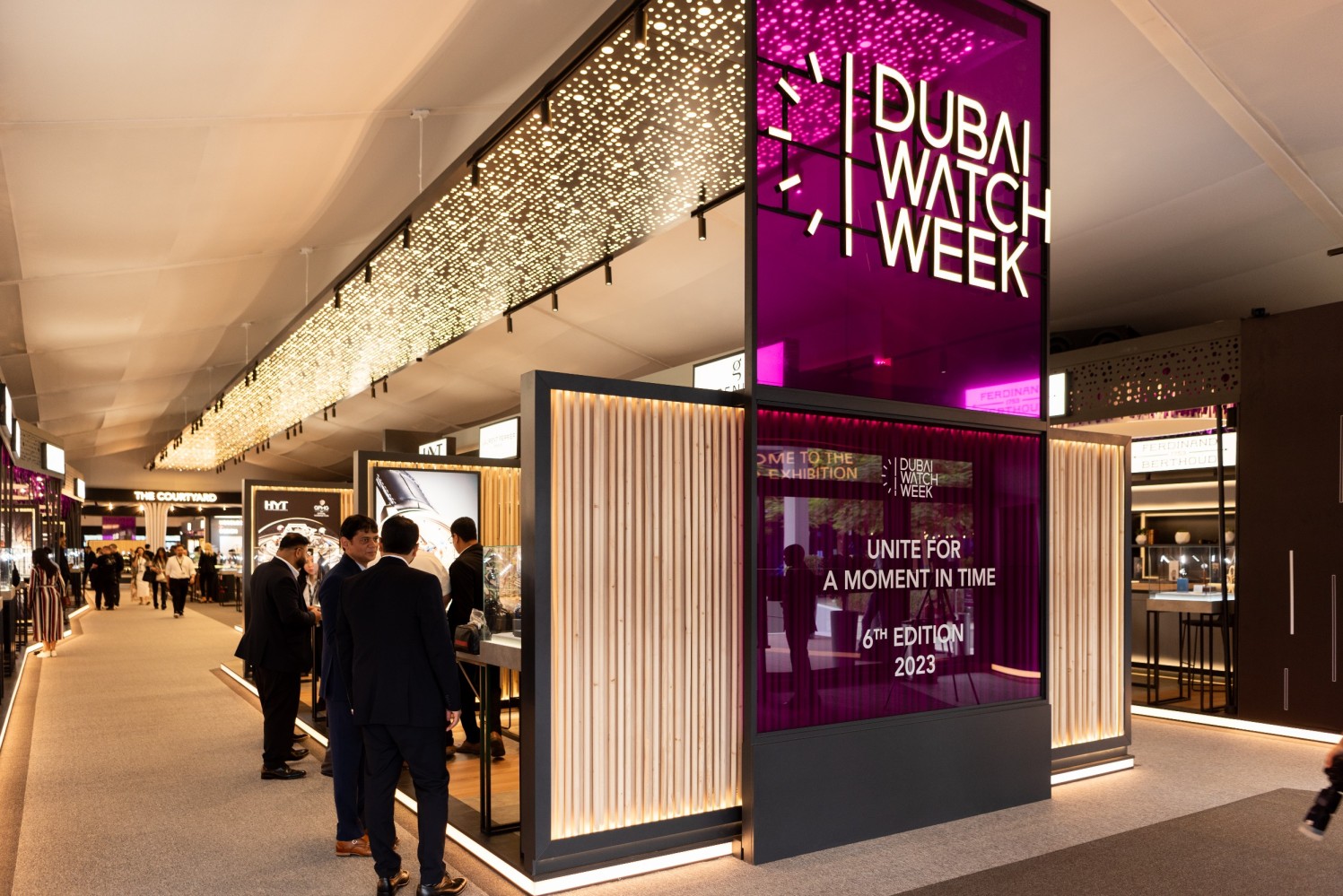
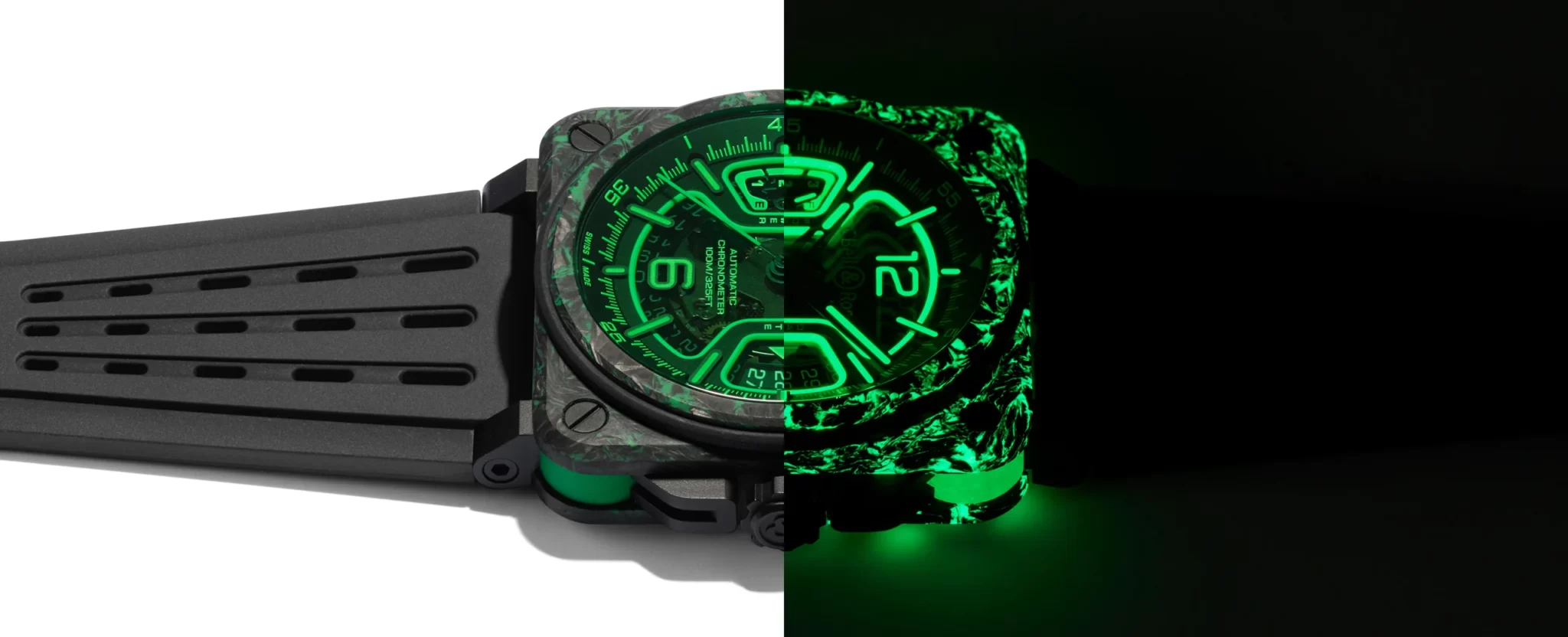
In any given issue, I struggle to decide what to filter out and where to let the chips fall as they may. Most of the time, it is not worth the column inches, as they used to say (look it up), and pictures might be a pain to find. Then I watched the Dubai Watch Week discussion between YouTube maverick and watch dealer Nico Leonard and WatchPro Editor Rob Corder… I recommend you watch this exchange if you read this because I am intent on only one point: that new watches are planned years in advance and that is somehow bad…because it might be.

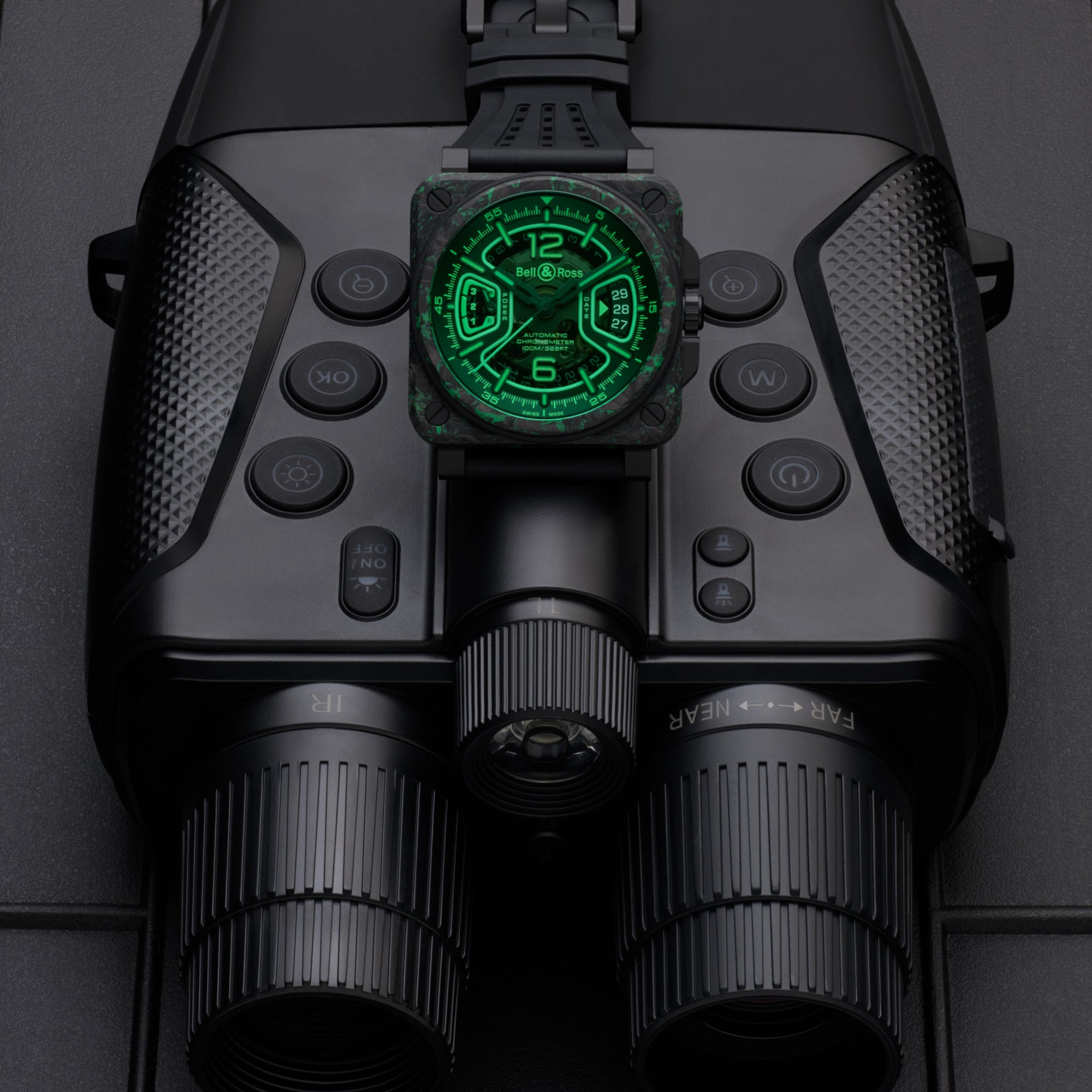
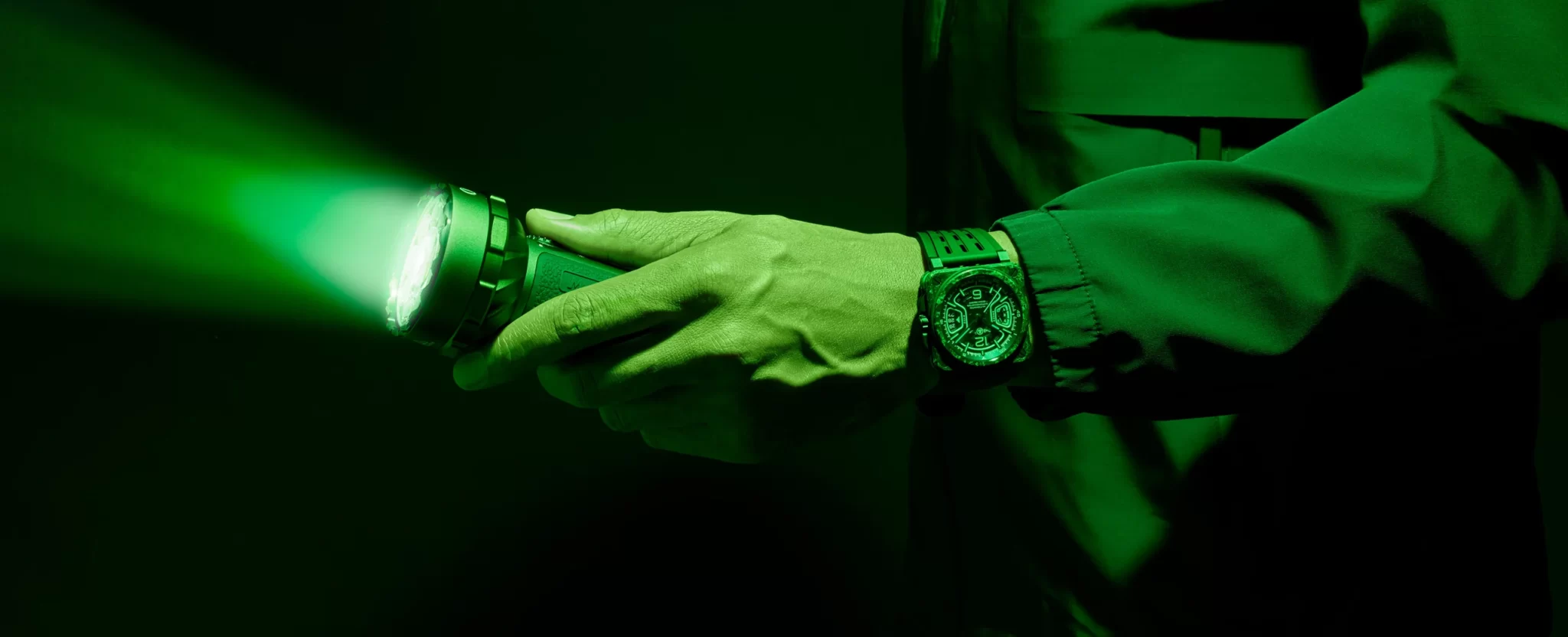
Of course, this excludes special pieces like the Blancpain Grande Double Sonnerie but not only these. It could also be anything that includes a new function or case, and certainly anything with an improvement in existing basic functions, like the power reserve for example. This was certainly the case, no pun intended, with the BR-X3 and X5 series from Bell & Ross; one cannot expect something like this to emerge in just a couple of years.

Bell & Ross BR-X3

Before I get into this, most of the conversation between Leonard and Corder was not about this, and I wrote multiple responses to many different points but those all went on too long and would have filled up another entire issue. Besides, this development matter is the only succinct point that I think was a missed opportunity. Broadly speaking on the other points, it is vacuous to take apart another person’s opinion because you have a different one so I will try not to do that.

And now, why do I want to address how long brands take to develop watches? There is an honest critique to be made here, and a discussion to be had. Neither Leonard nor Corder tried that, and the line was a throwaway remark that allowed Leonard to name-drop the Tudor CEO and Corder to say that watch brands all proudly claim it takes them years to develop their watches. Now, if either of them said that brands take an ungodly number of years to produce anodyne products, that would have been saying something real. Also, a missed opportunity for both these pundits to stick it to Big Time, or whatever.

To channel Leonard a little, the late Luigi Macaluso once told me to beware the tyranny of novelty — and I have kept his words close to heart and repeated them in public frequently. This is because this magazine, and plenty of specialists including Leonard and Corder, are constantly thrashing about in the unrelenting waves of new releases. I often find that brands should reconsider their release strategies, not to jump on trends faster but to figure out which ones to maybe ignore. It would be better if not every brand had to have a watch with a certain shade of blue, to cite just one example.

The Elder Scrolls V: Skyrim Special Edition

But things could be worse — we could be discussing triple A video games, the vast majority of which are released more or less unfinished, and then workshopped to the grave on the public’s dime. It is a good way to make a buck and an even better way to alienate the customer. The last major watch release that I might argue came even close was the Audemars Piguet Code 11:59 at launch, which makes for a great segue. When brands launch new collections, especially the big ones that Leonard and Corder are on about, they often spend years (or claim to spend that time, but that is another story) trying to get it right. When the results are just “meh,” that is a problem. Even a bad watch is better than a “meh” one — the old Louis Vuitton Tambour was a fantastic bad watch, for example. So are any number of discontinued watches, including my favourite Rolex Prince models, just so everyone understands that I have skin in this game and that ‘bad’ is subjective.
Bell & Ross BR-X3

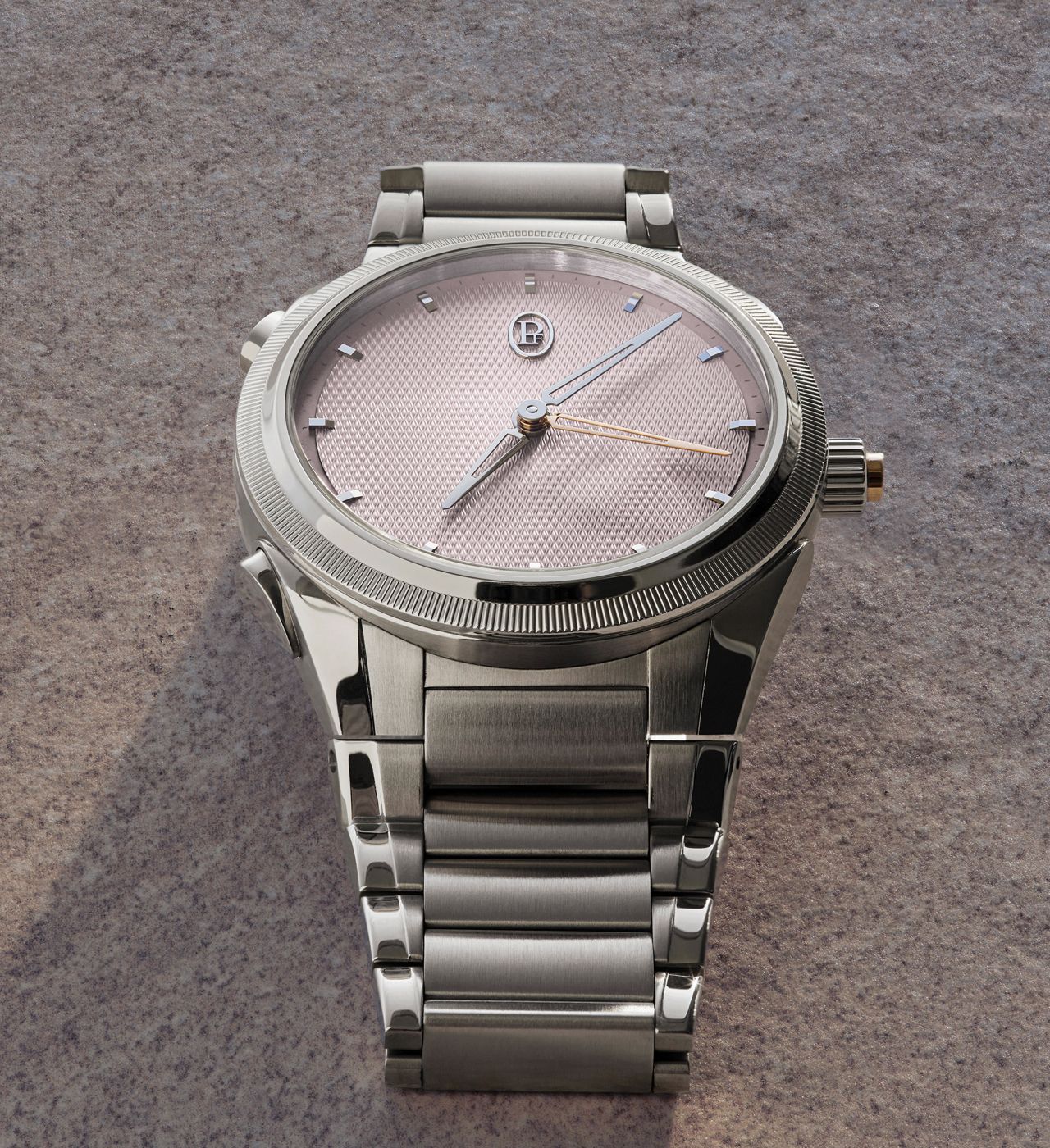
Returning to my singular point for this story, timelines are not a useful gauge and watch brands have shown, repeatedly, that they do not need a fixed number of years to develop watches, winners or otherwise. One example we can easily cite is that of Parmigiani Fleurier, which put out its most appealing model ever, the Tonda PF, in just under a year. Even more recently, we have the example of Breguet and the slew of watches this year. While they have no doubt been in the works for a while, the arrival of a new CEO no doubt necessitated some changes. I have nothing specific to go on but it seems like common sense. Of course, we have also seen something similar at Breitling, Bremont and Montblanc, all with varying degrees of success.

Parmigiani Fleurier Tonda PF Minute Rattrapante Arctic Rose

Of course, there are romantic notions to consider, especially any that confirm the dream of the mechanical watch: an eternal object that will always be by one’s side. Any idea that a watch might be a product like any other needs to be quashed mercilessly. Better yet, it should never come up. As watch buyers or collectors, we do need to question whether the claimed development time is reflected in whatever watch we are considering. Typically, this only comes up when a watch sparks contention, as most famously seen in the debut of the Patek Philippe Cubitus last year.

Patek Philippe, De gauche à droite: 5821/1A_001, 5822P_001, 5821/1AR_001

When brands rush watches out to meet commercial expectations, the results are mixed. Once again though, I would argue that as long as the novelties are not simply forgettable, some amount of debate is useful. It is for this reason — and Leonard’s famous ranking (which includes a “Meh” category) — that I was enthused about the development point. It is also why I was subsequently disappointed. Hopefully, he will revisit this idea upon reflection because it is a rich one, as I hope this little missive shows. Perhaps I will hit Leonard up in his comments section…

A New Milestone for Patek Philippe’s Contemporary Ladies’ Timepieces

Ref. 7340/1R-001

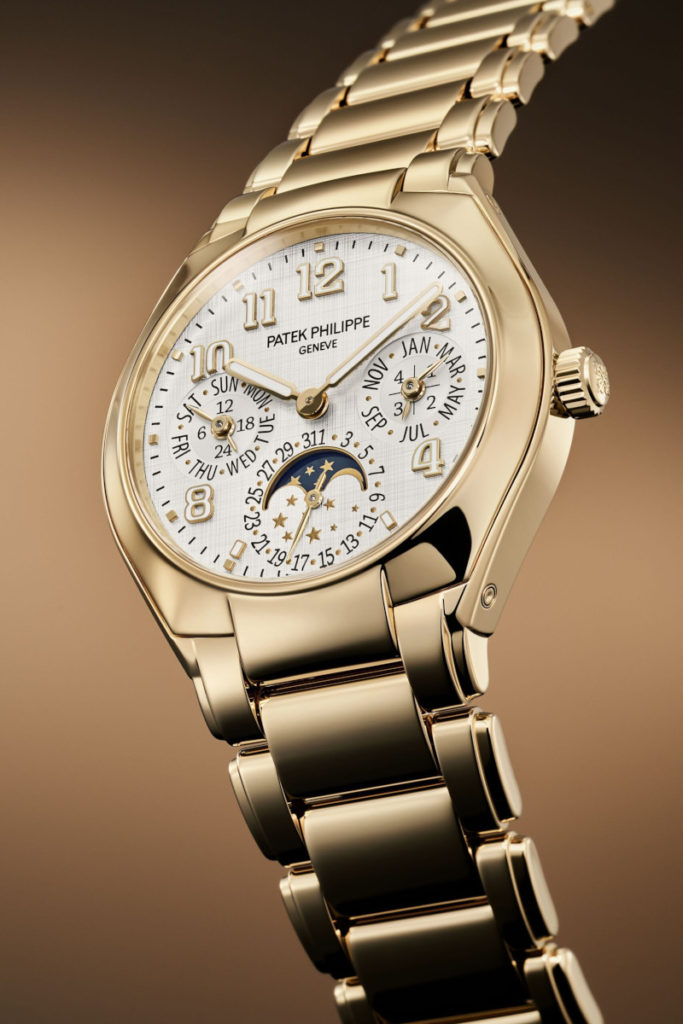
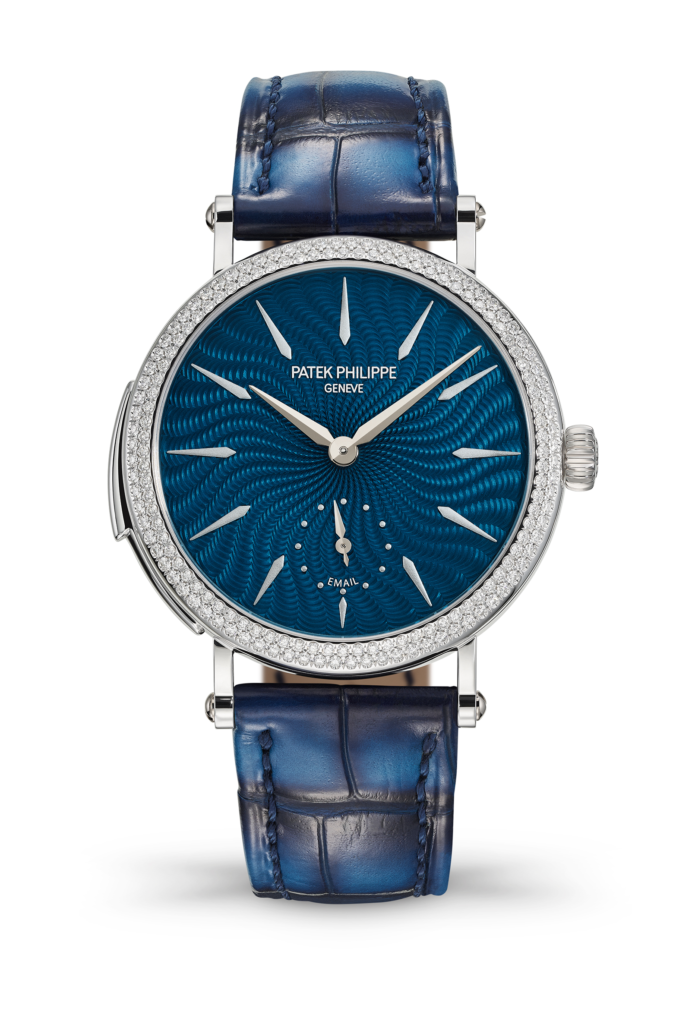
When we first wrote up the Patek Philippe Ref. 7340/1R for the Vision issue this year, it was a no-brainer: Patek Philippe debuts its first high complication – or grand complication as the brand terms it – in the Twenty~4 collection. Just seven years ago, this popular ladies’ watch family was all quartz, and in a distinctive shape; then a round automatic model debuted and we had to wonder if the Genevan brand would finally raise up this family with a complication. Ref. 7340, as we will refer to it, is the answer to that question. Of course, on reflection, this is perhaps entirely in line with Patek Philippe’s plans, even before the automatic model in 2018.

Ref. 7340/1R-010

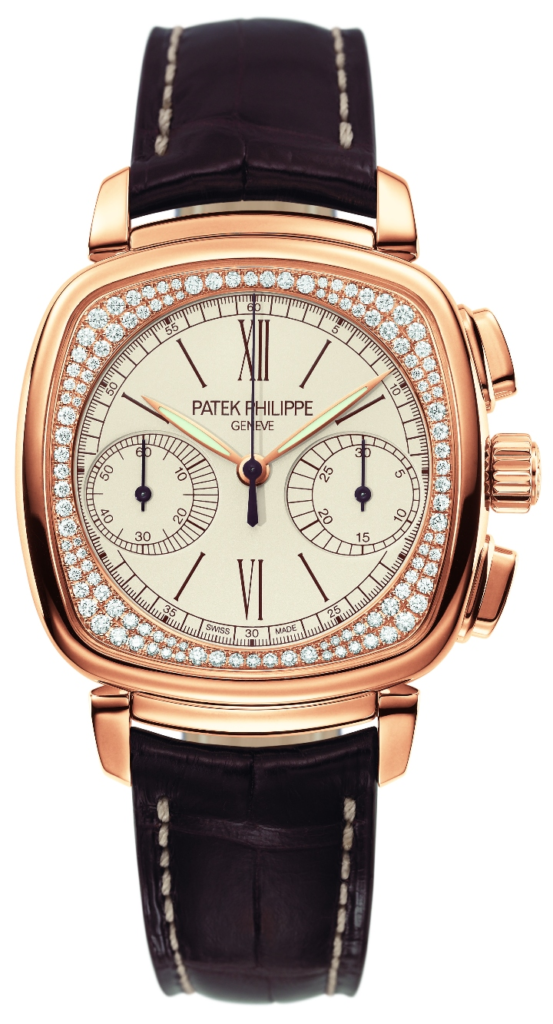
To understand, we have to journey a little further back, to a discontinued model called the Ladies First Chronograph Ref. 7071R. That watch represented a sea change at Patek Philippe and was regarded as a cheeky move way back in 2009, largely because this was the debut of Patek Philippe’s new manufacture chronograph movement. For those who do not remember this, it really did mean that men who did not like the idea of buying a ladies model for themselves would have to sit out the first appearance of calibre CH 29-535 PS. To be clear, it is worth remembering that in 2009, no one was really talking about unisex watches as a real phenomenon, and Ref. 7071R launched with diamonds (136 round ones on the dial flange). In other words, there was no doubt about what the watch was and who it was for, as if the name Ladies First Chronograph did not give it away.

DIFFERENT STROKES

With the raft of releases this year including notably restrained women’s watches – the Twenty~4 is not a unisex collection – as well as the Cubitus Ref. 7128 (in two variants), it may be tempting to read something about the role of precious gemstones here. When one includes watches such as Ref. 4946 and even the similarly sized Ref. 6196, the notion that the manufacture wants to offer sober watches to women gains ground. However, not only has this been happening for awhile – and we have not even brought Ref. 7040 and Ref. 7130 into it – but Patek Philippe certainly recognises the artisanal value of gemsetting in traditional watchmaking. Look to this year’s Ref. 5811/1460 and Ref. 7010G for evidence.

Ref. 7071R Ladies First Chronograph

Of course, the point is that there are different sorts of watches for different tastes, and a Patek Philippe perpetual calendar need not be enriched with diamonds to appeal to women. Now here, there is something of a relationship with Ref. 7071R because the new Ref. 7340 could have gone the same way but did not. The result is a watch that is far more inclusive and open, while also bearing the distinction of being first in more than just one way. Ref. 7340 is the also the first round Twenty~4 watch without a gem-set bezel. While we welcome this, we revise our previous assessment that the watch represents a “female collector prioritising substance over sparkle, and heritage over novelty.” There are not any priorities here, unless it relates to making the wealth of watchmaking’s appeal more apparent. This is why the simple three-hander is the most popular traditional watch of all, but we are getting ahead of ourselves.

Ref. 7130R-014

COMPLICATED AESTHETICS

Since we have covered Ref. 7340 at length, let us spare a few words to revisit the basics, and some details. Acting on all fronts of the 36mm Ref. 7340/1R is the ultra-thin self-winding calibre 240 Q, the same movement behind some of Patek Philippe’s grand complication perpetual calendars. This of course means that we are looking at continuity in the grand complication area, and a modular calibre whose virtues are well recognised. Despite measuring a svelte 3.88mm, the 275-component calibre with a 48-hour power reserve drives a complete perpetual calendar display that requires no manual correction until 2100.

Ref. 7040/250G

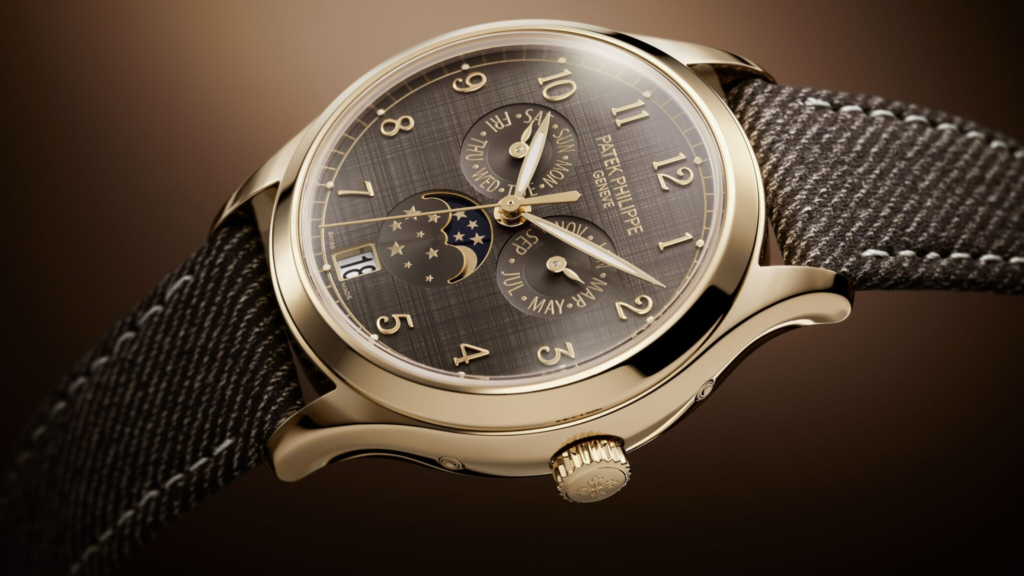
Although the calibre here is literally what makes the watch work, it is also a statement: in a great watch, complexity is the draw, and it can inform aesthetics. With its multiple subdials, the Patek Philippe perpetual calendar does show quite a fanciful face to the world. Gemsetting could add value here but it should be commensurate with the virtues of a storied calibre such as 240 Q. Again, consider Ref. 5811 and Ref. 7010 for good measure. Bringing in Ref. 4946 seals the deal for this story – here too, the aesthetic value is supplied by the subdials of the annual calendar complication.

TEXTURED APPEAL

Ref. 4946R-001

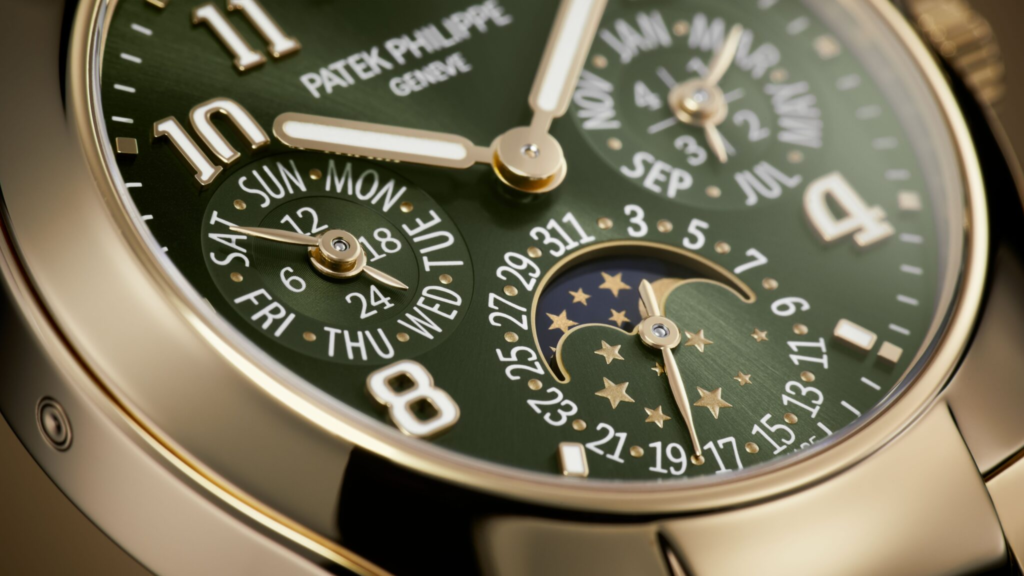
On a final note about Ref. 7340, there are two dial variations in play but both models are in rose gold, with matching bracelets. The 7340/1R-001 sports a silvery dial with vertical and horizontal satin-brushed finishing that resembles shantung (or Shandong) silk’s distinctive woven texture. Suffice to say that pictures do not do this sort of textured dial any favours; see it in person if you can. The second option, Ref. 7340/1R-010, is perhaps more in line with trends because the dial is sunburst olive green dial. However one feels about that, the colourway suits rose gold and will not disappoint, although we remain more convinced by the shantung version.

Ref. 7128/1G

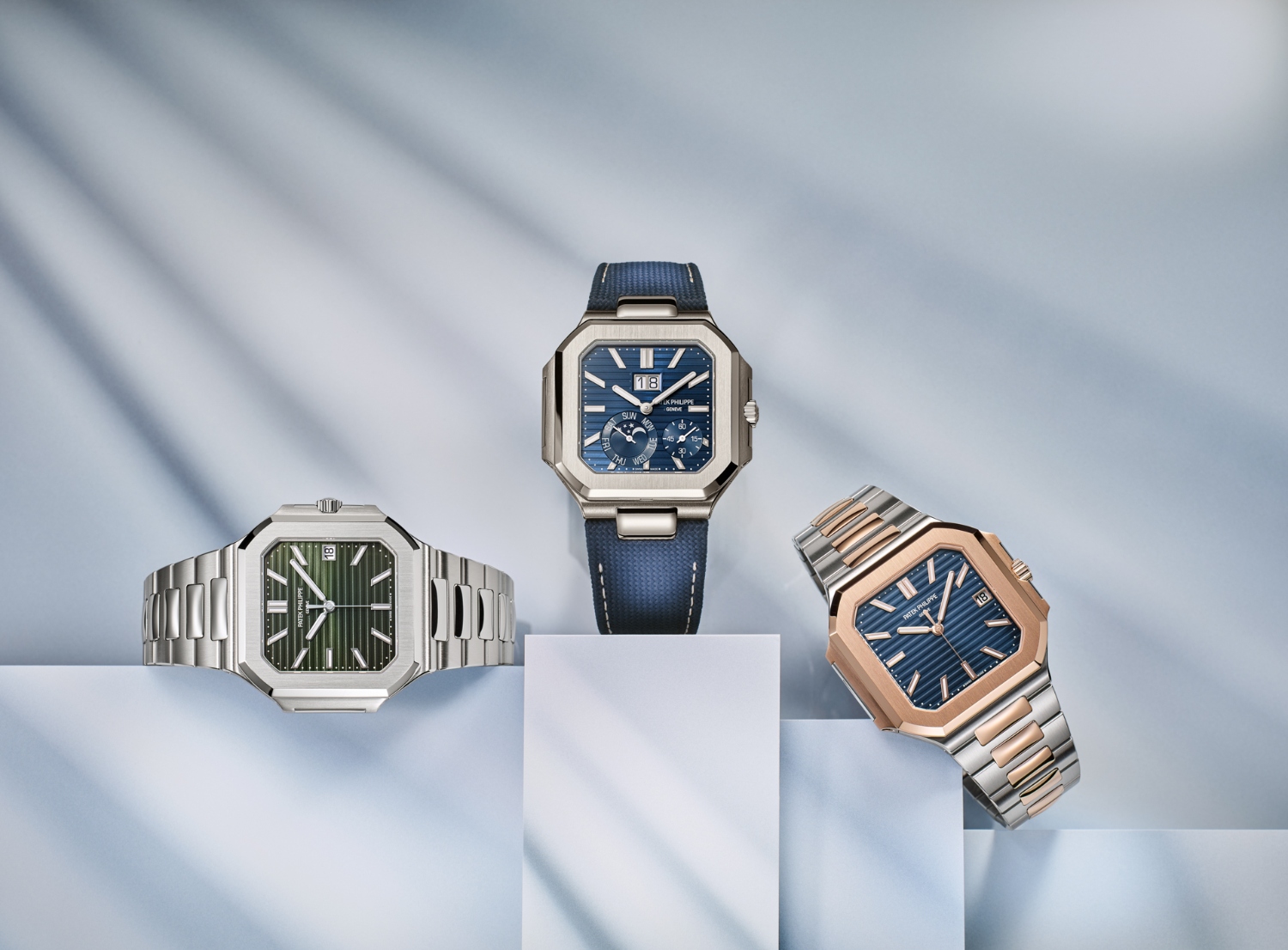
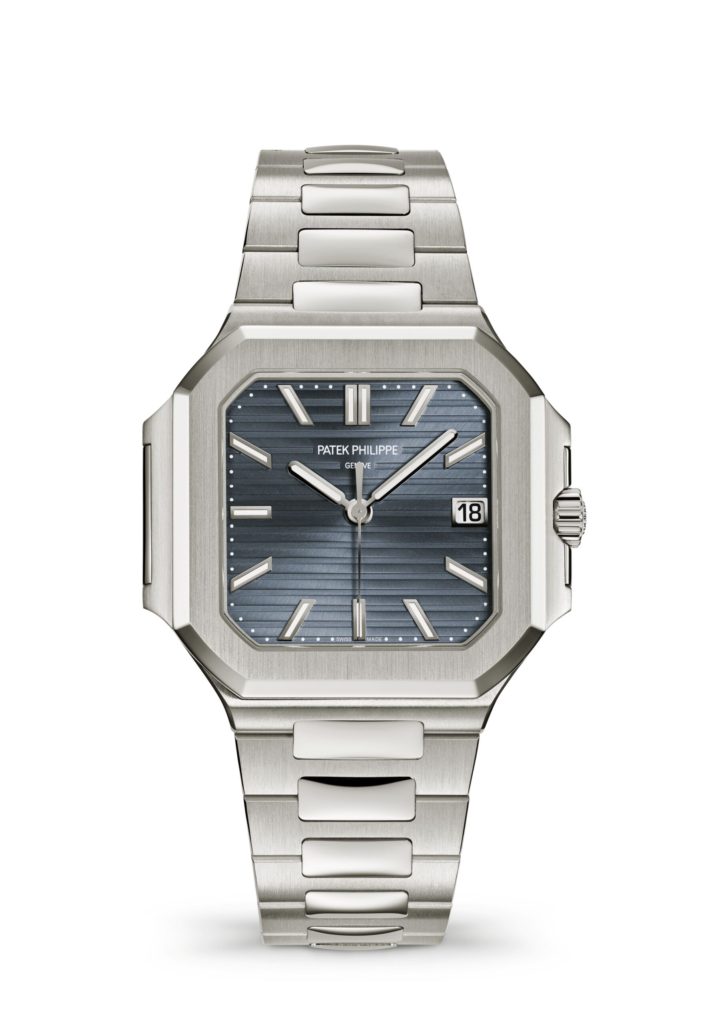
To close, we return to the appeal of the three-hander, which for our purposes here are the two versions of Ref. 7128. Unlike the Twenty~4, these are not specifically watches for women, just smaller versions – Ref. 5821 debuted in 2024 as a 45mm truly square watch, and two new references (7128/1G and 7128/1R) are 40mm. The large and “medium-sized,” as Patek Philippe describes the new watches, are both powered by the same calibre, the automatic 26-330 S C. This has the odd effect of demonstrating that this movement is more at home in this very modest case size. Certainly, 40mm is not small and the real difference is the space between the central links, top to bottom. This is really what makes the 45mm version wear large.

The bottom line, of course, is that the watches ostensibly pitched to women in the Patek Philippe range this year are really good for anyone with the right sort of wrist. Taken as a whole, they represent an appeal aimed at women who prefer more sobriety in their watches. Or they might just be great watches for anyone with good taste. That is a position we can get behind.

H. Moser & Cie: Behind the Irreverence Lies Serious Watchmaking

H. Moser & Cie manufacture facade

What does a manufacture that makes watches out of cheese look like…or maybe that should be what could it possibly taste like, never mind how it smells! What if the same manufacture also made a watch out of plants, which were literally alive on the case so it was less a watch than the world’s first and only wrist garden?

We might also wonder about the smell of such a watch, but we digress… Of course, the benefit of making a watch case out of dairy and one that is alive (affectionately dubbed Moser Nature) is that you automatically know which watchmaker we are discussing…if the pictures and description did not spoil it.

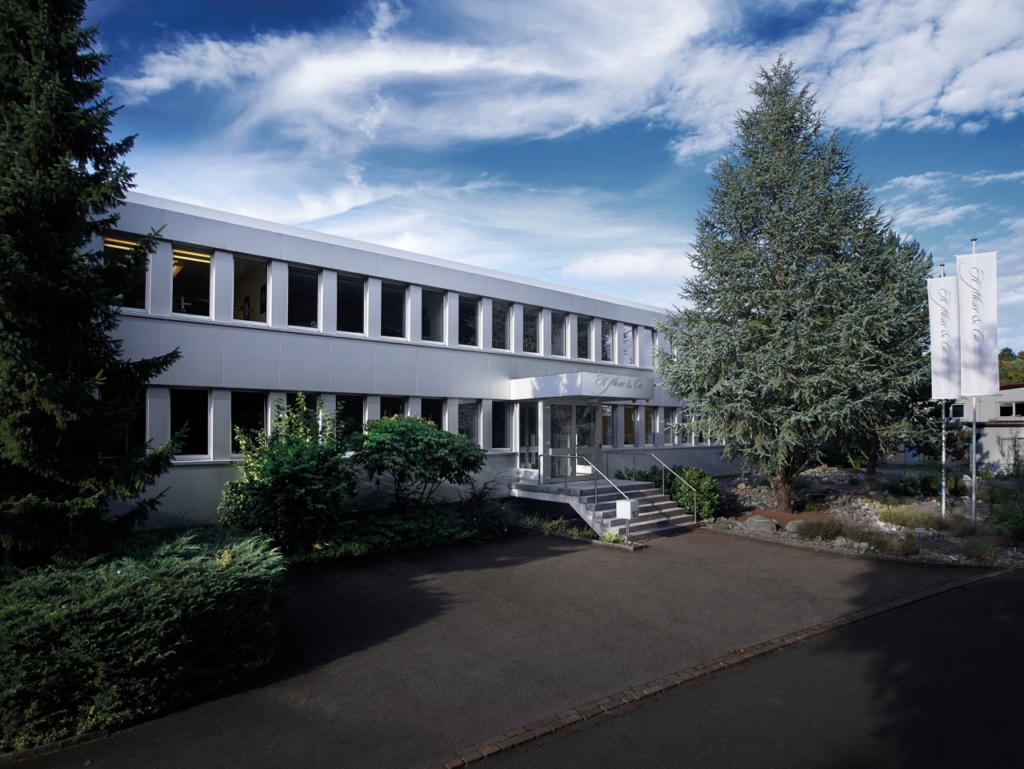
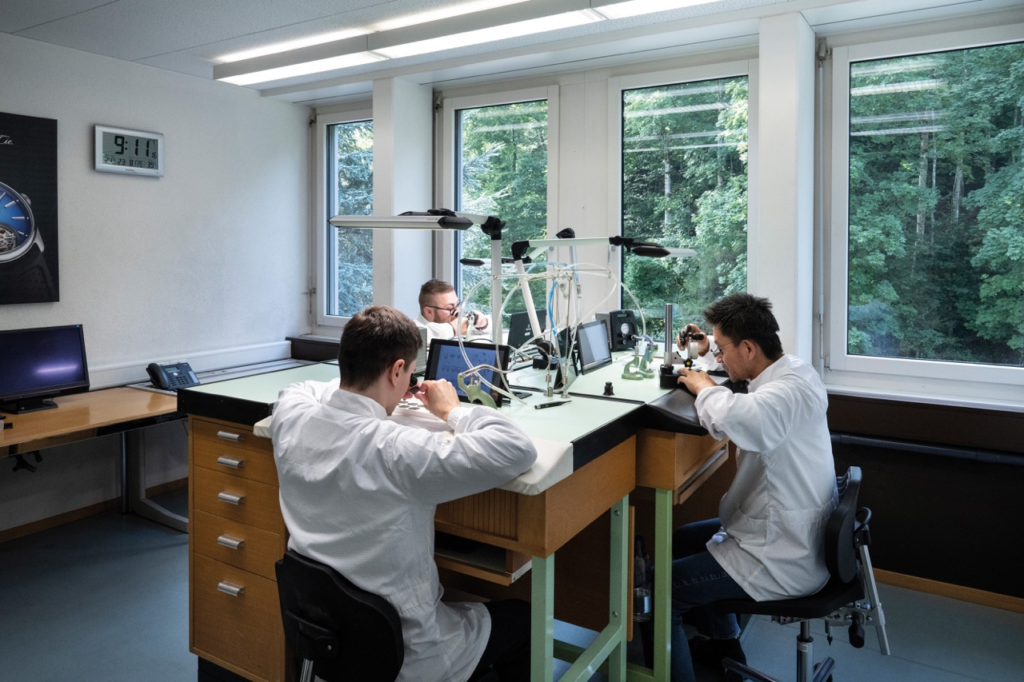
The irony is that H. Moser & Cie’s manufacture at Neuhausen am Rheinfall looks pretty much any other contemporary watch manufacturing facility, minus the bombast of some. In many ways, it is the not-perfect- but-just-right expression of a family-owned brand that is steadfast in its independence. H. Moser & Cie., under the quietly defiant stewardship of the Meylan family, has cultivated a reputation for being technically masterful, audaciously creative and, at its best, unexpectedly funny. It is a brand that honours tradition by tastefully (sometimes) breaking its rules, proving that true luxury is, above all, rare. Alright, that is a bit much, even if it is true. Allow us to back all this up, without the help of any one H. Moser & Cie watch…

From Imperial Russia With Love

Endeavour Perpetual Calendar with smoked salmon dial

In the spirit of irreverence, let us say that the story begins not in Switzerland, but in St. Petersburg in 1828, where founder (the properly Swiss and Schaffhausen- born) Heinrich Moser established a brand that would become a favourite of the Romanov court.

An astute industrialist as well as a master watchmaker, Moser later returned to Schaffhausen, where he harnessed the power of the Rhine Falls to build a dam, powering the region’s industrial growth.

Despite the auspicious beginnings, with the brand’s museum estimating that Moser made hundreds of thousands of watches, history had other plans here. Obviously, we need not explain about the Romanovs (it did not end well) and the Swiss operations faded through a series of ownership changes in the 20th century.

For decades, the name was little more than a footnote in the history of watchmaking until 2002, when it was formally revived. The true turning point came in 2012 when the Meylan family, through their holding company MELB, acquired the brand.

Led by the charismatic Edouard Meylan, H. Moser & Cie. was reborn with a new philosophy: to be “Very Rare.” This is not just a marketing slogan; it is a mission statement reflecting its limited annual production of around 4,000 watches, its mastery of approximately 20 in-house calibres, and a proudly contrarian spirit.

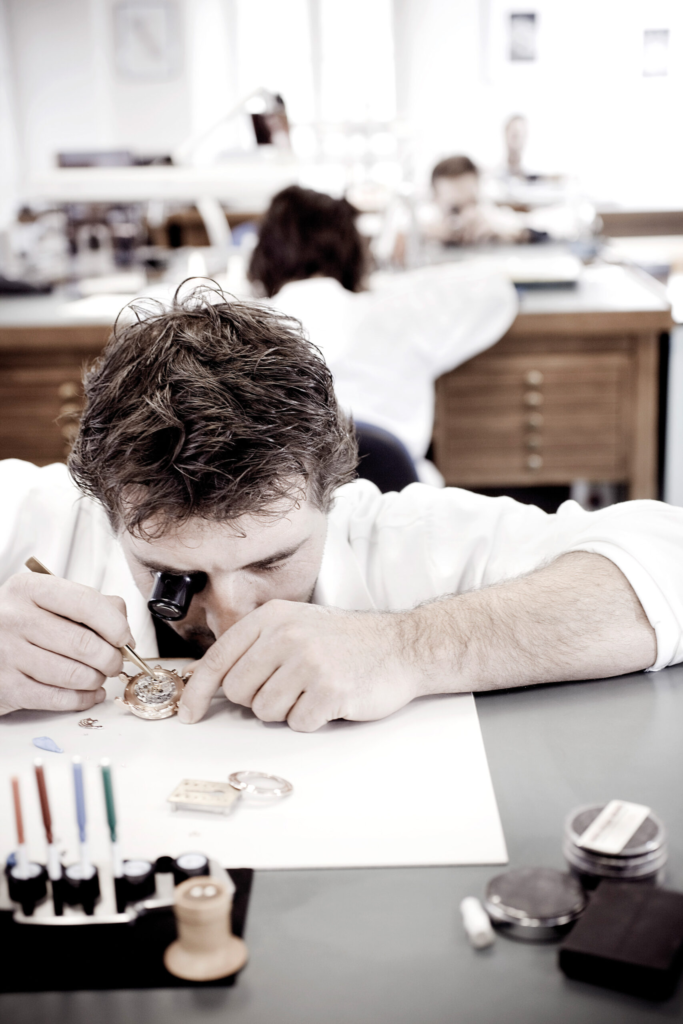
A group of watchmakers with traditional and contemporary tools

This boldness has produced some of the most talked-about timepieces in recent memory, from the “Swiss Alp Watch,” a mechanical middle finger to the smartwatch craze, to timepieces made of the aforementioned Swiss cheese (the Swiss Mad watch, which was a powerful commentary on the legally protected Swiss Made standard and remarkably prescient about broader global manufacturing concerns). Yet, beneath the wit lies a deep reverence for aesthetic purity.

Moser’s signature is the fumé (smoked) dial—a stunning gradient of colour that darkens towards the edges, often left completely sterile, free of logos or unnecessary text. The brand’s design philosophy is one of elegant reductionism, perhaps best exemplified by its perpetual calendar, which cleverly uses a small central arrow and the 12 hour indices to indicate the month, decluttering the dial in an act of horological genius.

Engineering Independence

This creative freedom is powered by profound technical independence. At the heart of the Neuhausen am Rheinfall manufacture is its sister company, Precision Engineering AG (PEAG).

This specialist firm is dedicated to producing the most critical components of a watch movement: the balance wheel and, most importantly, the hairspring. PEAG might also manufacture other escapement components, such as the pallet fork and the escape wheel, but we did not see this ourselves.

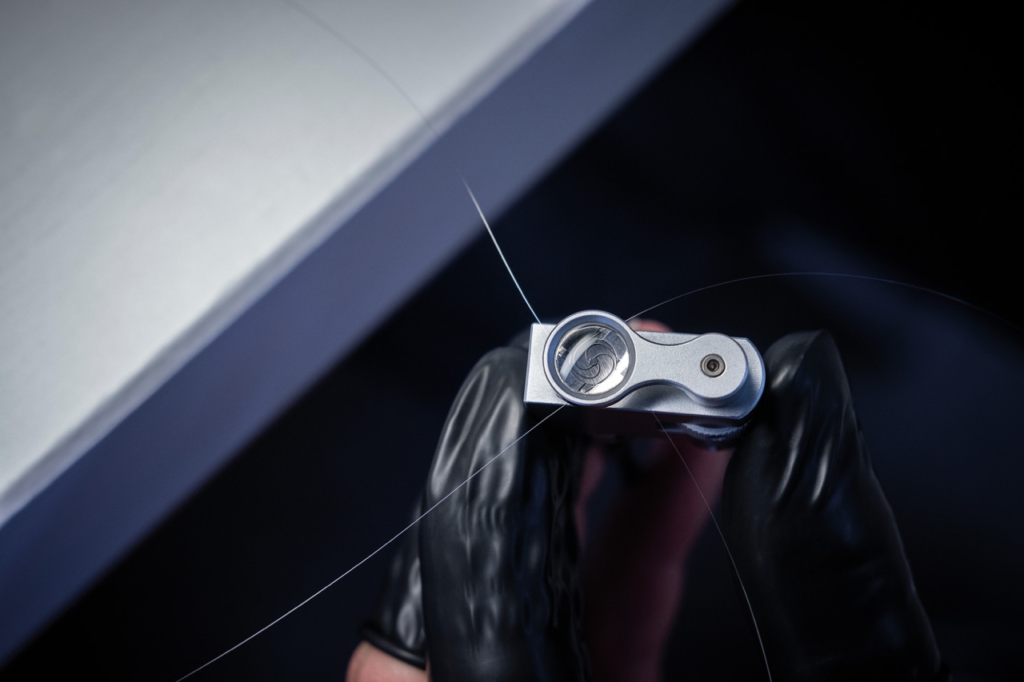
The tool for getting the hairspring in shape

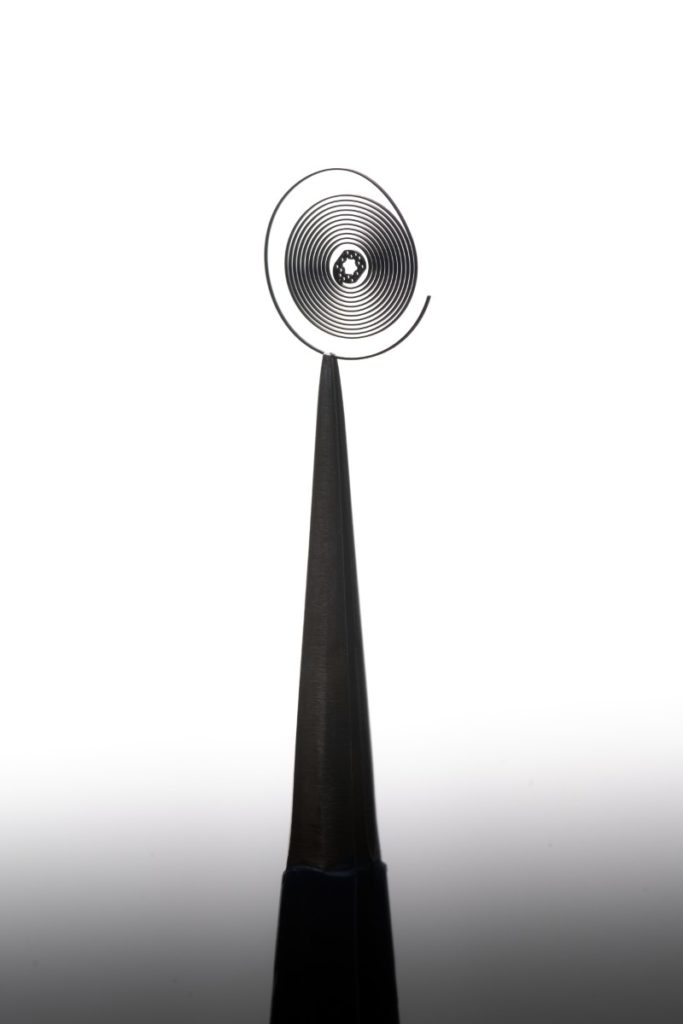
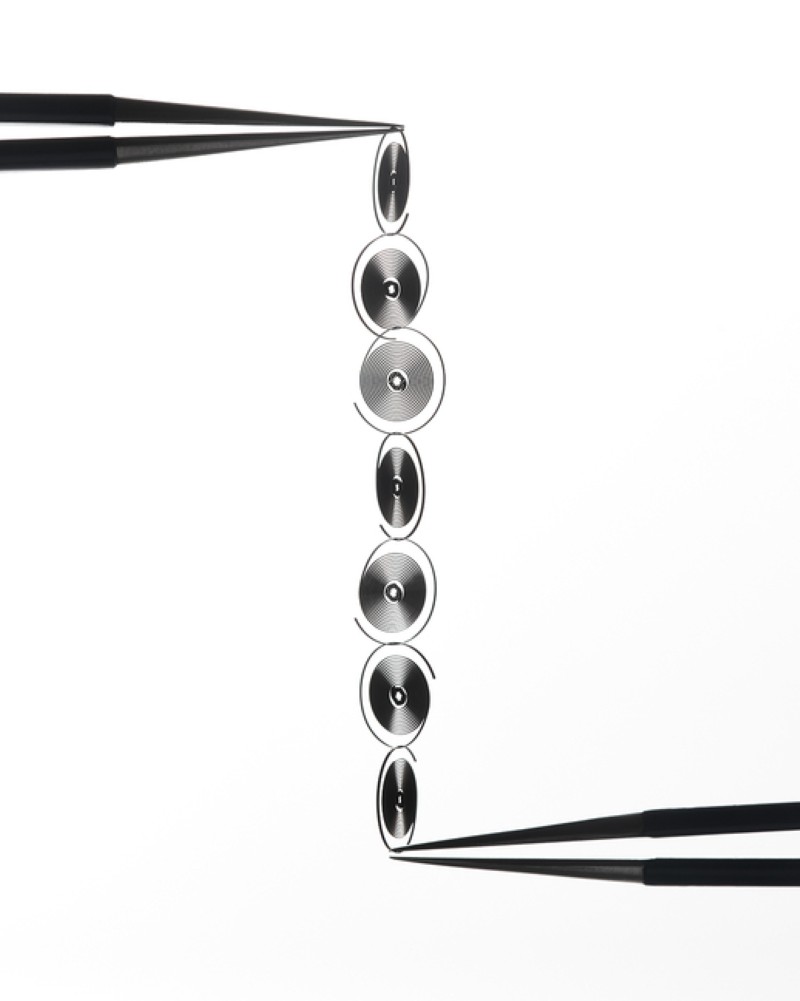
The hairspring, a minuscule, spiralled wire, is the regulating organ of a watch—its beating heart, as we have sometimes waxed lyrical about. Its quality dictates the timepiece’s accuracy, yet its production is so specialised that only a handful of companies in the world have mastered it. PEAG is one of them.

The process is a marvel of patience and precision, beginning with a 0.6 mm wire of a proprietary alloy named PE5000 (which is as different to Nivarox as Nivachron is to silicon) that is painstakingly drawn over two weeks to a thickness of just 0.01 mm (we are rounding up so you will have to imagine that it is even thinner, if you can).

This wire is then flattened to be finer than a human hair (0.07 mm, if you are counting) before being meticulously hand-coiled – with the help of special tool, as shown in the images – into a perfect spiral. PEAG not only supplies Moser but also a select group of other high- end independent brands, producing up to 800 of these vital components daily.

Streamlined Production

On this note, even a dedicated maker of watches like H. Moser & Cie cannot claim to make everything. The scale simply does not match up, which is evident when you consider how many hairsprings PEAG can make.

Moser says it makes 80 per cent of its calibres,with the remainder produced by Agenhor and Vaucher. These producers, likewise are intertwined with each other, with Moser owning a minority stake in Agenhor. For its cases, Moser relies on the facilities of a Vaucher sister firm, Les Artisans Boitiers, which you can read more about in our revisit of the Parmigiani Fleurier manufacturing sites.
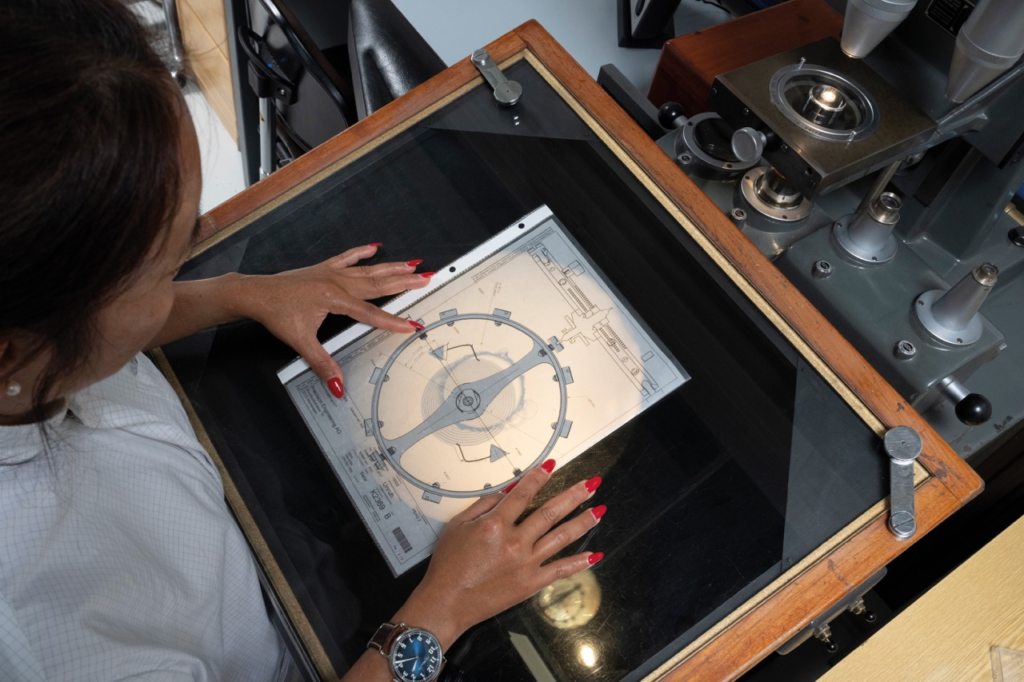
Another stage of hairspring work

Returning to PEAG, among its innovations is the Straumann Double Hairspring®, where two identical hairsprings (a challenge to find!) are paired and set to oscillate in opposite directions. This ingenious system averages out errors in timekeeping rates, achieving a level of precision comparable to a tourbillon but without its complexity or fragility. Moser also has a modular escapement, where the entire regulating organ can be removed as a single unit for servicing. This is a practical innovation, also seen at other more contemporary watchmakers, that streamlines maintenance without compromising performance.

We have spent quite a bit of time on hairsprings and the like but it should be remembered that it is not only PEAG doing the work of making components. The rest of the bridges, plates, pinions and gears are made in-house at Moser, which also shares its capabilities and capacities with Hautlence, another sister company. Like many other manufactures, there are CNC machines, computers and more traditional lathes and the like. Basically, everything you expect from T1 and T2 stage manufacturing is accounted for.

Arguably, all this is not enough to make a manufacture, and H. Moser & Cie gets the idea that people are at the centre of watchmaking. As it happens, for its anniversary this year, Moser has released a series of videos starring its own watchmakers, machine operators and museum curator.

Reimagining Complications

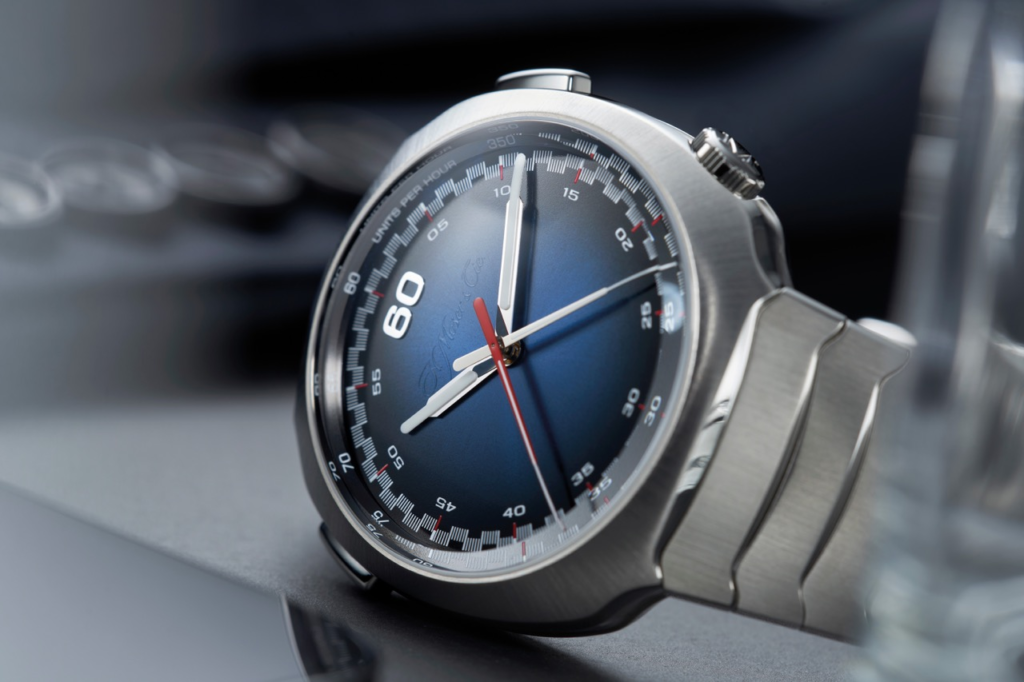
Streamliner Chronograph with funky blue dial

Moser applies its own brand of pragmatism and creativity to high horology. Minute repeaters are engineered with gongs and hammers on the dial side, not hidden within the movement, even if that might be more in tune with the H. Moser & Cie ethos.

Chronographs have been designed with the winding rotor placed on dial side, ensuring that the intricate beauty of the calibre, with its column wheels and levers, is fully visible through the caseback. On the other hand, chronographs have also been made to be to be completely centralised in display style, which is very much in keeping with the Moser way.

Each complication is reconsidered not just for function, but for aesthetic and emotional impact, reflecting the aforementioned ethos: to master time, not just measure it. This commitment to excellence has not gone unnoticed. Moser has earned prestigious accolades, including the Tourbillon Prize at the Grand Prix d’Horlogerie de Genève. In 2026, it will graduate from the incubator section of the Watches & Wonders fair to the main hall, a move that signals its arrival as a major force in independent watchmaking.

With its current facility at capacity, a new manufacture is already under construction, set to be completed in 2028. If you do visit, we recommend not skipping the museum, where the aforementioned curator will delight in telling you about the fantastic history of the Mosers. You cannot make this stuff up, but we had to skip it here, for brevity.

Parmigiani Fleurier Rewards a Closer Look

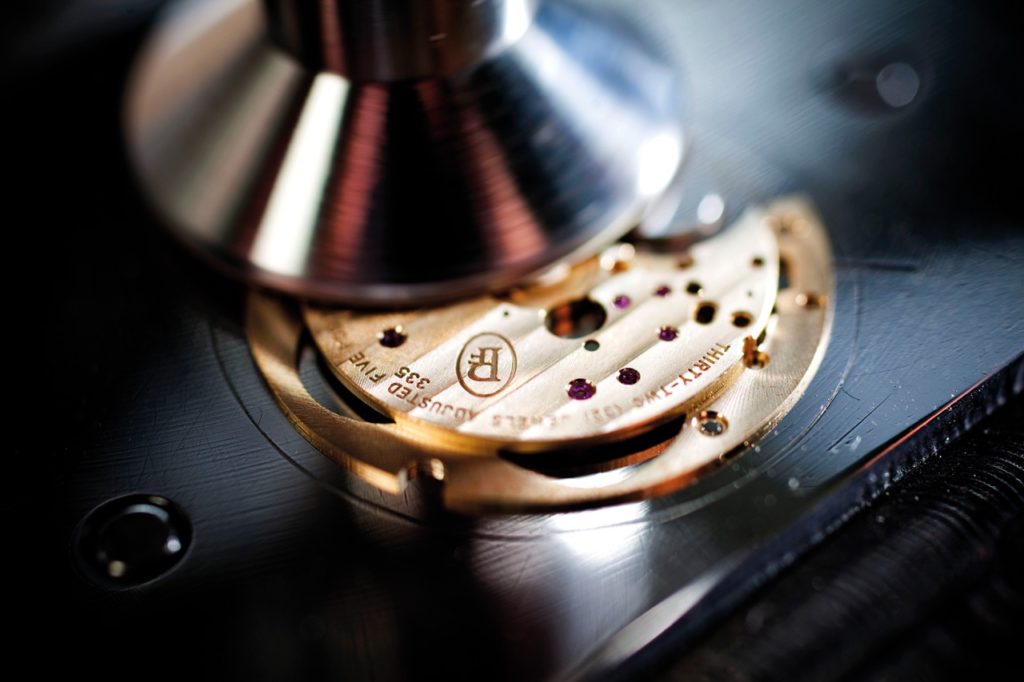
Application of the Geneva stripes at Parmigiani Fleurier

We go once more into the breach at Parmigiani Fleurier, this time as part of a guided tour with other Asian press. Our last story on this most amazing of watchmaking nodes – the brand itself is just one part of the set-up – covered all the basics of all the constituent parts of what is known as the Parmigiani Watchmaking Centre.

For this run, we are once more not visiting Atokalpa and Elwin, unfortunately, and we acknowledge that these remain significant gaps in our otherwise extensive coverage. Nevertheless, we did get an in-depth rundown on what happens at the aforementioned sites and dutifully sum it up here.

Of course, if you are already relatively familiar with Parmigiani Fleurier, or have read our story from three years ago (it lives on online), nothing has changed at all. We have made an effort to spruce things up with commentary on each of the production sites, based on what might make them valuable…

On that note, the biggest update at Parmigiani Fleurier in the last few years is the news that the entire Parmigiani Watchmaking Centre (PWC), including the brand Parmigiani Fleurier, was and might still be in search of a new owner.

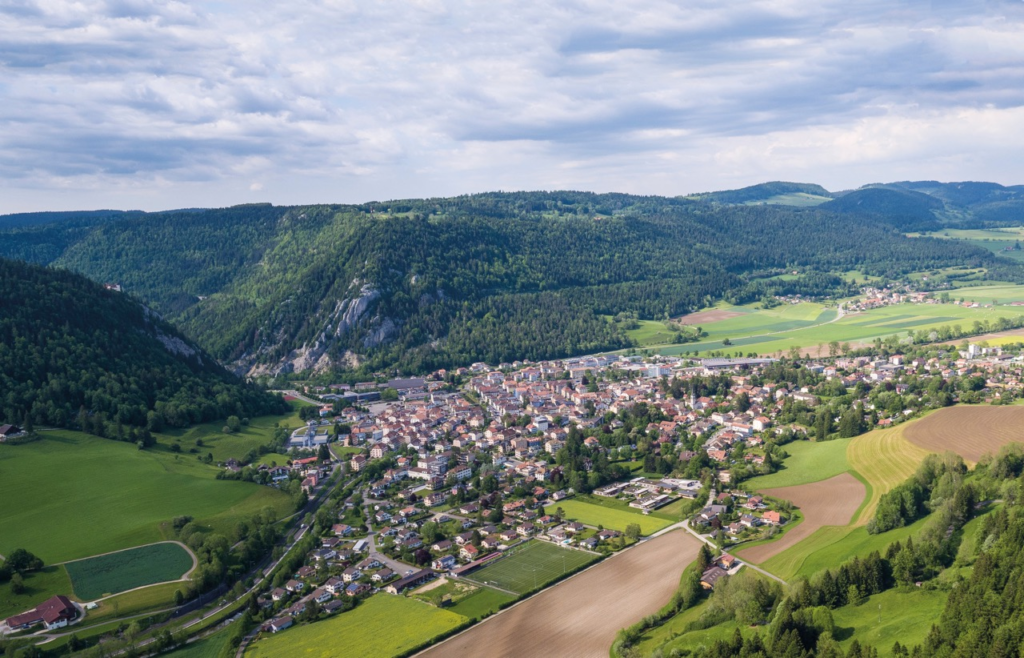
A bird's eye view of Fleurier

Currently, the whole show is still under the stewardship of the Sandoz Family Foundation. This news (still) offers us another angle to present the information about PWC in a different light, and that is just what we have done.

We begin therefore with the very short list of what Parmigiani Fleurier, which we might use interchangeably with PWC, cannot do. It is really just five items… Parmigiani Fleurier does not make sapphire crystals, synthetic rubies, leather straps, bracelets and mainsprings.

Given that the brand is going great guns with sales of the Tonda PF, which Bloomberg says accounted for an incredible 98 percent of the brand’s sales in 2023, we imagine that plans must be afoot to add bracelet production to the capabilities of Les Artisans Boitiers, or else make a strategic acquisition. The short of it is that there is nothing to report, yet, and nothing rises above the level of rank speculation.

A Foundation In Restoration

Final stages in checking an assembled watch

The story of Parmigiani Fleurier is inextricably linked to its founder, Michel Parmigiani. In the heart of the Quartz Crisis of the 1970s, when the Swiss watch industry was wobbling precariously, Michel (whom we address by his first name for clarity) established a workshop dedicated to the near-lost art of restoring antique timepieces.

His extraordinary talent for breathing life back into historical marvels earned him an elite clientele, including the Patek Philippe Museum and, crucially, the Sandoz Family Foundation. To wit, Parmigiani Fleurier CEO Guido Terreni often says Michel has a black belt in watchmaking, thanks to his prowess in restoration.

The foundation, built on the fortune of the Novartis pharmaceutical company, entrusted Michel with maintaining its vast and priceless collection of historical clocks and automata.

This relationship blossomed, and with the foundation’s backing, the Parmigiani Fleurier brand was officially launched in 1996. Its first creation, the Toric QP Rétrograde, immediately established the brand’s identity with its distinctive knurled bezel inspired by classical architecture and its complex, beautifully finished movement.

For Michel himself, restoration is a way to return life to mechanical wonders, without altering the character of the original. This deep understanding of historical mechanics and distinct absence of egotism became the brand’s unshakable foundation.

Manufacturing Powerhouse

Tonda PF Sport Chronograph No Date in Ultra-Cermet

To realize this vision of uncompromising quality, Michel and the foundation embarked on an ambitious project: building a vertically integrated industrial hub around Parmigiani Fleurier. This Parmigiani Watchmaking Centre is a constellation of specialist companies, each a master in its own right, giving the brand a level of self- sufficiency that few can claim.

Vaucher Manufacture Fleurier (VMF): The heart of the operation, VMF develops and produces high-end movements for Parmigiani Fleurier. It also supplies a select list of prestigious clients, including Hermès (which owns a 25% stake) and Richard Mille. It is the brand’s central nervous system, handling everything from R&D to final movement assembly and finishing. TAG Heuer’s Movement Strategy Director Carole Forestier-Kasapi calls Vaucher one of the best in the trade; VMF works with TAG Heuer to produce the brand’s split-seconds chronograph movement.

Atokalpa & Elwin: These firms produce the virtually microscopic, high-precision components that are the building blocks of a movement. Atokalpa is a specialist in the regulating organ—the escapement, balance wheel, and even the hairspring—a capability possessed by only a handful of manufactures worldwide. Elwin excels in bar turning, creating a vast array of tiny screws, pinions, and spindles with micron-level precision.

Quadrance & Habillage: This is the dial-making expert. From intricate hand-turned guillochage to the delicate grained finish of the Tonda PF dials—achieved by manually rubbing silver powder onto a brass plate—this is where the face of the watch is given its soul.

Les Artisans Boitiers (LAB): The casemaker, LAB masters both modern CNC machining and traditional hand-craftsmanship. It is responsible for the elegant, ergonomic cases of the Tonda PF as well as extraordinary one-off creations like the white gold double hunter case of the La Rose Carrée pocket watch. This integrated structure means that Parmigiani Fleurier produces virtually everything in-house, from the most complex calibre to the smallest screw, and is able to create virtually any complication it wants.

Silent Luxury

Toric Perpetual Calendar

For much of its history, Parmigiani Fleurier was a brand for those in the know, including King Charles III, who famously wore a Toric Chronograph for years, even when he was the Prince of Wales. However, the appointment of Guido Terreni as CEO in 2021 marked a pivotal moment. Terreni, the man behind the phenomenal success of Bvlgari’s Octo Finissimo, brought a new vision of “silent luxury” to the brand.

This was crystalized in the Tonda PF collection. Launched in late 2021, it was an instant sensation, and that is no exaggeration. The Tonda PF distilled the brand’s essence into a clean, refined, and incredibly sophisticated sports elegance watch. Its design is a study in subtlety: the fine knurled bezel, the intricate guilloché dial, the elegantly integrated bracelet, and the minimalist “PF” logo. It was a watch that did not shout; it whispered. Terreni noted was only possible because of the incredible depth of in-house expertise and capacity at PWC.

The success of the Tonda PF has propelled the brand to new heights, with turnover reportedly surging, according to Bloomberg. The collection has expanded to include innovative complications such as the GMT Rattrapante (see our note on this in the Moser story) and simple models, such as a celebrated no-date Micro-Rotor watch. Simultaneously, the brand continues to honour its classical roots with a revival of the Toric collection, now featuring exquisite perpetual calendars and chronographs with solid gold movements, with gold dials to match.

An enamel dial ready for the kiln

In a world of hype, Parmigiani Fleurier stands apart. It is a brand built on the quiet confidence of a master restorer and powered by one of the most comprehensive manufacturing hubs in Switzerland. With Terreni’s refined vision, it has found the perfect harmony between its rich heritage and a compelling, modern voice, proving that true legacy is not just about preserving the past, but artfully reinventing it for the future. The collection was developed in under a year, a feat Terreni noted was only possible because of the incredible depth of in-house expertise and capacity at PWC.

The success of the Tonda PF has propelled the brand to new heights, with turnover reportedly surging, according to Bloomberg. The collection has expanded to include innovative complications such as the GMT Rattrapante (see our note on this in the Moser story) and simple models, such as a celebrated no-date Micro- Rotor watch. Simultaneously, the brand continues to honour its classical roots with a revival of the Toric collection, now featuring exquisite perpetual calendars and chronographs with solid gold movements, with gold dials to match.

In a world of hype, Parmigiani Fleurier stands apart. It is a brand built on the quiet confidence of a master restorer and powered by one of the most comprehensive manufacturing hubs in Switzerland. With Terreni’s refined vision, it has found the perfect harmony between its rich heritage and a compelling, modern voice, proving that true legacy is not just about preserving the past, but artfully reinventing it for the future.